



The decades-pending Kishau Multipurpose Project has moved ahead to implementation after six states signed a deal on September 15. The project proposes water storage and hydropower infrastructure on the Tons River along the Uttarakhand–Himachal Pradesh border.
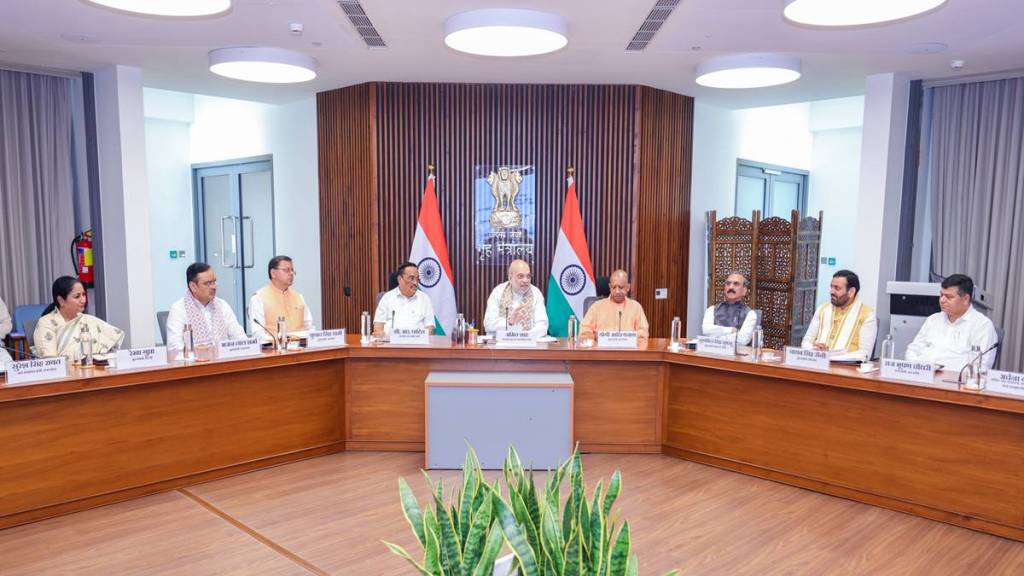
The chief ministers of Uttar Pradesh, Himachal Pradesh, Rajasthan, Delhi, Uttarakhand and Haryana signed the agreement in the presence of Union Home Minister Amit Shah and Union Jal Shakti Minister CR Patil. The project has been termed as a National Project, with the Centre set to bear around 90 per cent of its financial burden and the states to shoulder the remaining 10 per cent.
As per a report by Indian Express, the project is estimated to cost Rs 15,000 crore and has a proposed hydropower capacity of 422 MW. Following the agreement, it will be presented before the Union Cabinet for approval.
What infrastructure is planned?
The project is intended to have a 232.6 metre concrete gravity dam on the Tons River. As per PIB, the dam will have a water-storage capacity of 1,562 million cubic metres and is likely to irrigate 97,000 hectares while producing 1,476 million units of clean hydropower.
Underlining the scope of the proposed infrastructure, Shah stated, “A 232.6-metre-high concrete gravity dam will be built on the Tons River.” He further added that it would have storage of 1,562 million cubic metres.
The Indian Express report mentions that the project site spans Sirmaur district in Himachal Pradesh and Dehradun district in Uttarakhand. It also plans to provide drinking water and industrial water to beneficiary states.
What caused the delay in the project?
Kishau trace its roots to a May 12, 1994 agreement under which separate agreements were planned for storage projects in the basin. As per PIB, an official agreement on Kishau was reached on June 16 this year before the latest six-state agreement.
As per Indian Express, Kishau was one of the three storage projects that were planned in the upper reaches of the Yamuna and its tributaries, along with Renukaji and Lakhwar. Himachal Pradesh and Uttarakhand signed an Mou to form a joint venture in June 2015, whereas Kishau Corporation Ltd was incorporated in January 2017.
Himachal Pradesh had held out on signing the deal for eight years over issues about the financial burden, especially the power component and whether it would get equal benefits.
Giving reference to a 2020 feasibility study, the Indian Express report mentioned that around 2,950 hectares could be submerged, impacting 17 villages and about 5,500 people across Himachal Pradesh and Uttarakhand.
How will Kishau project be funded?
The Centre will bear approximately 90 percent of the financial burden, whereas the participating states will have to manage 10 percent. Shah stated, “The most important aspect is that all six states have given their consent and signed the agreement.”
The Indian Express, quoting Himachal Pradesh Additional Chief Secretary R D Nazeem, stated that, as per the MoU, the portion of Himachal’s expense on the project will be borne by Delhi and Rajasthan in a ratio of 75% and 25% as these two states will get the water supply.
How will Delhi and Yamuna benefit?
Shah said Delhi would be the biggest beneficiary. He also added that 25 per cent of the water would become available through the Kishau agreement, which would benefit Delhi and Yamuna and also result in environmental conservation. The project will combine water storage, hydropower infrastructure and irrigation, with benefits planned across the six states that are participating.