


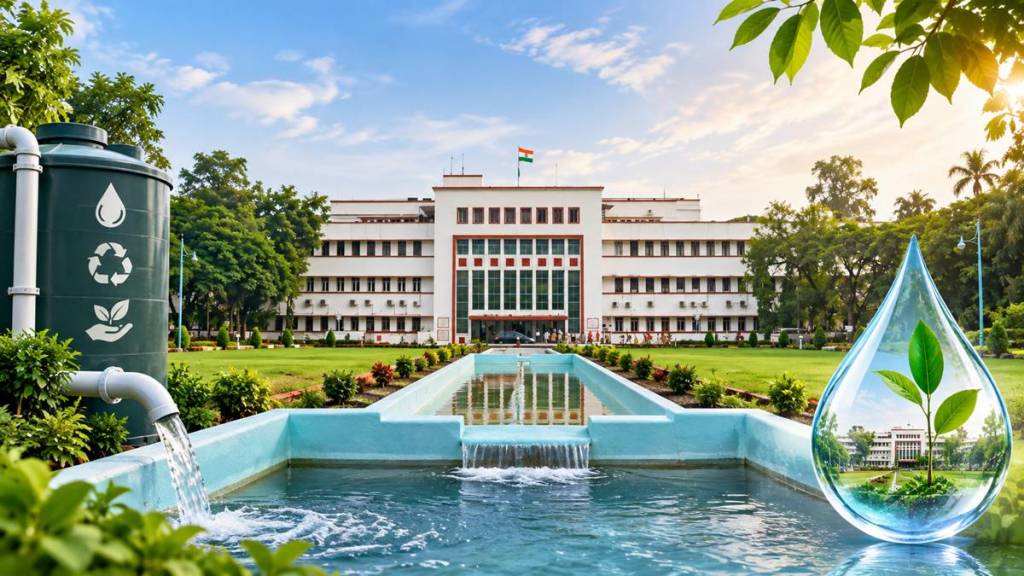

A 38-acre research campus in Pune is set to get an integrated water management system aimed at cutting water consumption, recycling wastewater and enhancing groundwater recharge.
Amazon India has announced a tie-up with water technology startup FluxGen to implement the water conservation project at the National Chemical Laboratory (NCL) campus in Pune. As per Amazon, once completed, the project is likely to restore an estimated 178 million litres of water annually.
The project is slated to be completed by the end of 2026 and will bring together several water conservation technologies within the NCL campus.
Smart sensors, efficient fixtures to reduce water use
The project will utilise smart sensors and water-efficient fixtures, including aerators and waterless urinals, as part of measures to reduce water consumption. The system will also focus on capturing and recycling wastewater and recharging groundwater across the campus. The broader integrated approach will include rainwater harvesting and recycling measures.
Rather than depending on one initiative, the project aims to combine different technologies to create an integrated water-management system at the research campus.
Ganesh Shankar, CEO and Founder of FluxGen, underlined this approach, stating, “What makes this project unique is the integration of various water technologies in one location to create a comprehensive water management system.” He also mentioned that the NCL campus could showcase how research institutions can operate more sustainably whereas contributing to local water security.
Water management model for other institutions
Amazon India expects the initiative to show how technology-based water management measures can be implemented at a larger institutional level. Karan Chugh, Director, Operations, Amazon India, mentioned that the NCL campus offers a setting to demonstrate the impact of such interventions at scale.
“By investing in integrated water management solutions here, we’re not just addressing local water challenges- we’re building a model that can be replicated,” Chugh stated. According to him, similar approaches could potentially be implemented across offices, schools, hospitals, commercial spaces, multi-unit housing and institutional campuses.
NCL also consider the initiative as an opportunity to demonstrate sustainable water management within a research institution. Kanika Goel, Controller of Administration, National Chemical Laboratory said the project combines rainwater harvesting, smart sensors, recycling and groundwater recharge.
“We look forward to this project serving as a yardstick for research institutions across the country,” Goel added.
Water conservation programme for students from 2027
The initiative will not be limited to water management infrastructure. An experiential learning programme aimed at increasing awareness about water conservation among young people is slated to commence in 2027.
The programme will include quarterly student visits to the NCL campus, where participants will get a chance to know about water management technologies that are being used at the site.
Plans also include setting up water conservation clubs in local schools and introducing “HydroQuest”, an educational board game made to explain water conservation principles through interactive gameplay.
Amazon says it is now water positive in India
The NCL project is part of Amazon’s broader initiatives in India. The firm recently announced that it has achieved its goal of becoming water positive in India ahead of its 2027 target.
According to its official release, Amazon now returns water equivalent to 120% of the amount used across its direct operations in India, which includes corporate offices, fulfilment centres and data centres.
The company estimates that these projects will replenish more than 4 billion litres of water annually through measures such as watershed restoration, lake rejuvenation, efficient irrigation, groundwater recharge and water-quality improvement.
Amazon stated that it has committed more than Rs 62 crore towards water stewardship initiatives across Maharashtra, Delhi-NCR, Tamil Nadu, Telangana and Karnataka.