


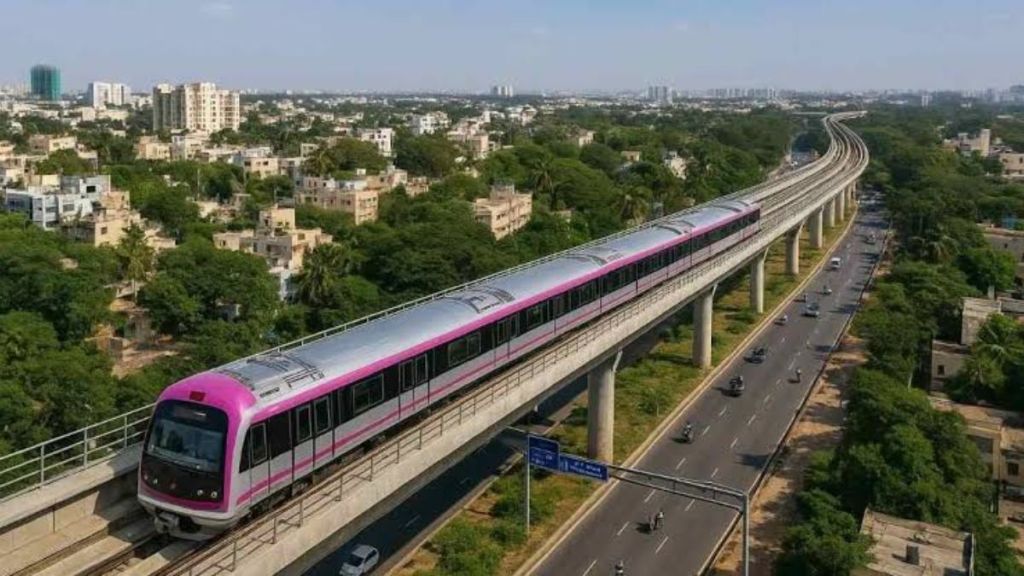

Bengaluru Metro’s Pink Line could soon add a new metro option for commuters in the city’s southern parts. The 7.5-km elevated stretch between Kalena Agrahara and Tavarekere is nearing opening, with key railway approval now in place for the trains that will operate on the route.
The Railway Board has sanctioned the new BEML trainsets proposed for the elevated section. The next major step is the safety inspection by the Commissioner of Metro Railway Safety (CMRS), after which the stretch can be opened for commuter services.
The inspection and authorisation are likely in the first week of October, while services could start in the second or third week of the month, according to The Indian Express.
Pink Line services may begin in October
The CMRS inspection and authorisation are mandatory before the elevated section can open to the public. The Railway Board’s sanction for the trainsets will form part of the documents submitted for the inspection.
Earlier, Karnataka Minister Krishne Byre Gowda had said that the 7.5-km Kalena Agrahara–Tavarekere stretch was ready for launch. He had also said the state was awaiting an inauguration date from the Centre.
BMRCL has also received the Independent Safety Assessor (ISA) certificate for the signalling systems, another step towards commissioning the stretch.
Bengaluru Pink Line: Length, Route, Stations
The full Pink Line will cover 21.25 km between Kalena Agrahara and Nagawara. It includes 13.76 km of underground corridor and a 7.5-km elevated section, with 18 stations planned on the line.
The first stretch to open will cover six stations from Kalena Agrahara to Tavarekere. It will pass through Hulimavu, IIM Bengaluru and JP Nagar 4th Phase before reaching Jayadeva Hospital and Tavarekere.
Jayadeva Hospital will also provide an interchange with the Yellow Line, allowing commuters to switch between the two metro corridors.
How the Pink Line could ease daily travel
The new metro stretch is expected to give commuters in southern Bengaluru another public transport option for daily journeys. With more people able to use the metro for regular trips, it could also help reduce dependence on road-based transport and ease traffic pressure on busy routes in the area.
The Jayadeva Hospital interchange with the Yellow Line will further help commuters connect between the two corridors without having to rely entirely on road transport.