


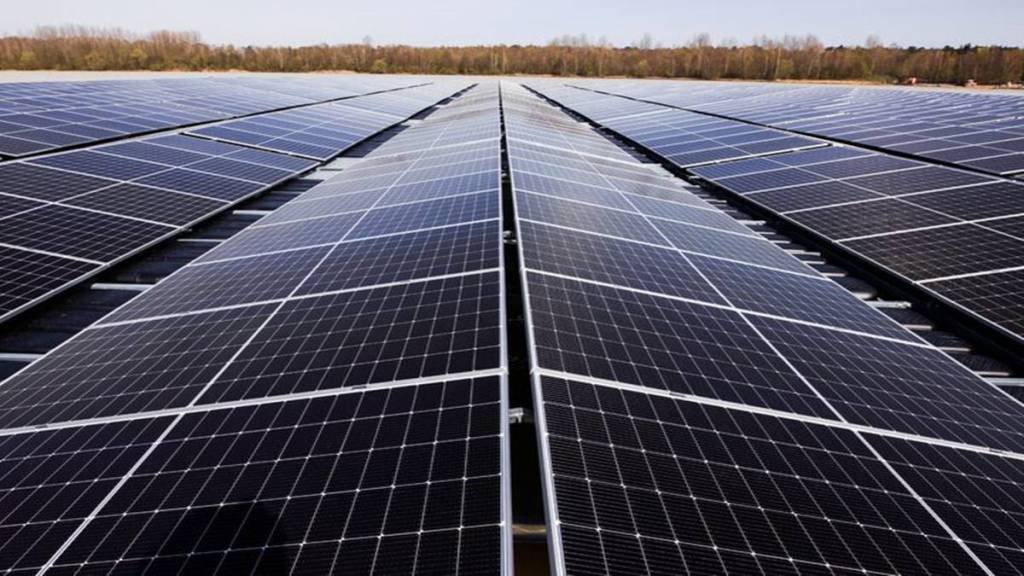

India announced its first-ever net zero target during the COP26 Summit in Glasgow — with Prime Minister Narendra Modi pledging that the country would become carbon neutral by 2070. New Delhi also achieved a capacity of 283.46 GW from non-fossil fuel sources in April this year, with top officials noting that India now ranked third globally in Renewable Energy Installed Capacity. But the national power grid has faltered while handling the changes — with transmission bottlenecks, thermal stress and battery storage concerns taking centre stage.
“The rapid growth in RE, particularly solar energy, which has seen a 3.5-fold increase in six years, now exceeding 140 GW of installed capacity, has fundamentally altered the demand–supply balance in the grid, creating deep intra-day variability and operational stress on conventional generation while presenting a fundamental challenge to the stability of the national power grid,” the Centre for Science and Environment explains in a new study.
Union Minister Shripad Naik also told Parliament in late July that the government held back 8,133 GWh of solar power in the April-June quarter owing to transmission constraints. News agency Reuters calculated that India had been unable to run 7% of its solar capacity at full output due to infrastructure curbs.
A separate statement from Union Minister Pralhad Joshi indicated that India had installed a total capacity of 283.46 GW from non-fossil fuel sources by March 31 this year. He noted that renewables had met 51.5% of the country’s total electricity demand of 203 GW in the past year.
Renewable energy soars as India eyes 500 GW by 2030
Data from the government’s Report of the Expert Committee on Energy Statistics contended in July that the “estimated potential for generation of energy from renewable resources reached 4,704 GW by the end of March 2025”. Solar led the list with a staggering growth from 748,990 MW in FY24 to 33,43,378 MW during FY25. Wind Power now stands at 11,63,856 MW while large hydro is at 1,33,410 MW.
By the end of July 2026, the country had crossed 300 GW of non-fossil fuel-based installed electricity generation capacity. The figure marked more than 60% of the 500GW target for 2030. A record capacity of 55.29 GW non-fossil fuel based electricity capacity was installed in the country during 2025-26 with key contributions from 44.6 GW solar power and 6 GW wind power.
“The growth in clean energy generation has been anchored by stellar contributions across sectors. Solar energy remains the key growth engine with around 165 GW at present from just 2.8 GW in 2014. Concurrently, the wind energy sector has also seen strong momentum reaching to over 58 GW from 21 GW in 2014,” a PIB press note said in August.
Vinay Rustagi, Chief Business Officer at Premier Energies Limited, told Financial Express that India was “almost certain to exceed the government target of 500 GW”. He highlighted the ongoing push for “retail and agri-solar combined with techno-economic advances in battery technology” as key drivers of growth for the industry.
“The government commitment to indigenise solar manufacturing has provided huge impetus to the business. Large investments are being made across the eco-system to make India self-sufficient in solar supplies,” Rustagi told Financial Express.
But the program has become a victim of its own success — with grid bottlenecks emerging as a massive constraint. According to energy think tank Ember, transmission constraints have led to a loss of 300 gigawatt-hours of clean electricity between January and March 2026. Naik told Parliament in late July that curbs in transmission occurred mainly during peak solar generation hours — when power flows can exceed the capacity of available transmission lines.
“India has made good progress in renewable energy, but we still have a long way to go to reach 500 GW by 2030. The challenge now is not just adding more solar and wind capacity. We need to make sure our transmission network and storage capacity grow at the same pace. Otherwise, generating more renewable power alone will not be enough,” warned Hanish Gupta, Founder and Managing Director, Sunkind India Limited.
“The main challenge remains adding new transmission capacity and power market reforms to absorb more intermittent renewable power into the grid,” Rustagi agreed.
The ‘variable nature’ of renewable energy
UK-based Ember Energy warned in mid-May that India’s accelerated renewable energy buildout is beginning to outpace its transmission and evacuation infrastructure. The think tank cautioned that there was a “growing mismatch between fast-moving solar projects and slower-moving transmission infrastructure” — tagging it as the “most critical operational risk” to the 2030 target.
“Renewable energy sources particularly wind and solar are variable and intermittent in nature, and integrating a substantial share of such generation into the Grid presents challenges related to grid security, stability, and safety. The government has taken several steps to ensure grid stability and integration of renewable energy…” Naik added before Parliament.
Ember also flagged “right-of-way disputes, fragmented land ownership, forest and biodiversity clearances, and a thin global supplier base for high-voltage direct current components” as the primary causes. The problem is compounded by the renewable energy buildout across the country — where Rajasthan in the Northern Regional Grid and Gujarat in the Western Regional Grid house most of its utility-scale solar and wind capacities.
“Such concentration of capacities, combined with delayed transmission and evacuation infrastructure, is producing long queues at key pooling stations. On average, projects awaiting commissioning in FY2026–27 face connectivity delays of four to five months, with some Rajasthan stations experiencing significantly longer wait times…Around one in four Inter-State Transmission System schemes nationwide faces a delay of a year or more,” the Ember report added.
The geographic energy divide
Details shared by the Ministry of Statistics and Programme Implementation also highlights a concerning geographical imbalance to this green expansion — with more than 70% of India’s entire renewable energy potential heavily bottlenecked in just six states. At the same time, India remains heavily dependent on coal and the price-sensitive volatility of energy imports.
The MoSPI report indicated that Rajasthan remains in the lead with 23.70% while Maharashtra follows with 14.26% of the estimated renewable energy generation potential.Gujarat is a distant third at 9.10%, with Andhra Pradesh (9.1%) and Karnataka (8.59%) following closely behind. Madhya Pradesh rounds out the list with 8.09% of this quota.
The data suggests a significant mismatch between production sites and the demand locations — with authorities forced to move power across thousands of kilometers of transmission lines to the rest of the country. And in many cases, this translates to massive grid congestion and power loss.
The missing storage buffer
Solar and wind are intermittent sources of energy — driven by natural phenomena such as daylight timings or weather patterns. A key piece of the energy puzzle therefore lies in battery storage or a pumped hydro system that can smooth out uncertainties with a reservoir of stored energy supply. And while India is leading a massive, policy-driven transformation, grid-scale storage has not yet caught up with its successful counterpart.
“Battery storage at pooling stations is the fastest available fix to resolve transmission constraints. Roughly 3–4 GW of two-hour storage could have absorbed most of the curtailed generation, against 236 GW of plug-and-play BESS headroom already available at major pooling stations. The technical pieces are in place; the gap is regulatory and commercial,” Ember analyst Duttatreya Das said in May.
Naik told Parliament in July that the government had already taken several steps to ensure grid stability and integration. This included efforts to “encourage setting up of RE projects with storage facilities for optimal utilisation of transmission facilities”. He also made note of “round-the-clock renewable energy and firm and dispatchable renewable energy tenders conducted by Renewable Energy Implementation Agencies. These rely heavily on energy storage systems to bridge the gap when solar and wind power are unavailable.
“Indian Electricity Grid Code mandates that RE plants participate in the primary and secondary frequency control in case of contingencies. Hybrid RE power plants, Energy Storage Systems such as BESS (Battery Energy Storage System) and PSP (Pump Storage Project) are being promoted for mitigating variability in RE generation and provide adequate frequency support to the grid,” he added.
Gupta however noted that the industry needed “clarity on the storage requirement, duration and cost before the mandate comes in” — even if adding storage was the right step forward. His remarks came amid reports that India was planning to mandate battery storage for all new government solar and wind projects from July 2027 in order to ensure green power can be stored and dispatched when needed.
“Battery prices and storage technology are improving, but we also need better transmission infrastructure and a clear business model for storage. The focus should be on making storage economically viable, not just making it mandatory,” Gupta told Financial Express.
Draft regulations cited by Reuters last week mandated two-hour battery storage equivalent to at least 10% of capacity for projects commissioned after July 1 next year. The rules were slated to tighten further from 2029.
Is coal flexibilisation the answer?
Coal has remained the backbone of energy supply in India — accounting for nearly 79% of the total energy supplied domestically in FY25. Production grew by 4.98% during the same year to reach 1047.52 million tonnes. Non-coking coal retains a dominant share at around 93.65% of the total production during FY25. And according to the Flex to Fix report published last month, coal power flexibilisation can help India create an additional 18GW to 34 GW of renewable energy space. This also has the potential to reduce power sector emissions by up to 8.37%.
“The capacity of Coal washeries in India has displayed a staggered growth over the years from 131.24 MTY as on March 31, 2016 to 262.39 MTY as on March 31, 2025; in contrast there is a steep rise in the volume of production of Coal over the years (an increase of 408.29 MTs from FY 2015-16 to FY: 2024-25)” read an excerpt from the MoSPI report.
India relies heavily on the import of coal, crude oil and natural gas to meet domestic demand. But heavy use of the most carbon-intensive fossil fuel on the planet also creates a significant deficit that must be aggressively phased out or fully mitigated to reach net zero targets.
“During FY 2024-25, the net-import of coal decreased by 8.09% and reached 241.71 million tonnes, while the net-import of natural gas surged by 12.34%, amounting to 35.72 BCM (billion cubic meter) during FY 2024-25 over last year. The import of crude oil also grew from 234.26 million tonnes to 243.22 million during FY 2024-25 over last year,” the Energy Statistics India report adds.
‘Net-zero emission target by 2070’
Prime Minister Narendra Modi had outlined a five-point target to deal with climate change during the COP Summit in 2021. The ‘Panchamrit’ were designed to ensure an “unprecedented contribution of India to climate action” — with the first deadlines set for 2030.
- Reaching a non-fossil fuel energy capacity of 500 GW by 2030
- Fulfilling at least half of its energy requirements via renewable energy by 2030
- Reducing CO2 emissions by 1 billion tons by 2030
- Reducing carbon intensity below 45% by 2030
- Achieve net zero emissions by 2070
Union Minister Pralhad Joshi confirmed in early April that India now ranked third globally for renewable energy installed capacity. But its historic and thriving green transformation now appears to be colliding with unfavourable geographical, infrastructural, and physical realities. The slow-moving transmission infrastructure and land bottlenecks crippling its grid have become key points of concern as the clock winds down.