


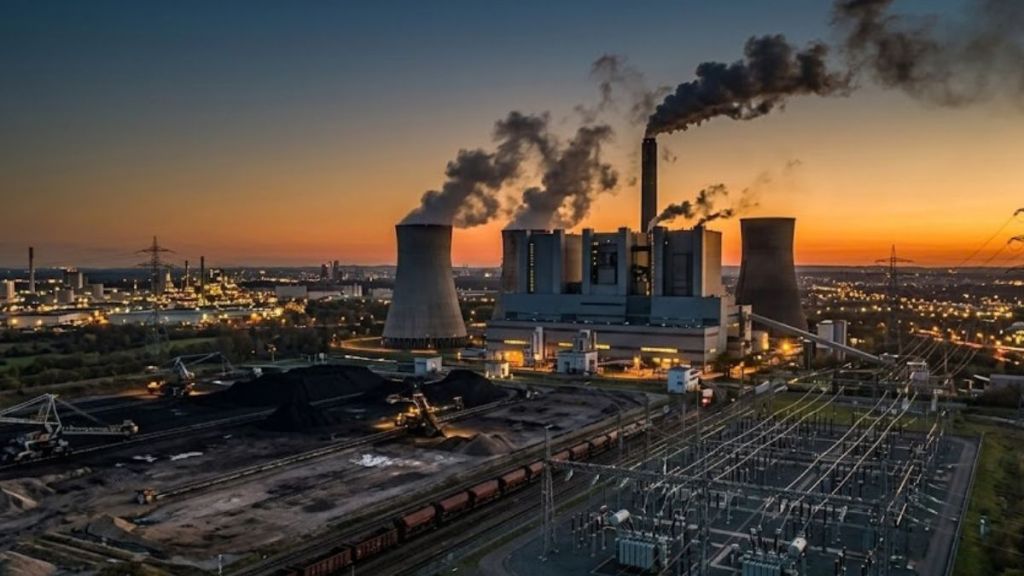

Picture a sweltering September evening. The sun has set, fans are spinning and offices are still humming. Somewhere, a grid operator watches the numbers climb. Can the country keep every light on? As per the latest HSBC report, the power demand increased 14.5% year-on-year during the first 20 days of September 2026. However, this has also resulted in coal shortage and also a supply constraint, especially in the evening.
Coal stocks at power plants have fallen to roughly eight days. Evening power shortages have also started appearing. Is India heading towards another supply-side challenge?
Here is a detailed analysis of the current supply-demand dynamics following the 12.8% year-on-year increase in August.
Power demand rises, peak load returns
India’s appetite for electricity is growing fast. Peak demand, the highest use at any single moment, eased to about 258 gigawatts in August. It then rose to 269 gigawatts in September. One gigawatt can power roughly a million homes.
The pressure has been particularly visible during evening hours. Solar panels stop working after sunset, and something has to fill the gap. Hydropower, made from flowing water, should help. But as per the brokerage report, “hydro generation remains weak this year”.
The result was a shortage of up to 7.7 gigawatts on 9 September. That is about 3% of the electricity being demanded at that moment.
The report noted that “Power demand growth remained robust in the first 20 days of September”.
At the state level, Karnataka and Punjab were among the strongest markets. Their power demand grew 37% and 26% year-on-year, respectively, in August. Madhya Pradesh and Odisha, meanwhile, remained largely flat.
Renewables are doing the heavy lifting
One reason the power system has been able to manage rising demand is the sharp increase in renewable generation.
According to the brokerage report, renewable power generation increased around 39% year-on-year in August. Renewable capacity additions also remained strong.
India added around 3.8 GW of renewable capacity during August. This included 3.4 GW of solar capacity and 0.4 GW of wind capacity.
But there is a problem. Solar power cannot contribute much after sunset, exactly when evening demand begins to rise.
Hydro generation has also remained weak this year. According to the HSBC report, this combination is contributing to the stress seen during evening hours.
The report said, “hydro generation remains weak this year, contributing to evening stress in the absence of solar.”
Coal stocks become the next concern
The bigger worry could be coal availability. According to the brokerage report, coal stocks at power plants stood at around 24 million tonnes as of September 13. This translates to roughly eight days of inventory.
Nearly 40% of thermal power plants are operating with critically low coal stocks, at less than 25% of their required inventory.
Why are stocks falling? Monsoon conditions have affected domestic coal production.
The report said, “August coal production down 13% YoY due to monsoons.”
At the same time, international coal prices have moved higher. Newcastle coal prices were around $145 per tonne as of September 17.
Power demand-supply dynamics: What’s the next step
The situation could become more important if demand remains strong while coal availability stays tight.
Average prices on the Indian Energy Exchange (IEX) have actually declined to Rs 3.6 per kilowatt-hour (kWh), down 5% month-on-month and 10% year-on-year.
According to the HSBC report, storage could increasingly become part of the solution. The Central Electricity Authority (CEA) has proposed that new renewable projects commissioned from July 1, 2027, should have storage equivalent to at least 10% of installed capacity, with a minimum two-hour duration.
The report noted, “CEA pushes storage into the mainstream.”
Disclaimer: This article is based on research reports from one or more brokerage firms and is for informational purposes only. The views, target prices, and recommendations expressed are those of the respective brokerage firms and do not reflect the official policy or position of Financial Express. This should not be construed as an offer, solicitation, or recommendation to buy or sell securities. Investors must conduct their own independent due diligence and seek advice from a SEBI-registered financial advisor before making any investment decisions.