


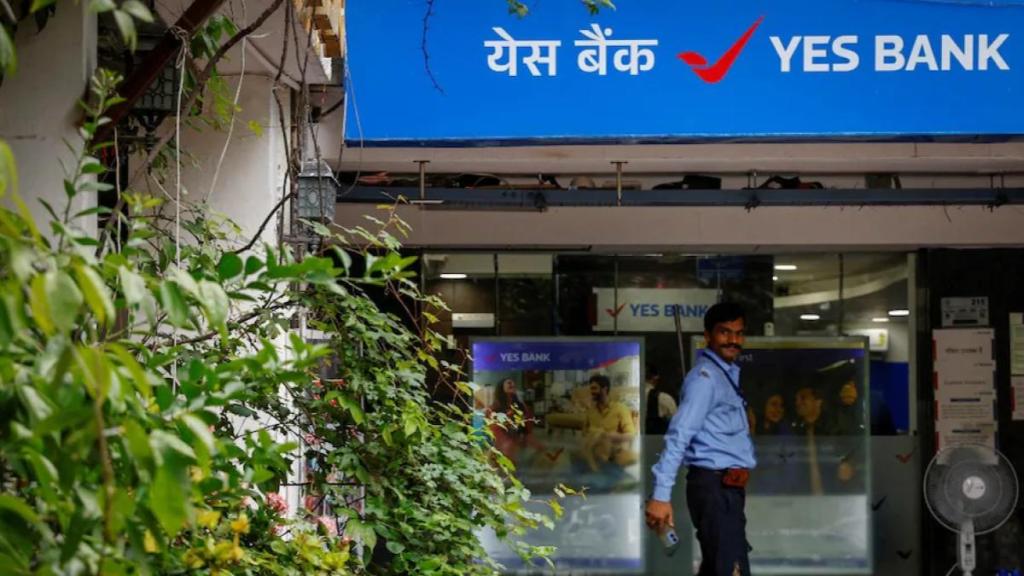

Share price of Yes Bank collapsed by 15% on Thursday as the Supreme Court of India deemed Yes Bank’s Rs 8,415 crore bond write-off illegal, Reuters reported, citing a Supreme Court lawyer. The apex body held that the write-off of AT-1 bonds by the private lender is against the Final Reconstruction Scheme.
Indian stock exchanges, the BSE and NSE have sought clarification
from Yes Bank. FinancialExpress.com will keep updating as soon as the response is received.
“The Supreme Court has held the write-off of AT-1 bonds by the Administrator of Yes Bank to be illegal and arbitrary on the ground of it being against the Final Reconstruction Scheme gazetted by the Union of India,” Reuters quoted Srijan Sinha, a partner at Edictum Law & Co., the lawyer representing Yes Bank’s AT-1 bondholders.
The Supreme Court’s decision is expected to provide relief to Yes Bank’s AT-1 bondholders, who had contested that the debt instruments were mis-sold to them and could not be written off following the completion of its restructuring plan.
As per stock exchanges, Yes Bank is yet to comment on the issue.
What are AT-1 bonds?
AT-1 bonds (Additional Tier-1 bonds) are a special kind of debt instrument that financial institutions issue to raise capital and enhance their market strength. However, they carry much higher risk than regular bonds, as they can be written off or converted to equity if a bank faces severe financial trouble.
Yes Bank had previously written off these instruments following its March 2020 crisis after the private lender faced governance issues triggered by mismanagement at the top level. Following its reshuffle, equity holders were allowed only a three-year lock-in on 75% of their total shares.
“Supreme Court decision seems to be on a technicality rather than the underlying terms of the product,” Reuters quoted Vivek Ramji Iyer, a partner and national leader for the financial services risk advisory practice at Grant Thornton, as saying. “This decision creates regulatory uncertainty that can have a potential to impact investor sentiment,” he added.
In September 2025, Sumitomo Mitsui Banking Corporation (SMBC) completed its acquisition of a 20% stake in Yes Bank through secondary purchase of shares from State Bank of India and other banks, the private lender said on Thursday. Following this, SMBC became the largest shareholder in Yes Bank, while SBI continues as a major shareholder with over a 10% holding.
Yes Bank share price
Yes Bank’s stock ended Thursday’s trade on exchanges at Rs 18.12, down more than 14.5% from its previous close. Over the past one month, its share price has fallen by more than 23%, while over the past six months its stock has declined nearly 6%.
(With agency inputs from Reuters)