


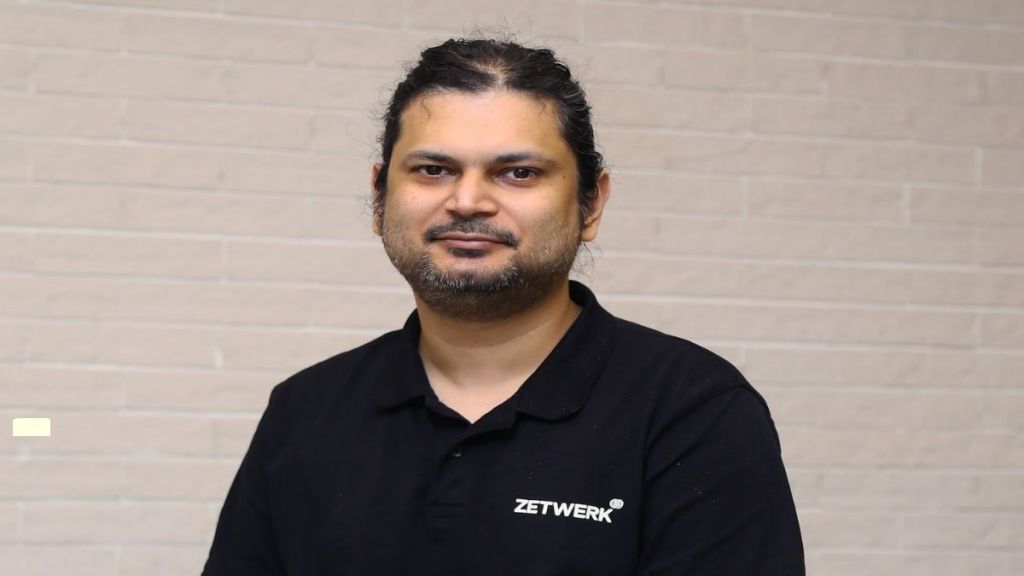

Zetwerk Manufacturing Businesses has priced its IPO at Rs 143-151 a share, below its Rs 171 pre-IPO round. The Rs 5,012-crore issue comprises fresh shares worth Rs 2,830 crore and a 144.5-million-share offer for sale. Once a marketplace for outside factories, Zetwerk now makes about a quarter of what it sells in its own plants. Chairperson and CEO Amrit Pratik Acharya talks to Anees Hussain about it’s diversification strategy, exiting civil infrastructure, margins and path to profitability. Excerpts:
Q: You make everything from power transformers to Bluetooth speakers. Why spread across so many sectors?
We are a young company trying to build a manufacturing conglomerate from India, focused on sunrise industries. Energy, at almost 70% of manufacturing revenue, covers wind turbine components, solar panels and trackers, and transformers. Precision, at about 15%, is electronics, aerospace and defence, and machining. Capital goods is the rest. In FY26, the overall company grew even though electronics remained flat. We have multiple levers of growth across product lines and geographies. Next, we are looking at green hydrogen and space commercialisation.
Q: A couple of years ago, you were building bridges for bullet trains, water pipelines and railway tracks. That civil infrastructure business is now held for sale. Why retreat?
We wanted to focus on fewer things, and we have not taken new orders for that business in many years. It was also a mistake at our end. We didn’t manage it well, and the customer quality there was poorer. It is up to investors whether to underwrite the history or the future.
Q: Own factories made a third of manufacturing revenue in FY26, up from 7% in FY24. Why move away from asset-light?
Ultra time-sensitive customers suit the marketplace, because we repurpose existing factories. But some customers have become very large and want the lowest cost, and there is not enough capacity in the market. Captive manufacturing our response to this. It’s like private label in retail.
Q: Terra91, your raw materials and commodities business, is about 40% of revenue at a 1% Ebitda margin. What role does it play?
We aggregate raw material purchases across the platform. We don’t keep inventory, we don’t speculate on raw material prices and we don’t finance it. It’s a pure volume play. The best analogy is Eternal and Hyperpure. We are it as a complimentary business, not a standalone one. Terra91 is an enabler that helps our partners buy raw materials faster and cheaper.
Q: How have your margins evolved?
For the manufacturing segment, gross margin was 13% in FY24, 19% in FY26 and 23% in the June quarter. Adjusted Ebitda grew four times, from Rs 97 crore in FY24 to Rs 420 crore in FY26. Terra91 margins have been largely flat.
Q: How is your international business growing?
About 35% of our manufacturing revenue comes from international markets, largely the US. We have customers in 29 countries, and we source from suppliers in 26 countries. We have plants in India, Spain, Germany and the US. India and the US will be the heart of the business. Both are re-industrialising and want to decouple from China, through PLI in India and tariffs in the US. We may do other things, but these are our focus areas.
Q: Zetwerk reported a net loss of Rs 1,606 crore in FY26. What is your path to profitability?
The business has a lot of operating leverage, because our engineering and distribution costs were upfront. We are now monetising that in profitability and cash flow. The headline losses are largely non-cash: a Rs 796 crore charge tied to the increased diluted shareholding of Srinath and me, and an impairment on the civil infrastructure business.
Q: Your top 10 customers made up 36% of revenue in FY26. Is that a concentration risk?
Working with larger customers is an intentional choice, because counterparty risk is lower. About 90% of our revenue comes from repeat customers.
Q: You settled with Ayr Energy, which sought about $1 billion in damages. Will it hit the balance sheet?
No. We moved on, they moved on. Everything is settled. We can’t talk about it much.