


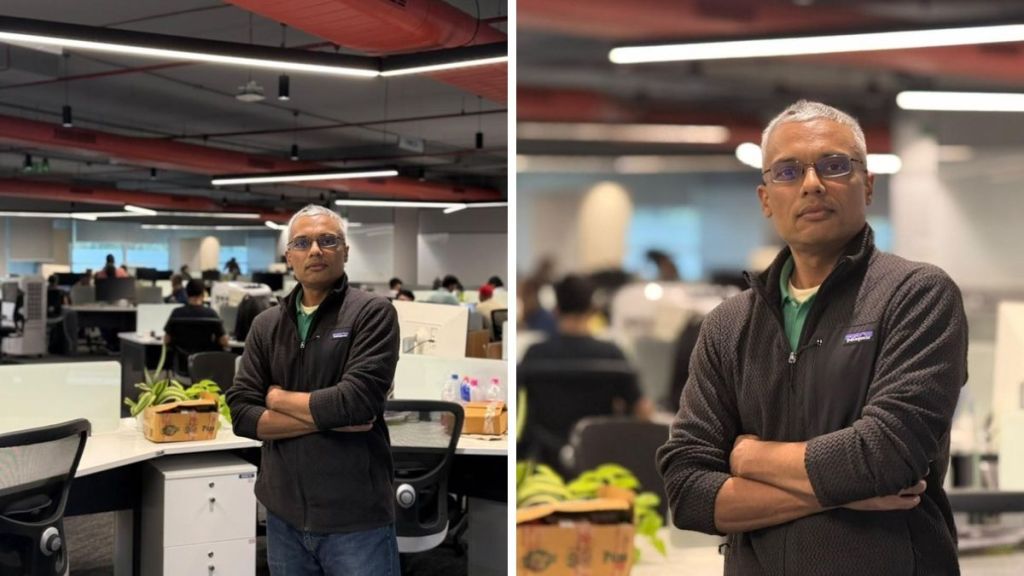

Udaan returned to growth in FY26, with revenue rising 12% to Rs 5,100 crore and net loss narrowing to Rs 850 crore. After years of losses, the B2B commerce platform has shifted from a marketplace to an inventory-led food and grocery business, focusing on city-based clusters. Co-founder and CEO Vaibhav Gupta, discusses with Anees Hussain, the company’s turnaround, competition from quick commerce and its path to profitability. Excerpts:
Quick commerce players are looking at tier-2 cities and beyond. Does this threaten Udaan’s business?
No. General trade in the top 10 cities has grown 7-8% annually over the past two to three years, even as quick commerce expanded. The latter is taking share largely from modern trade, or standalone supermarkets. There are two Indias, affluent and mass, and one is not simply turning into the other. The mass consumer buys loose atta and Rs 10 toothpaste from the kirana, not branded products through quick commerce.
What gives Udaan an edge in this market?
Our supply chain is built for mass India. Quick commerce platforms serve the affluent, DMart caters to value-seekers, while we serve the mass market. Each requires a different assortment, supply chain and cost structure. We are the only company with a cost model that allows us to serve small shopkeepers profitably, factoring in sales, delivery and credit costs.
Udaan was once seen as a B2B marketplace that struggled to make money. What went wrong, and what changed?
We expanded believing scale would eventually bring profitability. That was a mistake. We were a marketplace where anyone could sell anything, but realised we needed to build a deeper, first-party business. Since kiranas represent India’s largest retail market, we chose food and grocery. Around 2021-22, we shifted to city-based clusters focused on density and throughput. The strategy has worked, first in Bengaluru and now across our operating cities.
Where do you stand on profitability?
All our cities are profitable this quarter, across 11 clusters and around 18-20 cities. Bengaluru and Mysuru achieved this a quarter or two earlier. We will exit FY27 as a profitable company, with FY28 being our first full year of profitability.
With profitability in sight, what growth are you targeting?
We are targeting 25% annual growth. All 11 clusters have grown consistently for 16 quarters. In Bengaluru, we have around 8% of the kirana market and are growing 25-30% annually, against market growth of 7-8%. We believe we can eventually reach 20-25% market share in individual cities. Profitability will not change our growth plans.
Hotel, restaurant and cafe (HoReCa) now contributes significantly to revenue. How big can this business become?
It accounts for around 20% of revenue, rising to 27-28% in Bengaluru and about 20% in Hyderabad. We are rolling it out across all clusters this quarter and expect it to contribute a third of our business over the next couple of years. Our strength is serving smaller restaurants. Nearly 90% of Bengaluru’s 45,000 restaurants are small establishments, and our existing supply chain enables us to serve them efficiently.
How much headroom is there for private labels?
In staples, we expect private labels to account for 70-80% of sales. Much of what kiranas sell is unbranded, and retailers prioritise consistent quality, availability and pricing. As a large aggregator of staples demand, we work with millers to develop specifications for commodities such as rice and atta. Private labels generate twice the margins of market brands. We do not intend to acquire millers but work with the right partners to scale.
What does the Lynk Logistics acquisition bring to Udaan?
Udaan operates in wholesale, buying inventory and selling it to retailers. Lynk, acquired from Swiggy’s FMCG distribution business for Rs 500 crore in a share swap, gives us the distribution model, through which brands appoint distributors to reach kiranas. It also brings brand relationships and a retailer network, with considerable overlap in our operating cities and potential cost advantages.
Where do you see opportunities for expansion?
Our model can work in cities with more than 100,000 people, where we need 300-400 shops within a 5-10 km radius. We are also experimenting with towns with fewer than 50,000 people, including those with populations below 20,000, where we see rural demand. We are still working on the right operating model for these markets.