


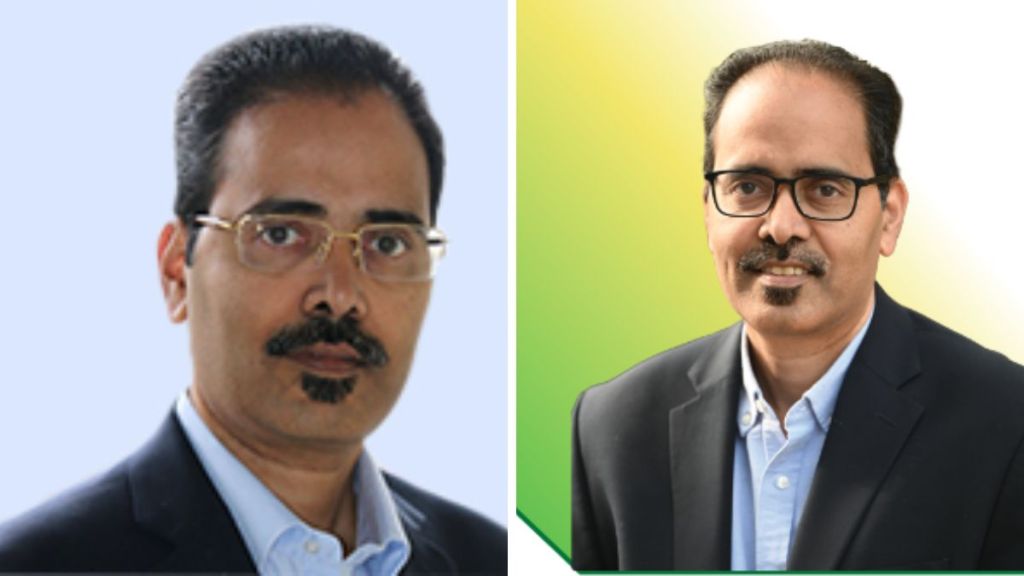

Happiest Minds expects its GenAI business services (GBS) unit to grow significantly faster than the company after its merger with ITC Infotech, as the combined entity gains access to new industry verticals and client accounts. Sridhar Mantha, CEO, GBS, Happiest Minds, tells Poulomi Chatterjee that the company is also scaling its AI product specialists, its equivalent of Forward Deployed Engineers (FDE), to 100 by the end of the year. Excerpts:
Q. How do you expect GBS revenue to grow after the ITC Infotech merger?
The GBS unit was created with a focus on GenAI and subsequently moved towards agentic AI. Its revenue reflects AI solutions and the business transformation they deliver, and does not include AI-led productivity gains within the company. The complementarity between Happiest Minds and ITC Infotech is clear. ITC Infotech has strong capabilities in areas such as manufacturing and travel, giving us access to new verticals and accounts. The sharper focus created through GBS over the last three years should translate into more opportunities after the merger. It is still too early to put a number to the growth. But since the unit is small, it is expected to grow much faster than the company. Our target this year was for it to grow upwards of 140% year-on-year.
Q. What proportion of productivity gains are coming from AI and how do you measure them?
It is a fallacy to assume that the productivity of an AI agent is equivalent to that of one employee. We look at a mix of metrics through our systems integration development framework, including the number of use cases being developed, velocity and agility. We also track metrics such as lines of code generated by AI, although that is not a direct measure of productivity, and token costs. We started with AI-led productivity gains of around 30% and have moved towards 50% with new tools such as Rel(AI)Build.
Q. Does Happiest Minds have roles similar to Forward Deployed Engineers and how are you scaling the team?
We call them AI product specialists. They are our version of the FDE role, but we did not adopt the same title since it was developed in a different context at Palantir. We made a structural change internally by consolidating talent across testing, engineering, cybersecurity and infrastructure management into a centre of excellence headed directly by our CTO. Hiring people with the required skills externally is difficult, so we handpicked some of our strongest employees. We started the financial year with 35 AI product specialists and plan to take that to 100 by the end of the year. Their utilisation is deliberately low because a significant amount of their time goes into learning, experimentation and developing new tools. Along with Claude, these specialists use a platform we have built internally. Together, these tools have helped raise productivity gains to 60-70%, from 30-40%, making these roles particularly valuable.
Q. What kinds of larger deals will Happiest Minds target after the merger?
Over the last 12-18 months, we have moved towards larger, multi-year deals, with initial closures of $5 million-plus being the sweet spot. With the scale we will have after the merger, I believe the ticket size can increase to around $10 million. The boundaries between large-cap and mid-cap IT companies are increasingly blurring. Mid-cap firms are pursuing larger deals, while large IT companies are competing for clients across segments. However, smaller deals require a degree of attention and urgency where mid-sized IT companies can be more agile. An executive can step in quickly when required on a niche project, which is not always possible at a large IT firm. That is why smaller clients continue to prefer us. After the merger, we will become the 11th-largest IT provider, but we will still be nowhere near the scale of a TCS. That allows us to retain our agility.