




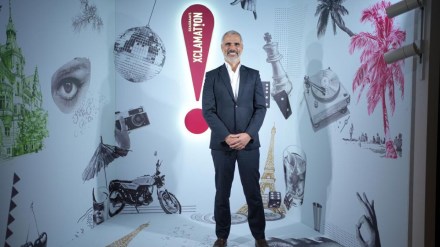
Pernod Ricard India (PRI), known for brands such as Royal Stag and Blenders Pride, aims to offer increasingly discerning choices as consumers seek higher-quality drinking experiences, CEO Jean Touboul said in a conversation with Viveat Susan Pinto. Speaking a day after Tilaknagar Industries completed its acquisition of PRI’s liquor brand Imperial Blue, Touboul outlined the company’s roadmap, investment plans, and new launches, including a multi-category range called Xclamation. Excerpts:
What is Xclamation all about, and how significant a launch is it for Pernod Ricard India?
It’s a big moment for us. Xclamation is a major innovation and a big bet under Seagram’s. It taps into premiumisation, especially for Gen Z, who want bold, modern, high-quality products. The bottle design, the aluminium cap, and the liquid—whether it’s the finest Indian grain spirit, French grape brandy, or dual-cask Scotch whisky—speak premium. India is traditionally a whisky market, but repertoire drinking, that is, drinking based on moods or occasions, is rising, including among women. Under the same brand, we’re introducing five categories—whisky, brandy, rum, vodka, and gin—so consumers can choose based on the occasion. We see Xclamation alone contributing to 10% of our (sales) growth in the next decade. The range has been designed and crafted locally for the country’s growing base of aspirational and quality-conscious consumers.
Do you believe your premiumisation agenda has got a fillip with the sale of Imperial Blue?
The disposal of the Imperial Blue business aligns with our premiumisation-through-innovation strategy. It frees resources—both financial and organisational—to focus on higher-margin segments. Xclamation is part of this, along with innovations like Royal Stag Double Dark, Blenders Pride Four Elements (both premium whiskies), and Longitude 77, which is an Indian single-malt whisky. Having said that, let me add here that premiumisation isn’t only about ultra-expensive bottles. A consumer moving from country liquor to IMFL at an affordable price point is also premiumisation. We serve premiumisation across levels, helping consumers move up the ladder as their incomes rise.
Jean on future sales growth
What are your expectations in terms of sales growth after the Imperial Blue disposal?
India benefits from strong structural tailwinds: a young and growing population—around 20 million new legal drinking age consumers every year—and rising disposable incomes. These factors support our strategy. India is, and will continue to be, a key growth engine for the Pernod Ricard Group. It is already our second-largest market after the US by value and the largest by volume. Over the last five years, we grew 8% per annum, despite a subdued macro environment. We closed the fiscal year ending March 31, 2025 (FY25) with revenue of Rs 27,446 crore. With the Imperial Blue disposal and greater exposure to faster-growing premium segments, we believe we can move to low double-digit growth in the coming years.
What is your investment roadmap for India, given that Pernod Ricard is setting up Asia’s largest malt distillery in Maharashtra?
We invest continuously in our manufacturing footprint—95% of our volume is produced locally. And India is unique—it’s the only market where we produce at this scale for local consumption. Our premiumisation strategy is implemented globally, but India allows a deeply localised execution. As far as the Maharashtra project is concerned, it is a major one. The facility, at Butibori in Nagpur, will see an investment of up to €200 million (approximately Rs 1,785 crore) over 10 years, and will have the capacity to produce 13 million pure alcoholic litres annually. Land has been purchased and the multi-year process of clearances, construction, production, and ageing is underway. Before the Imperial Blue disposal, we had 24 plants in India. Post-transaction, we have 18 plants. As far as increasing plant count goes, that would depend on regulatory conditions and business scale in each state. If Bihar reopens, we would invest there. In Telangana, where we already have three units, we may expand if demand grows.
Jean on Maharashtra govt dispute over alcohol taxation
What is the legal dispute with the Maharashtra government over alcohol taxation?
To clarify, Pernod Ricard has not sued the Maharashtra government. The legal challenge has been made by the industry association, International Spirits & Wines Association of India (ISWAI). However, we wish to add that we support regulation. Alcohol is not a neutral product. It is rightfully regulated and taxed. But what we seek is a fair and transparent taxation framework that encourages premiumisation. When consumers drink less, but better, governments earn more revenue. It can be a win-win for both.
But alcohol majors have pointed out from time to time the uneven taxation here and the lack of ease of doing business. Isn’t this hurting sales?
We engage with authorities state-by-state, asking for a fair, transparent playing field. Governments decide the rules, and we respect that. Our role is to present win-win solutions for revenue generation, consumer benefit, and industry stability.


