


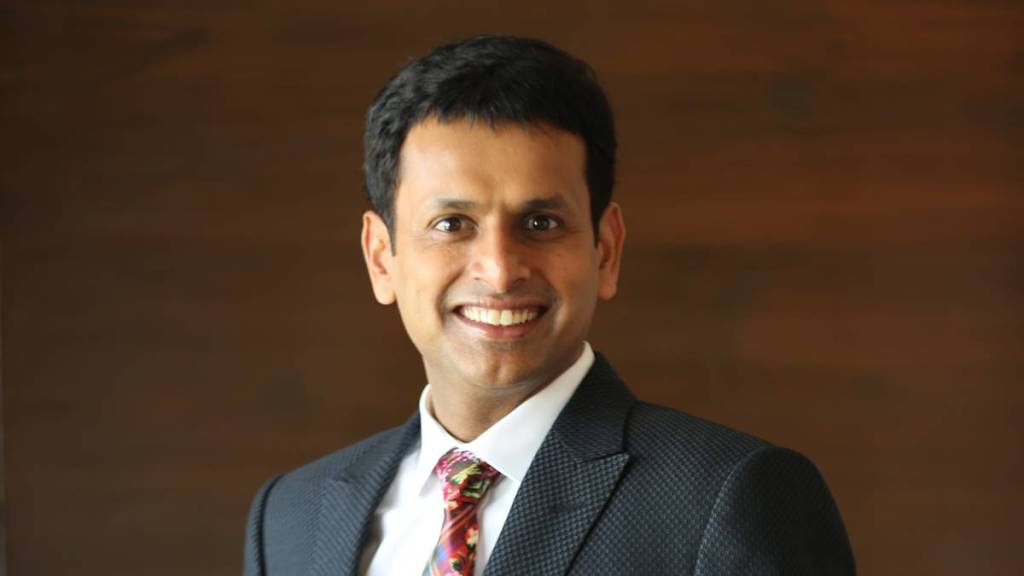

Avaada Group has filed a ₹7,600-crore IPO for its solar equipment manufacturing arm, Avaada Electro, and repaid ₹6,713 crore in debt owed to Canadian investor Brookfield. In an interview with Raghavendra Kamath, Vineet Mittal, founder and chairman of Avaada Group, discusses the group’s expansion plans across energy storage, green hydrogen and ammonia, nuclear energy and fundraising. Excerpts:
Many companies have ventured into nuclear energy. Is this an area Avaada is considering?
On nuclear energy, we are watching policy and technology developments very closely. The government’s Nuclear Energy Mission and its ₹20,000-crore programme for the development and deployment of small modular reactors (SMRs) are particularly interesting. Technologies such as the Bharat Small Modular Reactor and other indigenous SMR concepts could eventually create new opportunities for reliable low-carbon electricity, industrial energy and potentially hydrogen production. However, nuclear energy, particularly SMRs, remains an evolving opportunity. We would therefore take a measured approach rather than make speculative commitments at this stage.
Why has Avaada largely stayed away from acquisitions in the renewable energy space?
Avaada has historically been much more greenfield-led than acquisition-led. Our core strength has always been creating assets and executing projects quickly, while maintaining quality and cost discipline, rather than merely aggregating them. Greenfield development allows us to control project quality, technology choices, capital costs and operating performance from inception. It also enables us to build projects around long-term offtake arrangements and create value through disciplined execution.
That said, we are not doctrinaire about our approach to growth. Where an acquisition offers the right strategic fit—whether in terms of location, connectivity, technology, operating assets or portfolio advantages—and meets our return thresholds, we will certainly evaluate it.
The group was in talks with global lenders such as Standard Chartered Bank and SMBC to raise more than $1 billion in project-finance debt. What is the progress on that front?
We have moved well beyond the initial discussions and continue to see strong participation from both domestic and international lenders. During Q1 FY27, we secured nearly $950 million in debt financing across three utility-scale renewable energy projects, including our 590 MW firm and dispatchable renewable energy (FDRE) project in Bikaner and two 300 MW solar projects in Rajasthan and Gujarat. These financings involved separate lending consortia comprising institutions such as Standard Chartered Bank, State Bank of India, HSBC, DBS, SMBC, MUFG and BNP Paribas.
Subsequently, we secured nearly $1.3 billion in financing for a 2.15 GW renewable energy portfolio across four special-purpose vehicles (SPVs), with State Bank of India, REC and Canara Bank participating as lenders. As we scale, we will continue to evaluate both domestic and international sources of project finance.
What are your plans in the battery storage space?
We are already constructing storage capacity at scale, with 2.5 GWh of battery energy storage systems (BESS) in Rajasthan and around 4 GWh in other states. Across our portfolio, we have built a significant BESS pipeline and expect storage to become an increasingly important component of our future renewable energy projects.
The opportunity extends well beyond energy arbitrage. BESS can help meet peak demand, shift renewable electricity to periods of higher consumption, firm up renewable generation, manage congestion and increasingly provide important grid-support services. We also see significant demand emerging from large commercial and industrial consumers, including data centres, which require reliable, round-the-clock clean power.
What progress have you made on your green hydrogen and green ammonia plans?
Our flagship project is the 0.5-million-tonne-per-annum green ammonia project at Gopalpur, Odisha. We have made substantial progress on key project enablers, including land, renewable energy planning, power connectivity and banking arrangements, water sourcing, technology selection and engineering. The ammonia process licensor has been onboarded, and the basic engineering and design package has been completed.
The project has also received design-stage pre-certification from TÜV Rheinland covering relevant green hydrogen and EU Renewable Fuels of Non-Biological Origin (RFNBO) requirements.
On the commercial side, we are actively engaging with prospective customers in Europe and Asia and are also evaluating structured procurement mechanisms such as H2Global. For Avaada, the next phase is about converting project development into bankability—firming up long-term offtake, optimising the renewable energy configuration, progressing financing and moving towards a final investment decision (FID).
We want to build an integrated renewable-energy-to-green-molecules platform that can help decarbonise sectors such as fertilisers, refining, chemicals, shipping and, over time, steel.
Thermal power is expected to contribute more towards meeting electricity demand amid constraints in gas supplies and hydropower generation. Will this affect India’s energy transition plans?
We do not see the current increase in thermal power procurement as a reversal of India’s energy transition. Existing thermal capacity will continue to play an important role in maintaining resource adequacy during the transition, but that does not mean every incremental increase in demand must automatically translate into new thermal capacity.
The proposition that every additional gigawatt of renewable energy necessarily requires a corresponding addition of thermal capacity is increasingly outdated.
The renewable energy industry has moved well beyond standalone solar. Solar, wind, battery storage, pumped storage, transmission and advanced power electronics can now be configured together to provide increasingly firm and dispatchable electricity.
Therefore, the appropriate comparison today is not simply “solar versus thermal”. It is firm and dispatchable renewable power versus new conventional capacity, assessed on a comparable delivery profile and system-cost basis.