


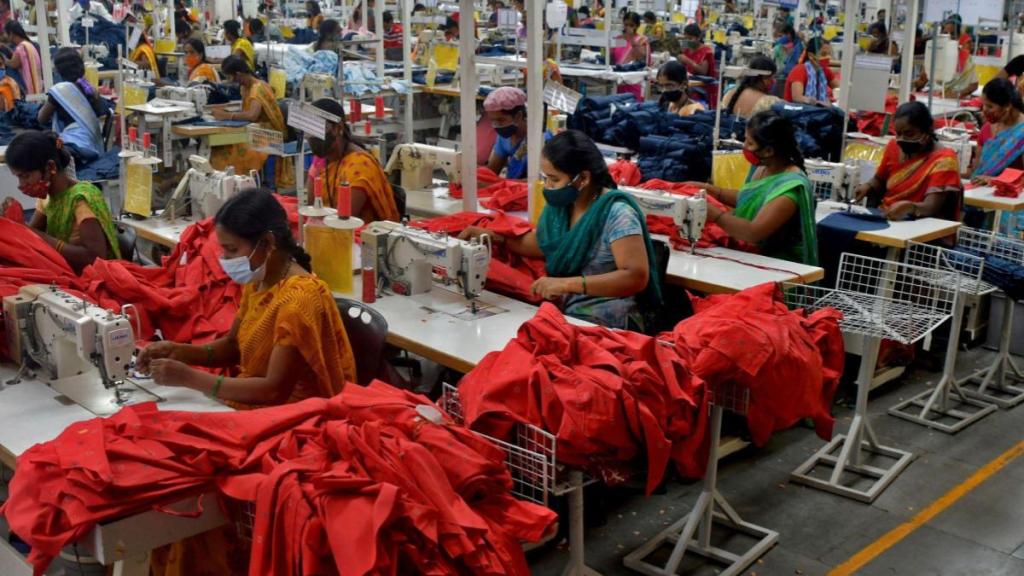

For nearly six years, India’s textile and apparel exports have gone nowhere. They stood at $37 billion in the last financial year, almost exactly where they were six years ago, even as the global trade in textiles and apparel grew to $904 billion.
Global brokerage firm Jefferies has turned bullish on the sector, initiating coverage on Raymond Lifestyle and assuming coverage on Welspun Living, with a Buy rating on both. Behind the call are three drivers Jefferies expects to pull Indian exporters out of their slump: new trade deals, a supply chain shift away from China, and strengths India has been sitting on for years.
India textile exports get tariff boost
Start with tariffs. Indian exporters have long paid more to sell into Europe than their rivals in Bangladesh, Pakistan and Turkey. As per the report, the gap is 10 to 12%.
That gap is closing. India’s free trade agreement with the UK took effect in July, cutting tariffs on textile products from a range of 4 to 12% down to near zero. A similar deal with the European Union could follow from 2027. Together, the two agreements would open up preferential access to a market worth about $220 billion, according to Jefferies.
There is also a rival stumbling. Bangladesh is on track to graduate out of its Least Developed Country status, a change that will chip away at the duty-free access it has long enjoyed in the EU and UK. Jefferies expects some of that business to move to India.
China+1 shift creates export opportunity
The second driver has been building for a decade. Global apparel brands have been diversifying their supply chains away from China, a strategy the industry calls China+1, to cut their exposure to a single country. China still exports more textiles than anyone, with a global share of 30 to 32%, but Bangladesh, Vietnam and India have all picked up ground as brands spread their orders wider, the report noted.
Jefferies said this shift is now feeding into a second trend, which is consolidation. Large retailers are narrowing their supplier lists, favouring big, compliant manufacturers over a scattered base of smaller ones. India’s scale and its pool of export-ready factories put it in a position to gain from that narrowing.
India’s textile manufacturing advantage
The third driver does not depend on any deal or any rival’s misfortune. It is what India has built at home. According to the Jefferies report, the country runs a textile chain that stretches from cotton fields to finished garments, and it is the world’s second largest cotton producer, giving it a raw material base few competitors can match. Government programmes such as PM MITRA parks and the Production Linked Incentive scheme are meant to add to that over time, Jefferies said.
The advantage shows up most clearly in home textiles. India already supplies 45 to 60% of the bed linen and towels sold in the United States. Its share in the UK and EU is far thinner, somewhere between 5 and 25%, which Jefferies reads as room to grow rather than a weak spot.
Apparel is the harder case. India’s share of the global apparel export market is only 4 to 5%, trailing well behind Bangladesh and Vietnam. Jefferies called this the bigger long-term opportunity of the two, betting that falling tariffs, the pull away from China and stricter compliance demands will give Indian apparel makers a runway that lasts several years.
The stocks Jefferies is backing
Jefferies gave Welspun Living a Buy rating and a price target of Rs 260, pointing to its scale and its position at the top of the home textiles export business. It expects the company’s revenue to grow 14% a year between FY26 and FY29, with a recovery in margins pushing earnings growth even higher.
It also started coverage on Raymond Lifestyle with a Buy rating and a price target of Rs 900. The call rests on the company’s branded textiles business, its distribution reach and a garmenting arm that Jefferies expects to ride the export upturn, with earnings per share forecast to grow 23% a year over the same three years.
Betting on double-digit earnings growth
Overall, Jefferies expects the export upturn to spark significant growth for the Indian textile sector. This is also expected to result in earnings seeing a double-digit boost and margins climbing higher. The brokerage house sees significant room for growth as tariff rates seem to be rationalising and the gap between India and others narrowing significantly.