


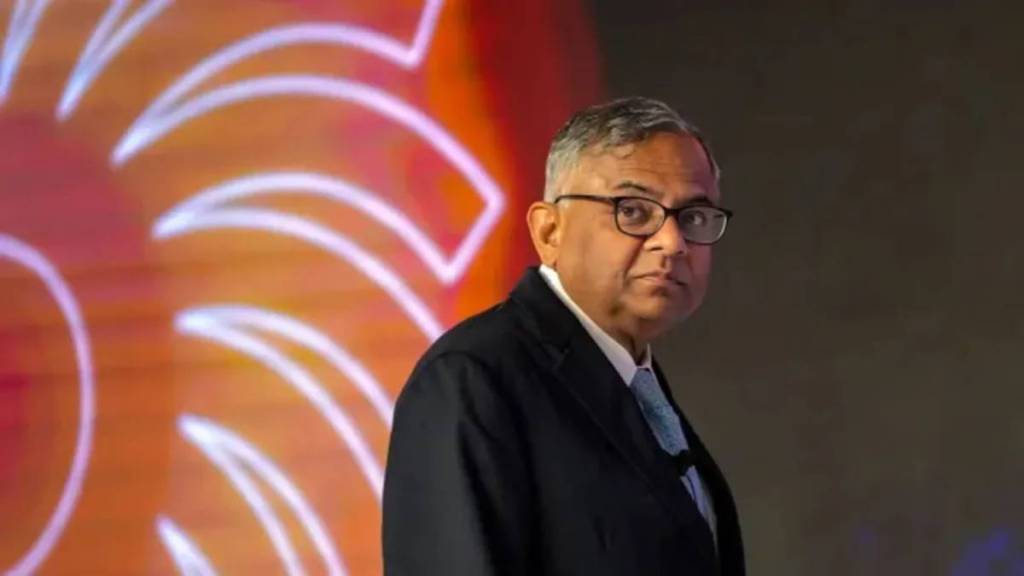

Tata Sons has dismissed Tata Trusts’ charges that the September 17 resolution reappointing N Chandrasekaran as chairman was invalid, citing fresh legal opinions from former Supreme Court judges B N Srikrishna and U U Lalit in support of its position, people familiar with the matter said.
In a September 24 letter to Noel Tata, chairman of Tata Trusts, the holding company rejected his objections to Chandrasekaran’s reappointment and maintained that the resolutions passed at the board meeting were consistent with its Articles of Association (AoA).
Tata had argued that the reappointment was invalid because it did not secure the approval required from the Trust-nominated directors under Article 121 and bypassed the selection process prescribed under Article 118.
Split vote over Chandrasekaran’s reappointment
The two Tata Trusts nominees on the Tata Sons board had voted differently on the proposal. Venu Srinivasan supported Chandrasekaran’s reappointment, while Noel Tata opposed it. Four of the five directors who participated in the vote backed the proposal; Chandrasekaran had recused himself.
The dispute centres on whether the 1-1 division between the Trust nominees could be resolved through a casting vote. Tata Trusts has maintained that a majority of two nominees means both must vote in favour and that a casting vote cannot substitute for the affirmative support required under Article 121.
Tata Sons has now relied on the opinions of Srikrishna and Lalit to contest that interpretation, according to excerpts of the letter revieLegal opinions back casting vote
wed by FE.
Srikrishna concluded that the use of the casting vote was consistent with both the “letter and spirit” of Article 121. He said the provision should be interpreted in a manner that enables the board to conduct its business rather than leaving it deadlocked.
“The proceedings before the Board were not intended to be deadlocked in any event,” his opinion said, adding that Article 121 should be read in a way that allows the board’s proceedings and the company’s business to be taken forward and concluded.
Lalit arrived at a similar conclusion. He noted that four of the five directors who voted supported Chandrasekaran’s reappointment, with Noel Tata casting the sole vote against it. Since the two directors appointed under Article 104B were divided, the presiding or officiating chairman could exercise a casting vote to satisfy Article 121, he said.
Legal opinions back casting vote
“Since there was equality of votes among the Directors appointed under Article 104B, there was certainly an occasion for the Chairman to have a casting vote,” Lalit said in his opinion. He consequently concluded that the September 17 resolution had been validly passed.
The fresh opinions reinforce the interpretation earlier offered by senior advocate Sudipto Sarkar, whose advice had been circulated to the Tata Sons board. Sarkar had said Article 121 permitted a casting vote both when the directors appointed under Article 104B were evenly divided and when there was an equality of votes across the full board.
Sarkar had also concluded that Article 118, which sets out the process for selecting a “new chairman”, did not apply to Chandrasekaran’s reappointment. His view was that Chandrasekaran remains the incumbent chairman until his current term expires in February 2027 and, therefore, the proposal did not involve the selection of a new chairman.
Srikrishna’s opinion also addressed the obligations of nominee directors, an issue that has assumed significance because Srinivasan voted differently from Noel Tata.
According to Srikrishna, a nominee director has a fiduciary duty to the company under the Companies Act as well as an obligation to the nominating entity. If the two conflict, the statutory duty to the company must prevail over the contractual obligation to the nominator, he said.
On that reasoning, Srikrishna concluded that Srinivasan had acted correctly in discharging his statutory fiduciary duty while supporting the reappointment.
Tata Sons did not respond to queries sent by FE until press time.
The opinions cited by Tata Sons directly counter the legal position taken by Tata Trusts and an opinion obtained by Noel Tata from former Chief Justice of India D Y Chandrachud. Chandrachud had concluded that the affirmative support of the Trust nominees was an independent requirement and could not be replaced by a casting vote.
The competing opinions deepen the dispute over the interpretation of Articles 118 and 121 and set the stage for a possible legal challenge over Chandrasekaran’s continuation.