




Tata Power is expanding its electric vehicle (EV) charging footprint beyond major metropolitan centres, adding more locations across tier-2 and tier-3 towns. According to data received by FE, Tata Power has installed 1,889 of its 3,373 EV charging stations in Maharashtra, Karnataka and Uttar Pradesh, with Mumbai Metropolitan Region (MMR), Haryana, Uttar Pradesh, Maharashtra and Karnataka accounting for the largest share of charger installations.
The company said its focus remains on tier-1 and emerging metro cities, while it is increasingly expanding into growing cities, tier-2 and tier-3 towns and along major highways. State EV policies supporting infrastructure development are also helping extend the charging network beyond urban centres.
“India’s EV story is extending beyond urban centres into a genuinely national ecosystem, supported by state EV policies that are increasingly incentivising infrastructure development across tier 2 and tier 3 markets,” Virendra Goyal, Head – EV charging, Tata Power, said.
Tata Power’s EZ Charge network currently spans 6,700-plus public and captive charging points, 2,50,000 lakh-plus home chargers and 1,200-plus bus charging points across more than 700 cities and towns.
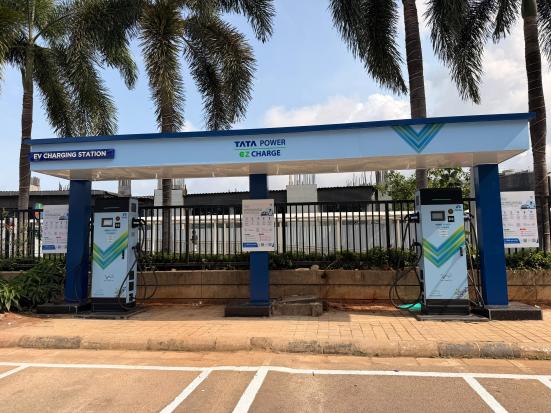
Goyal said charging density, grid connection timelines and access to land in high-footfall areas remain the key constraints to faster deployment, particularly on highways. Tata Power has deployed charging hubs on the Yamuna Expressway, Hyderabad-Vijayawada, Bengaluru-Tirupati and Pune-Bengaluru corridors.
“Charging density on highways, grid connection timelines, and land access in high-footfall zones remain the three key constraints,” Goyal said.
The company said high-footfall charging locations are already profitable at the site level, while others are moving towards viability. Tata Power continues to invest ahead of demand and is targeting 7,50,000 home chargers and 10,000 public charging points by 2030.
Home charging remains the largest part of its network, but apartment complexes are emerging as the next challenge. The company has called for standardised RWA and builder norms, dedicated EV parking and simpler load-sharing frameworks to improve access for consumers without private parking.
On highways, Tata Power has introduced dedicated charging hubs connecting key corridors, with at least four charging guns at each location and capacities above 120 kW. It also operates more than 1,200 bus charging points, with dedicated high-capacity hubs, grid connections, land and suitable financing models identified as key requirements for commercial fleet adoption.
Looking ahead, Tata Power expects EV adoption and government-led initiatives to drive charging demand, while seeking faster single-window approvals for land and power connections, uniform EV tariffs and easier access to highway sites.