


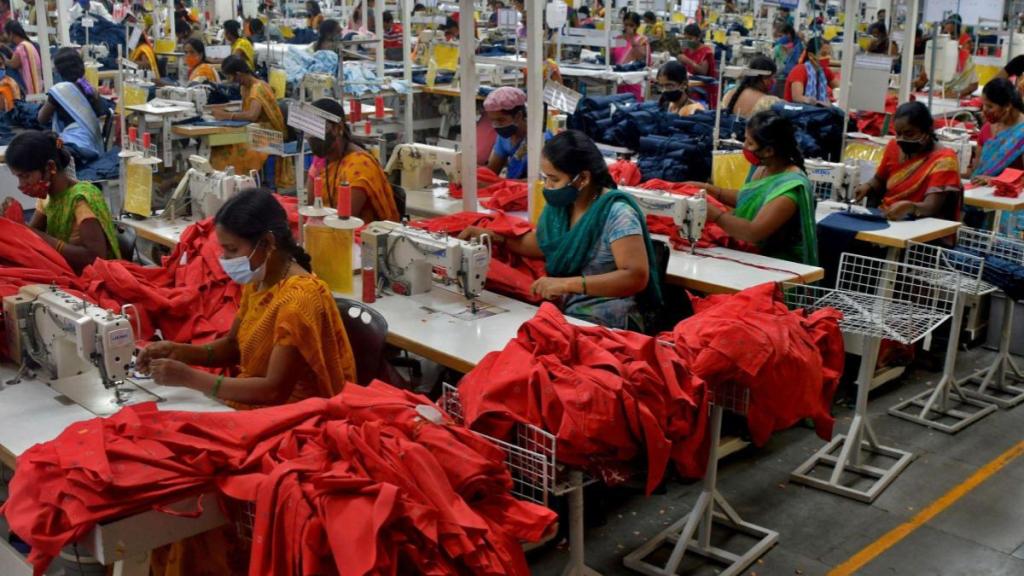

Surat’s man-made fibre industry is facing a fresh squeeze from a sharp rise in polyester raw material prices at a time when manufacturers are already grappling with higher input costs and weak demand following the disruptions caused by the Hormuz crisis and recent floods.
The latest price increase has put manufacturers in a fix ahead of the festive season. They are finding it difficult to pass on the higher costs to buyers at a time when demand remains sluggish, while absorbing the increase would further squeeze already-thin margins.
According to the Southern Gujarat Chamber of Commerce & Industry (SGCCI), the increase has added about Rs. 20 per kg to the cost of polyester yarn — Rs. 7.92 at the MELT stage and another Rs. 12 at the POY stage. The chamber has described the increase as an abnormal rise in polyester yarn costs.
Surat’s textile industry has an estimated annual turnover of Rs. 1.50 lakh crore, with the man-made fibre segment playing an anchor role. The sector directly employs around 12 lakh people and normally sees demand picking up ahead of the festive season.
In a letter to Union Textiles Minister Giriraj Singh, the SGCCI has sought measures to restore competitive pricing, ensure adequate availability of polyester raw materials and yarn, and protect downstream MSMEs.
SGCCI president Ashok Jariwala has also called for a polyester price-monitoring mechanism and for benchmarking MELT, POY, FDY and DTY prices against international input costs.
“It is an artificial price rise. It is a cartel,” Jariwala alleged while speaking to FE, adding that buyers were unwilling to accept the higher prices. “We want a committee to monitor prices,” he said.
Suresh Patel, secretary of the South Gujarat Texturising Association, said the price rise could dampen the festive season for the industry. “The yarn prices have increased one-and-a-half times compared with what they were on March 1 this year,” he said, questioning whether buyers would be willing to absorb the increase. “If it is a hike proportionate to the hike in crude oil prices then we can understand. But this hike is one and a half times,” he said.
With demand already weak, manufacturers are buying less than they normally would, even as units continue to operate to meet daily overheads and other fixed expenses. “Normally, we start getting festive orders from August. The demand is sluggish this time. Buyers are waiting and watching,” said Ashish Gujarati, textile industry leader and former president of SGCCI. He too expressed concern that Diwali may not bring the kind of demand seen in other retail sectors.
The industry has also sought exemption from Basic Customs Duty (BCD) on monoethylene glycol (MEG) and purified terephthalic acid (PTA) for six months, with a further six-month extension.
The latest price pressure comes after the industry suffered losses of over Rs. 200 crore during two successive floods in July. Nearly 30 textile markets were inundated and around 1,000 shops and godowns were affected, with finished goods and raw materials damaged in the flooding.