


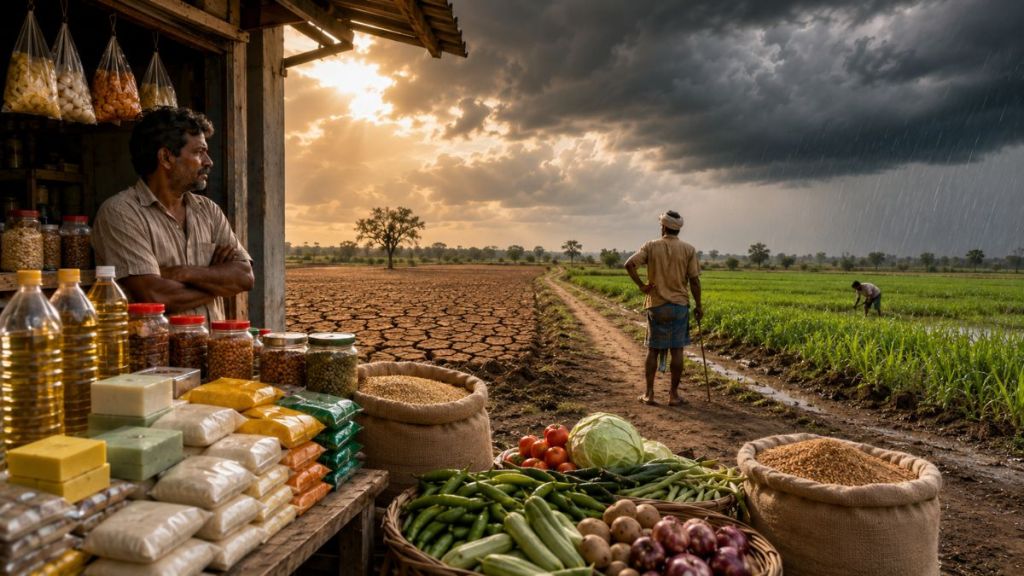

Karnataka declared 226 taluks as drought-hit with estimated losses of approximately Rs 60,000 crore. Maharashtra has declared 305 of its 358 talukas drought-hit. Many parts of India are facing drought as the country received a 12% rain deficit monsoon and weather-related uncertainties.
“A deficient monsoon can put pressure on rural incomes, particularly in regions dependent on rain-fed agriculture. Lower farm output may affect sentiment and discretionary spending, leading to some moderation in rural and mass-market consumption categories,” Devender Singhal, Sr. Fund Manager, Kotak Mahindra AMC
But how is the monsoon deficiency affecting consumers?
Tractor sales fall over 16%
Certain segments in auto sales have faced a decline in September due to weather-related uncertainties.
Radhika Piplani, economist at Motilal Oswal said, “Drought is likely to have a bearing on rural demand, with signs already visible through the tractor retail sales growth which showed a 16% plus negative decline, albeit on an unfavorable base.”
Gaura Sengupta, chief economist at IDFC First Bank said that nascent signs of a slowdown in rural demand are already visible, “with moderation in tractor sales, two-wheeler sales and rise in employment demand under MNREGA.”
Rural inflation crosses 6%
It is important to note that rural inflation has already crossed 6%. “We expect a further upside surprise here in the coming months with more than 3-4 states at the verge of being drought hit,” Piplani added.
Weak monsoon unlikely to derail India’s consumption story
However, India’s consumption story has become more diversified over the years. Rural incomes are increasingly supported by non-farm employment, construction, services, government spending and allied agricultural activities, thereby reducing the direct linkage between rainfall and consumption.
“Therefore, a weak monsoon may create pockets of demand softness without necessarily resulting in a broad-based consumption slowdown,” said Devender Singhal of Kotak Mahindra AMC said,
“The key risk to watch is whether prolonged rainfall deficiency leads to both higher food inflation and sustained pressure on farm incomes, which could have a more meaningful impact on household spending,” he added.