


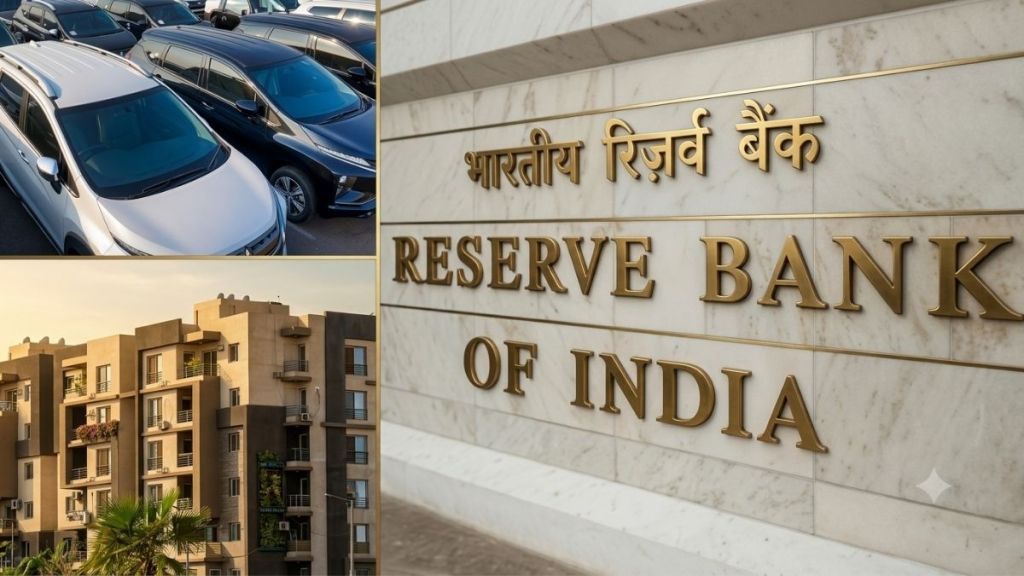

The Reserve Bank of India’s decision to raise the repo rate by 25 basis points could weigh on buyer sentiment across interest-rate-sensitive sectors, with the impact likely to be more visible in residential real estate, alteast in the short term, than in automobiles, developers, consultants and industry experts said.
The rate hike comes at a time when residential sales growth has already remained subdued in major markets. Sales in Mumbai were marginally higher, while the National Capital Region declined during the first nine months of 2026. Overall, the top cities recorded no growth during the first nine months of CY26.
Housing affordability under pressure
“Higher borrowing costs may temporarily moderate buyer sentiment, particularly in the mid-income segments,” said Pradeep Aggarwal, founder and chairman, Signature Global. A stable repo rate, he said, would have better sustained the current demand momentum. “Still, with strong fundamentals, and the upcoming festive season, we expect the sector to remain resilient,” Aggarwal said.
Anuj Puri, chairman, Anarock Property Consultants, said the rate hike would put pressure on consumer sentiment and discretionary spending, which has a direct correlation with housing demand. The festive season is a key period for housing demand, and higher borrowing costs could affect buyer sentiment, Puri said. Residential prices in the top seven cities have already risen significantly, stretching affordability. According to Anarock Research, average residential prices increased 7% year-on-year. “With the rate hike, dearer home loans will make buyers more selective and cause decision timelines to extend, particularly in the price-sensitive segments,” Puri said. “This momentum will now be tested because even a modest increase in EMIs will result in deferred purchase decisions or budget recalculations among affordable housing buyers,” Puri added.
Shishir Baijal, international partner, chairman and managing director, Knight Frank India, said higher borrowing costs could create affordability pressures, particularly in interest-rate-sensitive and lower-priced segments. “But we do not expect a material disruption to the sector’s broader trajectory in the near future,” he said.
Niranjan Hiranandani, managing director, Hiranandani Group, said real estate performs well in a higher-inflation environment. “Real estate prices grow higher than general inflation,” he said. #
Subodh Runwal, chairman and managing director, Runwal Enterprises, said the rate hike would have little impact on real estate. “It (hike) is in line with global happenings,” he said.
Auto impact seen marginal
In the automotive sector, Amar Seth, vice-president, FADA, expects rising transaction costs to have a marginal impact on demand, particularly as around 70% of vehicle purchases are financed. Higher borrowing costs could add to the effective cost of vehicle ownership.
However, two-wheeler expert Sanjay Tripathi does not expect the rate hike to materially affect festive purchases. He said buying decisions during the festive period are driven more by sentiment and income visibility than marginal changes in EMIs.
“People buy automobiles based on overall income visibility, bonus payouts, cash flow, exchange and finance schemes,” Tripathi said. For two-wheelers, he identified inflation and the job market as bigger risks to festive demand than interest rates.