


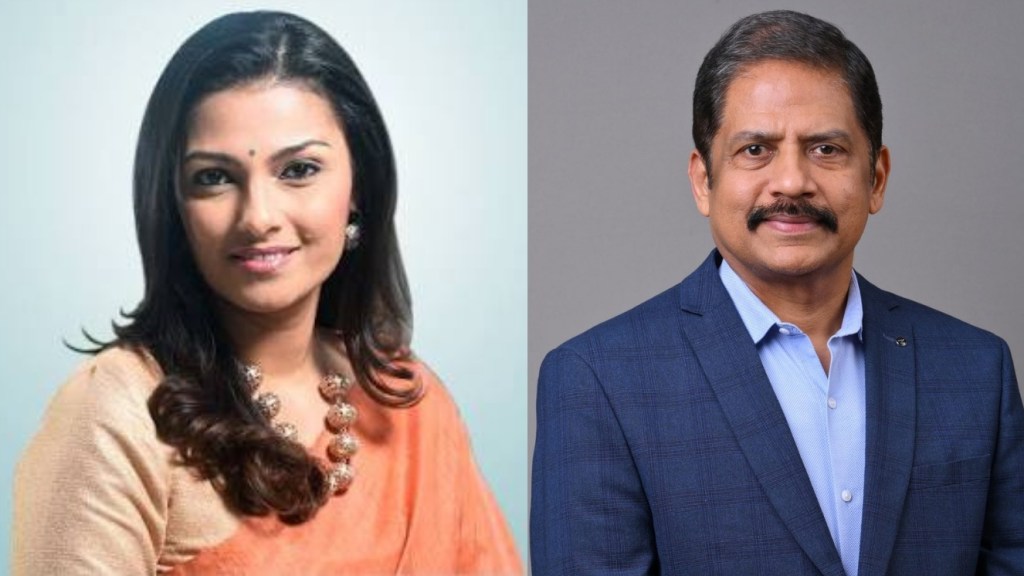

Metropolis Healthcare‘s growth is being driven by higher test volumes and a shift towards premium wellness and speciality services, rather than price increases. In an interview with FE’s Manu Kaushik, promoter and executive chairperson Ameera Shah discussed the changing competitive landscape, industry consolidation and acquisition strategy, while managing director Surendran Chemmenkotil spoke about revenue growth, expansion plans and margins.
How are you dealing with competition from hospital chains and online diagnostic platforms?
Ameera Shah: The newer technology players are largely focused on preventive healthcare, selling affordable wellness packages through home services. But wellness accounts for only 5-10% of the market; 90% is illness. Customers may pay Rs 100-200 more for a trusted brand. Hospital chains largely depend on captive patients. Doctors outside their hospitals may hesitate to refer patients there. Hospital chains also lack the speciality menu needed to win B2B outsourcing business. In fact, they outsource tests to us.
The diagnostic industry is highly fragmented. Do you see consolidation gathering pace, and how are your recent acquisitions integrating with the business?
Ameera Shah: The industry is a pyramid with around 20-40 organised players at the top, independent labs with annual revenue of Rs 20-25 crore in the middle, and nearly 290,000 small labs at the bottom, out of a total 300,000. The shift towards organised players has accelerated after Covid. Only around 2,000 labs were approved for Covid testing, making consumers more familiar with them. Customers increasingly expect digital reports and app- and WhatsApp-based services, which smaller labs may struggle to provide.
Consolidation is more likely among the top 200 players. We focus on acquiring ethical, transparent B2C businesses with a good reputation. Finding the right businesses takes time. The four acquisitions that we completed last year had been planned over two years but came together at once. They are integrating well and are on track on revenue and margins.
How much of the company’s revenue growth is driven by higher test volumes and improved realisations, and how much is attributable to inflation-led price increases?
Surendran Chemmenkotil: We have not changed prices in the last one-and-a-half years. Patient volumes are growing around 10% and test volumes 11-12%. TruHealth, our premium wellness offering, has a ticket size of Rs 2,400-2,500, is growing nearly 20% and contributes 17% of the business. Speciality is also growing 19-20%, supported by the oncology menu added through Core Diagnostics and our genomics centre in Gurgaon.
The industry’s average test realisation is reportedly growing by 1-2%. How does Metropolis compare?
Surendran Chemmenkotil: Our realisation is growing 5-6% against the industry’s 1-2%. Around 40% of our tests are speciality and 17-18% are TruHealth. Together, they contribute nearly 60% of the business and are growing at around 20%. Their higher ticket sizes lift overall realisations.
Are higher realisations also translating into better margins?
Surendran Chemmenkotil: TruHealth margins are slightly above the company average because bundled packages reduce logistics and testing costs. Speciality margins can be at the company level or one to two percentage points lower, as some tests are yet to gain volumes. Routine and semi-speciality tests have margins well above the company average. In the first half, revenue grew 16%, against 12-13% in previous years, while EBITDA margins improved 190-200 basis points year on year. We expect these trends to continue.
What is the company’s expansion strategy, and where will most of the new centres come up?
Surendran Chemmenkotil: We started the year with 22 collection centres for every lab; the ratio is now 24. We aim to reach 30 in the near term and 35 over the next couple of years. We add around 100-125 centres each quarter and plan to accelerate this over the next six to 12 months, largely in tier-II, III and some tier-IV towns. Our 200 labs can serve around 750 towns.
What is the revenue mix across cities, and how quickly do new centres break even?
Surendran Chemmenkotil: Tier-I towns contribute 65-66% of revenue, tier-III and smaller towns 26%, and tier-II towns 8-10%. Most new centres are franchisee-run. Our own centres take 12-18 months to break even; franchisee centres generally break even in three to four months, and within six months at most.
How have last year’s acquisitions strengthened Metropolis’ B2C business?
Ameera Shah: Our B2C capability has always been strong in West and South India. In North India, much of our business was B2B. Acquisitions in Dehradun and Agra, including Scientific Lab, give us access to markets where we lacked a strong B2C brand.
How is AI being used in diagnostics and business operations?
Ameera Shah: AI needs relevant, localised master data, which is not yet available across the industry. We use it in finance, purchasing, inventory prediction, centre hygiene checks and call-centre reviews. Where suitable data exists, it can also support clinical work. For example, AI has cut the time needed to prepare a karyotyping report from around 15 days to seven.