


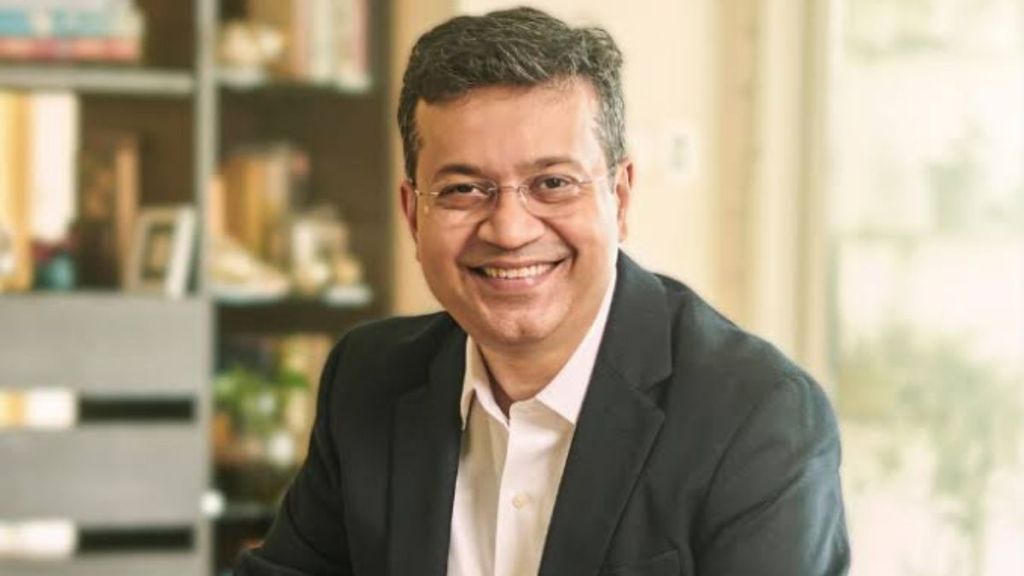

India’s media and entertainment industry has an opportunity to build globally recognised creative businesses and intellectual property (IP) that travels across platforms and markets, says Gaurav Banerjee, chairman, CII National Council on Media & Entertainment, and MD & CEO, Sony Pictures Networks India. In an interview with Viveat Susan Pinto, Banerjee discusses AI, the future of storytelling and television’s growth potential. Excerpts:
You have spoken about the need for credible evidence of returns on media investments. What would that entail?
My reference here is to the creative ecosystem. India has the ingredients to become one of the world’s most important entertainment markets… Our opportunity is not simply to serve a large domestic audience but also to build businesses, franchises, and capabilities and talent in India that can create value around the world. This will require ambition, experimentation, financial discipline, and a willingness to rethink established business models. It is no longer enough to just make a good TV show or film. If we can combine India’s creative diversity and scale with stronger IP, with smarter technology, and sustainable economics, we can build an industry that is not only much larger but also much more valuable.
AI is both an opportunity and a challenge… Where do you stand in this debate?
Thoughtful deployment of AI can democratise story development, research and discovery. These tools were earlier very restricted, but they can now become available to just about anybody. I have spent 27 years building television shows, and one restriction has often been the lack of depth in our writing rooms. AI can help us achieve greater depth in development and research and do it quickly. Pre-visualisation, which used to be expensive earlier, can become key for content development now, as costs come down. That is where the big opportunity lies. The challenge is when you start using all of this to replace creative talent and basically cut costs. That is worrying.
TV viewership continues to co-exist with the growth of OTT and connected TV in India. How can broadcasters capitalise on this trend?
It is heartening for our industry that both are growing… Do we have 100% television penetration in this country? No. There is enormous headroom for growth. We have more than 50 million free-to-air households. One of the important goals for broadcasters should be to give these homes the reason to switch to pay television as their purchasing power improves. How do you do it? With a great product and marketing. Regional content is part of that, of course, but the fundamentals are very simple: good storytelling and amazing content backed by strong marketing.
How can broadcasters and distributors work together to unlock growth?
Firstly, we are not living in disharmony. There is an amazing business logic for working together because of the opportunity that exists for all of us. The over 50-million free-to-air household base represents an enormous opportunity for distribution companies and television broadcasters. Our country’s need for entertainment and the headroom for growth are enormous… There is no structural reason whatsoever for disharmony.
When do you expect the current data-dark environment to end?
I am hopeful that it will come to an end soon. For media companies that have familiar IP, the challenge is not significant because viewers know what is coming. However, if you want to create new IP in a data-dark world, that is far more challenging to do. Which is why we need a solution to this issue. And the industry is working to get that solution quickly.