


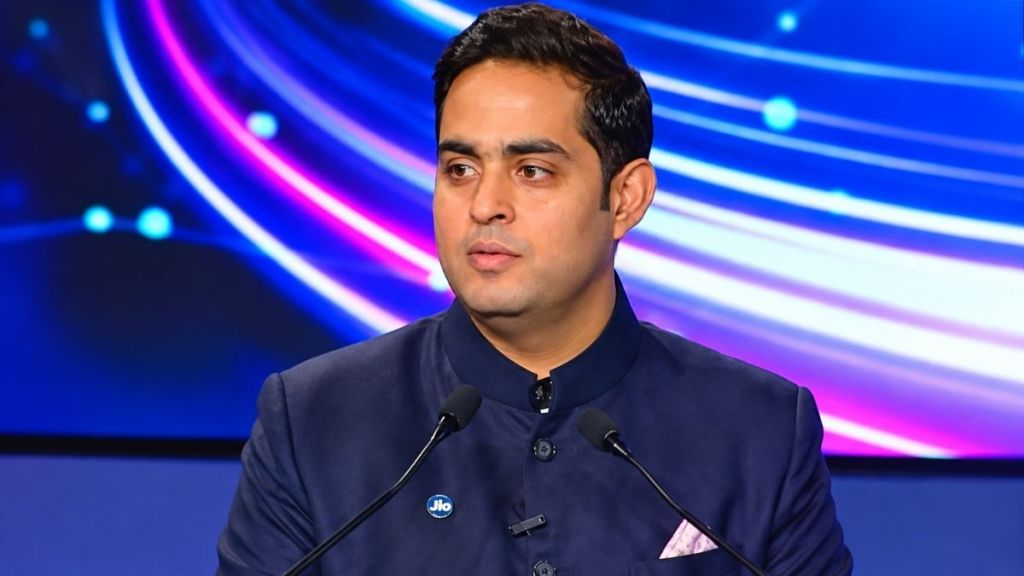

With Jio Platforms’ initial public offering (IPO) opening for subscription on Wednesday, following strong institutional demand for its anchor book, Managing Director Akash Ambani outlines the company’s growth priorities. In an interview with Rishi Raj, he discusses how Jio plans to drive revenue beyond tariff increases, improve returns on capital and build new opportunities across AI, home broadband and enterprise services. Excerpts:
Q. As Jio Platforms approaches its public-market debut, what will be the biggest driver of growth over the next three to five years: telecom monetisation, home broadband and enterprise services, or AI and digital platforms?
Growth will come from several mutually reinforcing drivers rather than a single engine. Mobility has volume growth, consumption growth, digital services growth and realisation growth. Home broadband has significant headroom through fixed broadband penetration, our unique ability to serve customers through our own UBR (unlicensed band radio) stack and digital services. Enterprise services for large enterprises are driven by digital services such as cloud, IoT and managed Wi-Fi. There is also huge potential in disrupting small and medium businesses by offering a bundle of the right digital products tailored for them, along with affordable, reliable connectivity.
Q. How do you see competition evolving in telecom? Will Jio continue to prioritise subscriber additions and market share, or shift towards monetising its existing base and improving profitability?
Customers decide who wins, based on network, price and experience. Affordability and inclusion will remain fundamental to Jio. In FY26, we added about 27 million net active mobility customers, roughly three times the nearest competitor. Scale and monetisation reinforce each other. The more customers on our platform, the more we can offer them across mobility, home and enterprise. Better customer scale and engagement always result in better financial performance. Sustainable financial performance must rest on customer trust and enduring value to customers.
Q. Jio has the largest subscriber base, but its average revenue per user (Arpu) is below Bharti Airtel’s. Do you see Jio closing this gap, or will affordability remain a deliberate trade-off?
We respect what Sunil Bharti Mittal and the Airtel team have built for Indian telecom. When we speak about Arpu, each player has its own definition. I measure Jio against our own mission: how many Indians we bring online, and how much more they do once they join. Jio has always stood for affordability with high-quality service and will continue to do so. That shapes our offerings; for instance, Jio Bharat phone users form a sizeable part of our base.
Q. Jio has a smaller postpaid subscriber base than Airtel. Does scaling up postpaid become a priority? Can it offer greater flexibility to improve realisations through premium plans and bundled benefits?
Customer wants a service, and mode of payment is not the right classification for how they receive the service. Our job is to build products good enough that customers choose to do more on Jio, whatever plan they are on. We believe more value can be created for shareholders and customers by operating multiple levers beyond realisation, especially by focusing on more services and increasing value through higher consumption, apart from an increase in realisation.
Q. What is the right frequency for telecom tariff hikes? Should the industry move towards smaller, more frequent revisions? How do you balance returns on capital with affordability?
How often to revise tariffs is each operator’s call. Affordability is part of our strategy; it comes from our technology architecture, integrated operations and national scale. Return on capital at a point in time may not be the right indicator because Jio has always invested ahead of the curve. We built more than one million 5G cells within a year of launch, using our own end-to-end 5G standalone stack, the only one at nationwide scale globally. This is reflected in industry-best network performance, higher customer engagement and the ability to layer digital services on top. Every service we add brings revenue at low incremental acquisition cost. With the capex cycle now behind us, all growth in revenue and incremental Ebitda should drive an upswing in return on capital.
Q. Where does Jio see its biggest competitive advantage in AI: compute infrastructure, indigenous models or taking AI-powered services to consumers and businesses?
Our edge is owning the whole path to the customer: network, platform and applications. AI matters only when it reaches people, and we serve 533 million customers and understand each one of them deeply. Our strength lies in the combination of proprietary technology, nationwide connectivity, a large customer base and the reach to distribute services across mobile, home and enterprise.
Q. What AI-led products or services do you expect to become meaningful revenue generators?
AI has potential in both consumer and enterprise markets, and we are embedding it across our platforms and operations. We are focused on building useful, scalable services that create lasting customer value. Many of our AI services are live, and many more are coming, focused on Indian use cases and natively working in 12 Indian languages. In the future, we would rather ship products and let users decide than forecast revenue.
Q. 5G has struggled to gain traction in enterprises. Why has this happened, and how can the situation be remedied?
I would distinguish between the potential of 5G for enterprises and the pace at which use cases become commercially viable. The way forward is to move from selling technology to solving business problems: work with enterprises on use cases, simplify deployment and demonstrate outcomes. We are building enterprise solutions, including private 5G, with the priority on practical adoption. We are running private 5G trials in manufacturing, warehousing and mining.