


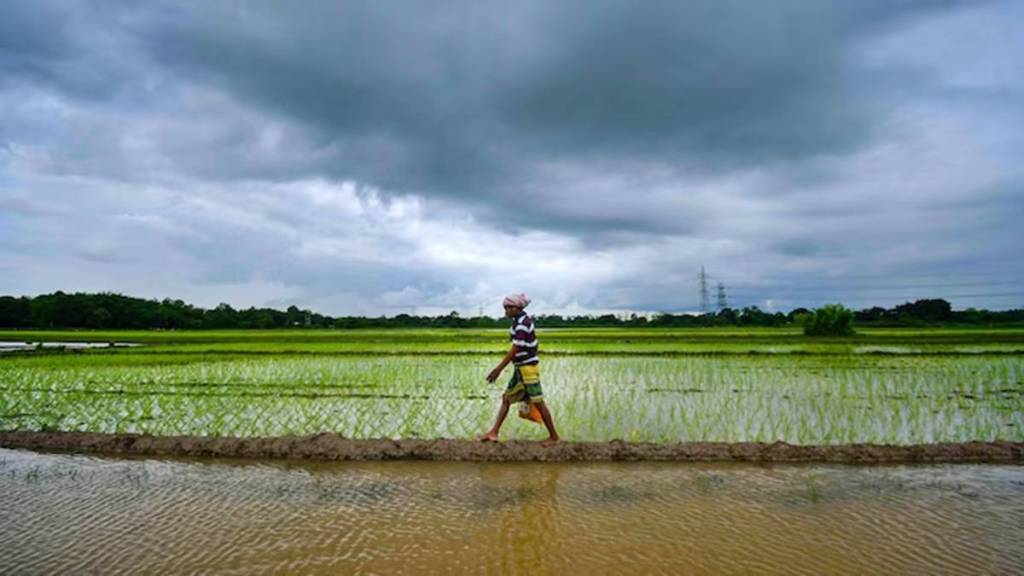

India’s southwest monsoon has turned out to be the weakest in ten years. Rainfall so far has come in nearly 15% below normal, according to a report by Nomura. That is sharper than the season’s original forecast of a 10% deficit.
September has been particularly dry. Rainfall this month has been around 25% below normal so far, the report said. Many parts of the country are expected to end the month below 91% of the long-period average of 167.9mm, as per India Meteorological Department data cited in the report.
The monsoon is now on its way out. The IMD says withdrawal began from parts of West Rajasthan around September 19. A near-normal spell is expected in the last week of the month, after another week of below-normal rainfall.
Central India cushions crop impact
The all-India number, however, hides a more reassuring picture at the regional level, the report said.
Central India, which the report described as the most important region for kharif crops, has seen only a 6% deficit. The region accounts for 70% of cotton output, 57% of oilseeds, 52% of pulses and just under a third of sugarcane and cereals, according to the report. Because the shortfall there is far smaller than the national average, it is expected to cushion the overall hit to crop output and prices.
The northwest, the second most important kharif region, has fared only slightly worse, with a 10% deficit. This region contributes over half of the country’s sugarcane and more than a third of its rice, the report said.
The South Peninsula has borne the brunt of the deficient monsoon, down 28% from normal. But its share in overall kharif crop production is moderate, the report said, which should limit the damage.
The east and northeast region is down 26%. Its contribution to most crops is small, except for jute and mesta, the report noted. One exception flagged was tea. Assam accounts for more than half of India’s tea output, and while prices have eased since late July, they remain up 7% year on year. The report said it would watch for further impact on tea prices.
Kharif sowing recovers despite monsoon deficit
Kharif sowing has improved through the season even as the monsoon deficit widened. Sowing was down 23% year on year as of June 25 but had narrowed to a 1.5% decline by September 11, the report said. Central India’s rainfall deficit has been a modest 5.5% so far, and since the monsoon core zone lies largely within the region, this helped sowing recover.
Not every crop has kept pace. Sowing for rice and maize remains weak, down 3.8% and 2.6% year on year respectively, according to the report. Pulses have fared better, up 1.5%, helped by a rainfall deviation of 11% for the crop, lower than the countrywide deficit of 15%.
Food stocks offer some insurance against price pressure. As of August 16, government rice stocks stood at three times the buffer norm and wheat stocks at 1.8 times, the report said, citing agriculture ministry data. This should help keep inflation in check.
The Cabinet Committee on Economic Affairs has also raised the minimum support price for 14 kharif crops for the 2026-27 marketing season, with procurement expected at around 82.4 million tonnes, the report added.
Reservoir storage falls below 10-year average
Water storage across the country’s reservoirs is running below the ten year average, which the report flagged as a risk for the winter, or rabi, sowing season.
Live storage stood at 130.6 billion cubic meters as of September 10, or about 7% below the ten-year average, according to the report. That said, close to two-thirds of the country’s 178 major reservoirs were holding more than 80% of their normal storage levels.
The regional split is uneven. Storage in the western and central regions remains strong. The east is holding steady. The north continues to be affected, and the report said the deficit in southern reservoirs has widened again, from around 17% in August to about 25% now. Combined with below-normal rainfall, this raises concerns for the region’s rabi sowing prospects.
El Niño raises monsoon and rabi risks
Moderate El Nino conditions currently prevail and could strengthen further, the report said. India has historically received below-normal rainfall in years marked by moderate El Niño.
The Indian Ocean Dipole (IOD) remains neutral for now, though several models point to a positive IOD developing in the coming months. The report noted that any rainfall relief from this would arrive too late in the season to matter for the monsoon.
Weak monsoon puts rural demand at risk
According to the report, Nomura remains watchful on rural demand because of the weak monsoon, El Niño, and price increases that companies have been taking due to the conflict in West Asia.
Overall inflation and the pace of these price hikes are still seen as manageable, in the mid-single digits, and are not expected to weigh materially on volumes for now, the report said. But further price increases, combined with any hit to agricultural output, could add pressure on consumption.
Rural growth, which had outpaced urban growth earlier, has begun to converge with it, the report noted. A warmer winter, driven by El Niño, could also weigh on categories such as cold creams, lotions and Chyawanprash, which see stronger sales in the colder months.
Given these crosscurrents, Nomura said it prefers companies with greater urban exposure, pricing power, strong brands and better execution.
Nomura’s top consumer stock picks
Among consumer staples, the report named Marico, Tata Consumer and ITC as top picks, all rated Buy. In consumer discretionary, Nomura favoured Lenskart Solutions, Titan and United Spirits, giving them all a Buy rating.