


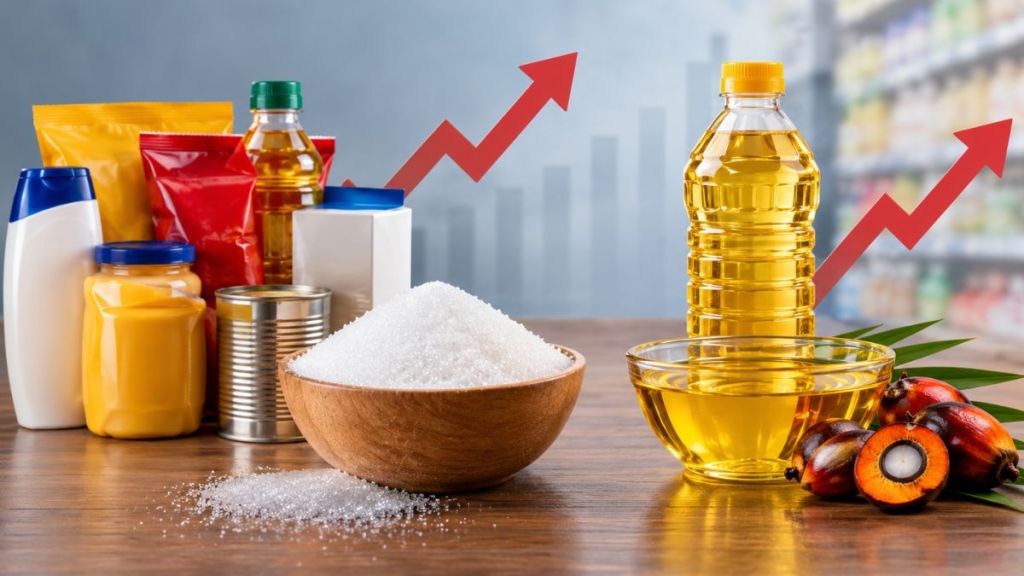

FMCG companies are grappling with a fresh wave of input-cost inflation. Earlier it was surging crude, and now it is sugar, cocoa, milk, edible oil and others on top of a weak monsoon that is troubling India’s FMCG firms. Analysts from Crisil, Elara Capital and Kotak Neo, whom financialexpress.com spoke to, said that “Sustained food inflation and volatile commodity costs are actively compressing gross and operating margins across the FMCG sector.”
Amit Agarwal, SVP, Fundamental Research of Kotak Neo said, “Gross margins for most names may decline year-on-year (YoY), as they use up high-cost crude and palm oil inventory and absorb inflation in sugar, tea, edible oils and other commodities. However, price hikes have partly offset this pressure.
“At the EBITDA margin level, A&P cuts and operating leverage should mitigate Gross Margins impact,” Agarwal added.
Here is a detailed look at what the rising inflation means for FMCG companies.
Price hikes ahead?
A new round of price increases for consumers is now expected due to rising input costs, as FMCG firms have already implemented price hikes of around 3-5% since the onset of the West Asia conflict.
“We expect companies to take price increases and focus on cost control (including reducing ad spend and promotions) to restrict a sharp fall in EBITDA margins. However, the full effect of price increases will be felt with a lag; hence, near-term margins will be under pressure,” Amit Purohit, Vice President at Elara Capital, said.
However, Aditya Jhaver, Director at Crisil Ratings, noted that with the festive season underway, “further price increases will be more calibrated.”
“Although urban consumption remains relatively resilient, inflationary pressures and uneven monsoons are beginning to weigh on rural demand, and this will limit the ability of firms to fully pass on higher costs. As a result, operating margins are expected to contract by 100-150 basis points in fiscal 2027,” Jhaver noted.
Jhaver pointed out that while personal and home care players continue to face pressure from elevated crude-linked input costs, food and beverage firms are now contending with higher prices of cocoa, sugar, milk, edible oil, maize and tea, along with weather-related disruptions. Logistics and packaging costs also remain elevated across segments.
Higher sugar price and elevated palm oil price does result in input cost pressure on FMCG companies particularly the biscuit category.
FMCG firms likely to post double-digit revenue growth amid price hikes
Revenue growth across the pack is expected to remain resilient. Amit Agarwal, SVP Fundamental Research of Kotak Neo said “most companies may deliver double digit revenue growth, aided by price hikes, a soft base (GST transition impact for a few names) and stable underlying demand.”