


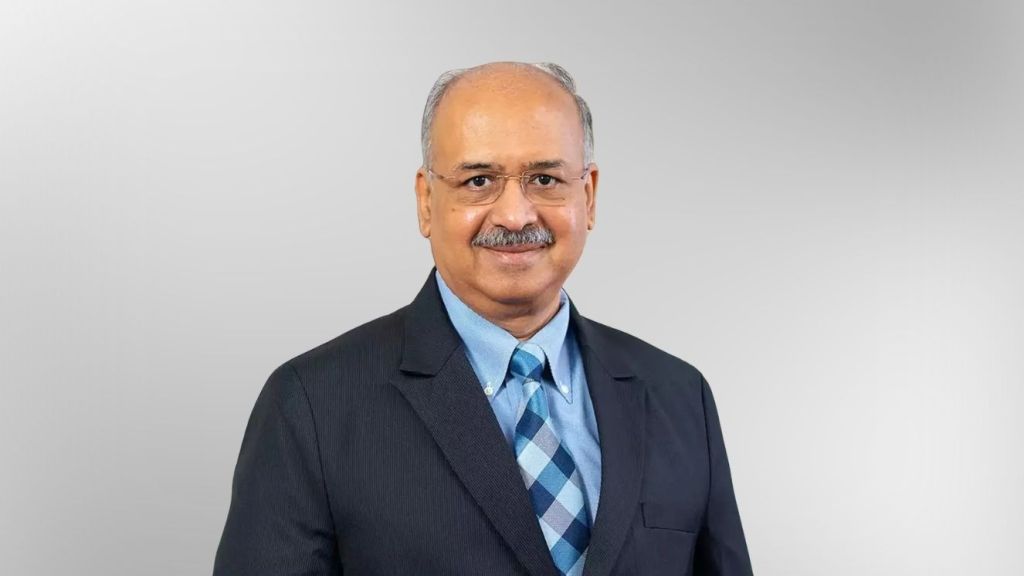

In 1983, Dilip Shanghvi set up Sun Pharmaceutical Industries with five psychiatry medicines, a two-person team and a Rs 10,000 loan from his father. Four decades later, he presides over India’s largest drugmaker and one of the world’s leading pharmaceutical companies. This year, Sun made its boldest move yet.
Its $11.75-billion acquisition of US-based Organon is the largest overseas buyout by an Indian pharmaceutical company and the biggest biopharma deal announced globally in 2026. Organon, a specialist in women’s health and established medicines, earns about $6.2 billion a year, roughly as much as Sun itself. The combined entity, with annual revenues of around $12.4 billion, would rank among the world’s top 25 drugmakers.
The deal would give Sun a leading position in women’s health, lift it into the global top ten in biosimilars and extend its reach to 150 countries. More significantly, it marks a decisive shift from generics powerhouse to diversified global pharmaceutical company, with innovative medicines increasingly at its core.
That transformation has been decades in the making. Shanghvi, who grew up in Kolkata in a family of pharmaceutical distributors, chose not to fight in crowded markets. Instead, he focused on specialised therapies, starting with psychiatry before moving into cardiology, gastroenterology and other chronic conditions. The strategy built a strong domestic franchise. When Sun went public in 1994, its issue was oversubscribed 55 times, a striking vote of confidence in a young company. Overseas expansion began in 1997 with the purchase of Caraco in the US.
The turning point came in 2015 with the $4-billion takeover of Ranbaxy, which made Sun India’s largest drugmaker and a major force in global generics. Ranbaxy came with serious regulatory and operational problems, and integrating it was anything but smooth. But Sun’s appetite for difficult acquisitions, and its ability to fix and scale them, became the defining feature of its growth.
More recently, the company has steered towards specialty and innovative medicines in dermatology, ophthalmology and oncology. Ilumya, for psoriasis, and Leqselvi, for severe alopecia areata, are the clearest markers of that shift. The acquisitions of Concert Pharmaceuticals in 2023 and Checkpoint Therapeutics in 2025 have deepened the innovation pipeline further.
Organon, therefore, is less a departure than a culmination. It brings Sun the global scale, commercial infrastructure and therapeutic breadth that would have taken years to build from scratch, and it does so at a moment when Indian drugmakers are seeking to move beyond low-margin generics.
The risks are real. Absorbing a business of Organon’s size across dozens of markets will test management bandwidth, and the additional debt taken on to fund the deal will need careful handling. Yet Sun has faced such tests before, and its record suggests it knows how to turn a difficult acquisition into a lasting advantage.
For turning a small psychiatry venture into a global enterprise, and for having the conviction to bet big once again, Sun Pharma is a worthy Company of the Year. Shanghvi’s journey from a Rs 10,000 loan to a $12.4-billion global ambition is one of the most remarkable stories in Indian business.