


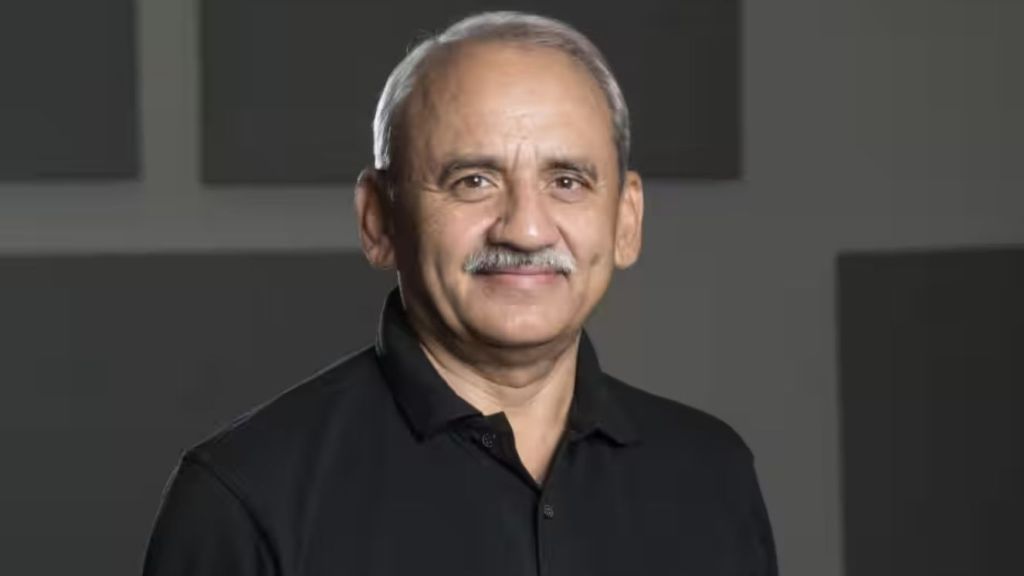

Bajaj Auto is sharpening its focus on premium motorcycles, exports and electric mobility to drive growth in FY27. Rakesh Sharma, Joint Managing Director, Bajaj Auto, talks to Akbar Merchant about the Pulsar revival, upcoming motorcycle brands, record export performance and the company’s strategy to balance market share with profitability. Excerpts:
Bajaj Auto remains outside India’s top three two-wheeler manufacturers. What are your priorities for regaining market share in FY27?
India’s motorcycle business accounts for around 19% of our overall business, while our international operations across 108 countries contribute substantially. In India, our focus is on motorcycles of 125cc and above, alongside electric scooters.
The sub-125cc segment has declined from around 50% of the motorcycle market five years ago to approximately 45% now. We prioritise profitability, with operating profitability at 20.9%, which we believe is best-in-class globally. Our entry-level products are priced at a premium, and we accept some market-share loss to protect margins.
Pulsar has faced market-share erosion. How is the refreshed portfolio performing?
Pulsar sells around 100,000 units a month, but parts of the portfolio had reached the end of their product cycles. We began refreshing the range with the 250cc models, followed by the 160cc motorcycles, and are now seeing a reversal of market-share erosion in the 150cc-plus segment.
The NS range is growing at roughly twice the market rate, while the classic range has also been upgraded. The contribution of new products to our 250cc-and-above portfolio increased from 7% in August to 26% in September and 34% during the first 16 days of the festive period. We expect the entire 125cc-to-400cc Pulsar portfolio to be refreshed by January 1.
What are your plans for the two new motorcycle brands in FY27?
One brand will target an emerging sub-segment with significant potential, identified through an understanding of India’s demographics and international markets. The second will strengthen our presence in the 125cc-to-150cc space. Both will complement Pulsar and address distinct market opportunities.
Is adventure motorcycling another growth opportunity?
Adventure and soft-adventure motorcycles account for around 7% of India’s market but are growing four times faster than the overall market. Through KTM adventure motorcycles and Triumph scramblers, we are leaders in this segment. KTM’s Dakar heritage, engineering and brand strength give us strong credentials.
Will Bajaj introduce another electric two-wheeler brand beyond Chetak?
Electric scooters account for around 25% of the scooter market, and penetration could reach 50% in three to five years. Chetak has five variants catering to different customer groups. We are open to a second brand if a distinct customer segment and usage pattern emerge, but we are not actively evaluating one at present.
We are also examining electric motorcycles for India and international markets. However, battery space and range remain challenges. On dealer margins, we see no immediate need for restructuring, as higher EV prices can support reasonable earnings even at similar percentage margins.
How have exports performed in H1 FY27, and which markets are driving growth?
Exports crossed 1.5 million units in H1, growing over 40% year-on-year and marking record performances for both the first half and the quarter.
Africa has been the biggest driver. While the industry grew around 35%, we grew 83%. Nigeria’s market has recovered to approximately 30,000-35,000 units a month from a low of 15,000, and our market share stands at 55-60%. Our share exceeds 50% in Kenya and is around 80% in Uganda. Ethiopia remains constrained by foreign-exchange restrictions.
Latin America is the second major growth driver. The industry grew around 12%, while we grew 44%, with Mexico, Colombia, Brazil, Central America, Argentina and Peru among our key markets. Sportier Pulsar and Dominar models also deliver a better product mix and higher margins.
In Asia, the industry declined around 7%, but our volumes grew 5%. In the Middle East and North Africa (MENA), industry volumes fell around 29%, while ours declined 24%, reflecting the impact of the war. Africa contributes around 50% of our international business, Latin America 35%, and Asia and MENA the remaining 15%.
How has Bajaj’s share of India’s motorcycle and three-wheeler exports changed?
Our share of motorcycle exports from India rose from 44% last year to 48% in H1 FY27, meaning nearly one in every two motorcycles exported from India carries the Bajaj brand. Our share of three-wheeler exports increased from 60% to 63%.
What are your key growth priorities going forward?
Our priorities are motorcycles in the 125cc-plus segment, international business, electric two-wheelers and electric three-wheelers. We see opportunities to gain share in India’s 150cc-plus segment, expand our presence in Africa and Latin America, build on our leadership in electric three-wheelers and strengthen our electric scooter business.