



India’s electric vehicle market held firm in November despite the expected post-festive cooldown, with the latest data from the Federation of Automobile Dealers Association (FADA) showing resilient underlying demand. Total EV retail sales came in at 14,850 units, a 17.75% month-on-month decline but a sharp jump from the 9,174 units sold in November 2024—marking a robust 61.87% year-on-year rise. EV penetration in the passenger vehicle segment improved to 3.8%, compared with 3.3% in October and 2.8% a year earlier.
Tata Motors leads the electric PV race
Tata Motors retained its leadership in the electric passenger vehicle space with 6,153 retail sales in November, comfortably ahead of rivals despite a sequential dip. JSW MG Motor followed with 3,693 units, while Mahindra secured third place with 2,966 units—reflecting one of the strongest growth trajectories in the category. Together, the top three players contributed over 85% of total EV retail volumes.
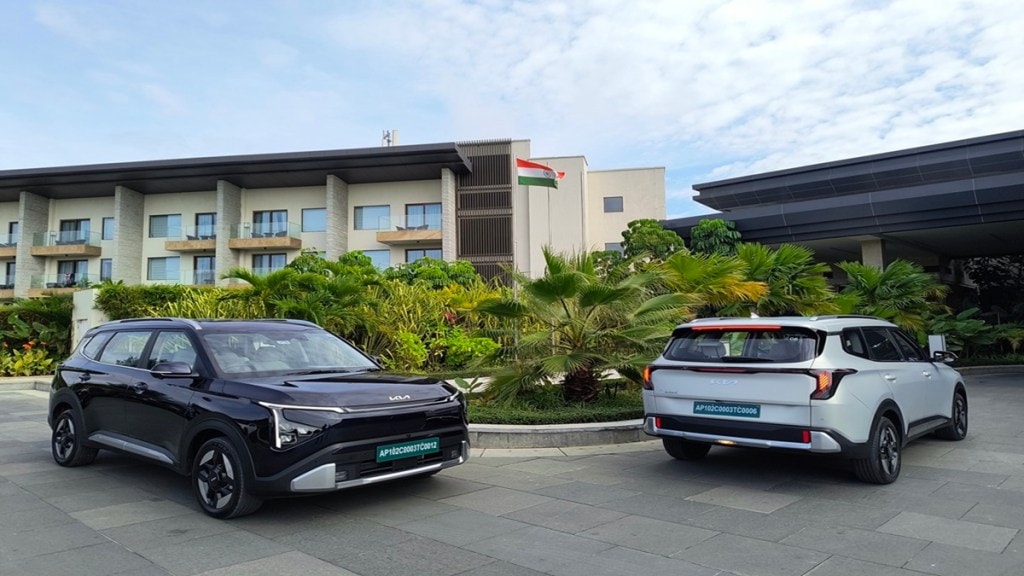
Several automakers posted significant year-on-year gains even as the market moderated sequentially. Kia and Hyundai, both expanded their EV portfolios this year, recorded sales of 464 units (up 527%) and 372 units (up 1,671%) respectively. BYD India retailed 425 units, growing 15.8% y-o-y, while new entrant VinFast delivered 291 vehicles, more than double its October volumes as it ramped up deliveries.
Premium segment players
In the premium segment, BMW led with 268 EVs, registering a 150% y-o-y jump. Mercedes-Benz retailed 69 units, lower than last year, while Tesla—still in an early rollout phase—delivered 48 vehicles, up 20% month-on-month.
Industry analysts expect the next leg of EV expansion to be fuelled by the rollout of new mass-market offerings such as the Mahindra XEV 9S, with upcoming models like the Maruti eVitara in 2026 likely to accelerate adoption further. FADA noted that the sequential decline in November was anticipated after a strong festive surge, adding that demand indicators remain positive as model choices widen, financing becomes more accessible and charging infrastructure improves.
Beyond passenger vehicles, the broader electric mobility ecosystem posted mixed trends. Electric two-wheeler retail slipped 2.51% y-o-y to 1,16,982 units despite continued momentum from TVS Motor, Ather Energy, Hero MotoCorp and Kinetic Green Energy.
The electric three-wheeler category remained a bright spot, rising 32% y-o-y to 83,683 units, led by Mahindra Group with 10,779 units—reflecting 51% y-o-y growth. The electric commercial vehicle segment saw the fastest expansion, surging 202% y-o-y to 1,698 units, albeit on a low base.