



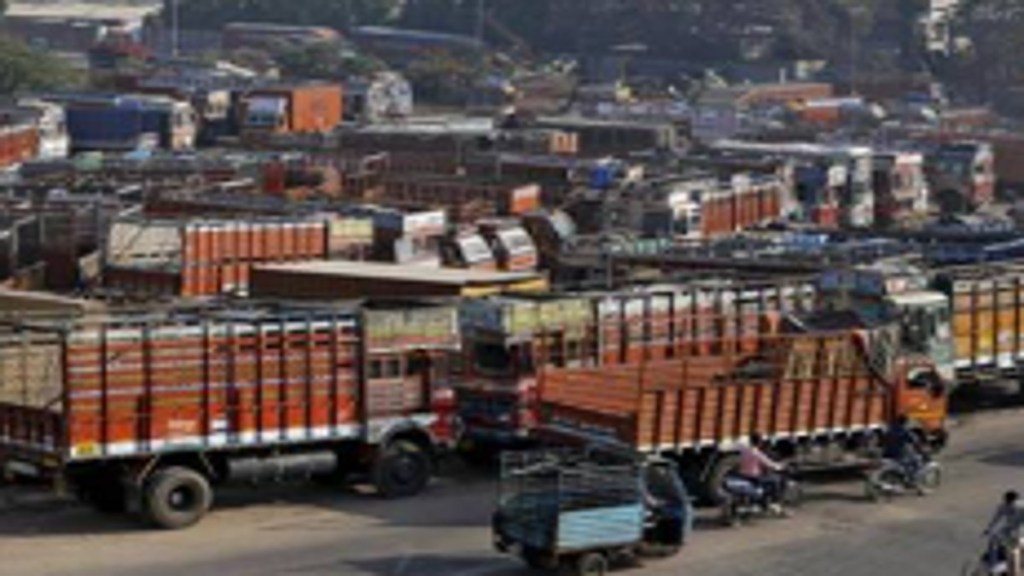
E-way bills generated in July by businesses for the movement of goods touched a record high of 104.86 million, surpassing the previous high of 103.55 million achieved in March this year. This suggests that collections of goods and services tax (GST) in August will be robust. E-way bills recorded a year-on-year growth of 19.2% in July as compared with 16.3% in June this year.
The surge in the generation of e-way bills is an indicator of better activity and consumption in the economy, say experts.
“In spite of Budget-related concerns in July, the e-way bill generation has shown a marginal increase month-on-month and a substantial increase on year. This shows the increasing economic activity through physical movement of goods, primarily by road transport,” said All India Transporters Welfare Association (AITWA) secretary general Abhishek Gupta.
With more goods being moved and sold, the uptick in e-way bills signals a sustained economic recovery, providing a positive outlook for the country’s fiscal health. “This momentum, if maintained, could lead to long-term economic stability and growth, reinforcing confidence in India’s economic resurgence,” said Sandeep Sehgal, partner-Tax, AKM Global.
An e-way bill is an electronic document generated on a portal, depicting the movement of goods, and confirming whether or not the tax has been paid. Under Rule 138 of the CGST Rules, 2017, any registered person responsible for the movement of goods, whether or not it is due to supply, must generate an e-way bill if the consignment’s value exceeds `50,000. This requirement applies to both inter-state and intra-state movements. However, individual states or union territories with legislatures have the authority to set their own threshold limits for goods moving within their boundaries.
The surge in e-way bills also reflects better compliance and strict anti-evasion measures in place. Due to the fear of vehicle seizure, confiscation of goods, penalty for even minor lapses during the movement of goods, businesses are now generating e-way bills regardless of the consignment’s minimum value, a tax expert explained.
Sehgal said that this surge in e-way bills, reflects uptick in manufacturing and distribution. “However, for a definitive conclusion, one needs to look into the data along with other economic indicators and not to be seen in isolation. Hence, we may need to look into the figures of GST collections going forward,” Sehgal added.