


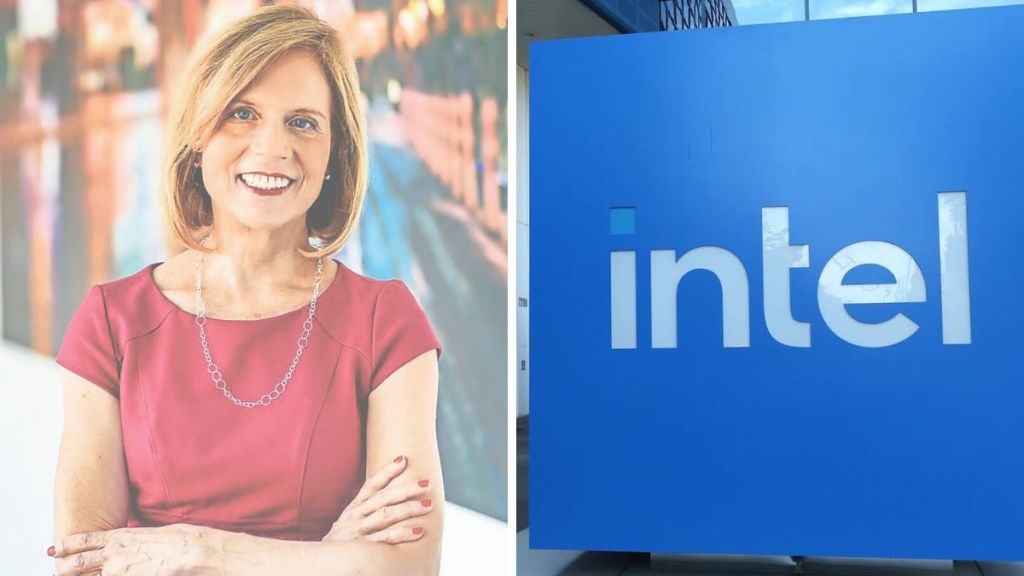

For large organisations, the AI challenge is shifting from experimentation to execution. The harder question now is not where the technology can be used, but what needs to change when it becomes part of everyday work – from employee skills and business processes to governance and decision-making. Intel is confronting this question internally as it expands the use of AI across its workforce. In this interview, Cynthia Stoddard, Intel’s senior vice-president and chief information officer, speaks to Sudhir Chowdhary about the lessons emerging from that transition, the productivity gains the company is tracking, and how AI could reshape the way organisations work. Excerpts:
How do you build an AI-first culture and make it part of employees’ everyday work rather than just another technology initiative?
It starts with leadership vision – a clear sense of how AI will be used across the organisation and how it serves the needs of different roles and personas. From there, communication is everything. Whether through formal training, internal chat groups, or informal conversations, employees need to understand what AI means for their work specifically. Equally important is giving people the time and space to learn and experiment. Comfort with technology comes through use, not instruction alone.
How is Intel approaching AI upskilling across a workforce with very different levels of technical expertise?
Through AI@Intel, we’ve built a comprehensive training programme that starts at the foundation – what AI is, how to use it – and then moves into persona-based training tailored to specific roles. The goal is to help people understand not just the tools, but how to apply them meaningfully to their work and how to create their own agents. We’ve also established a network of AI advocates embedded across business units globally. More than 1,000 employees have signed up, helping drive communications and peer learning from the ground up.
What are the early signs that this investment is translating into real productivity and business outcomes?
The measure we care about is not how frequently someone uses a tool – it’s whether the technology is actually changing how work gets done. We’re seeing strong adoption of the Gemini platform, employees building their own agents, and widespread use of Copilot across functions. But we track hard business metrics: ROI, cycle-time improvements, time-to-market gains. Those are the indicators that tell us AI is moving from experimentation to impact.
With Gemini rolling out across Intel, which use cases have shown the greatest potential so far?
Day-to-day productivity is where we’re seeing the strongest early traction – employees using AI to learn faster, prepare better, and operate differently. We’ve taken a staged approach to the rollout, beginning with productivity capabilities before expanding into data and coding tools. Across the development lifecycle, we’re already seeing measurable improvements in productivity, cycle times, and quality.
How do you balance employee experimentation with data security, IP protection and responsible use?
We’ve built a multi-layered architecture with security and governance at its core – covering safeguards, permission structures, data access controls, MCP controls, and observability that allows us to monitor and manage information access in real time. But technology can only go so far. Employees need to internalise their personal responsibility within that framework – understanding how to use AI ethically and what the boundaries are. Both layers are essential.
How is the shift in skills affecting hiring and talent development at Intel?
Our hiring plans haven’t changed, but the nature of roles is beginning to shift. Early analysis suggests that in certain areas, we’ll need more generalists rather than deep specialists. As AI takes on more of the sequential, specialised work within a function, the human role increasingly becomes about integration – connecting insights across a broader workstream, exercising judgement, and managing complexity end to end. We’re watching how that plays out and thinking carefully about what it means for how we develop our people internally.
What separates organisations that turn AI investments into business value from those stuck in endless experimentation, and what advice would you offer Indian organisations starting out?
My advice would be, “Don’t get trapped in proof of concepts.” Technology is moving too fast – what looks promising today may be obsolete in six months. Do enough experimentation to understand how to structure your approach, then commit: build a strong architecture, put real change management in place, and go after the business process itself. That last point is critical. Don’t just layer chatbots onto existing processes – question the process. Ask how AI can fundamentally transform the way work is done. That’s where the dramatic impact lives.
At the end of it, building an AI-first organisation comes down to four things: the right architecture, the right people and training, a willingness to rethink business processes, and the courage to move. AI transformation starts with people – and our goal is to give every employee the skills, mindset, and tools to make AI a natural part of how they work, learn, and innovate.