



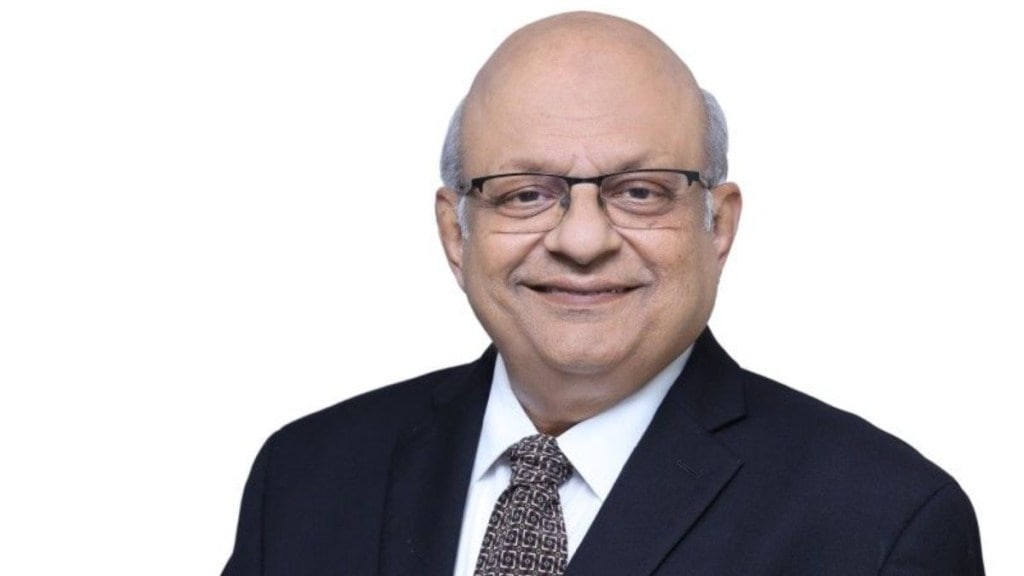
Natarajan Srinivasan, former CEO of CG Power & Industrial Solutions and Executive VC, Coromandel International, Murugappa Group, has captured the turnaround of CG Power in his book “The Great Revival”. Srinivasan tells Raghavendra Kamath, CG Power can achieve in four years what it earlier achieved in 75. Excerpts:
What prompted you to write this book?
CG Power had become an NPA and was required to reopen, recast, and re-audit its accounts. It was simultaneously under investigation by the CBI, ED, and SFIO. Then Covid struck, disrupting operations. Despite these challenges, the new management regained market share, returned to profitability, generated enough cash to become debt-free, and even paid dividends. I felt it was important to document this journey so that it could serve as a guide for anyone facing similar circumstances.
How did you handle the early turnaround when the accounts were in disarray?
Around 150 accounts had to be reopened and recast. Wherever records were missing—especially overseas—we retrieved them through contacts and banks, and in some cases reconstructed them. Within nine months, the entire recast was completed. We also centralised treasury operations to ensure payments and receipts ran smoothly even during lockdowns.
Srinivasan on what drives his confidence?
You’ve said CG Power can achieve in four years what it did earlier in 75. What gives you that confidence?
The company is now in a very strong financial position, and its plants are operating efficiently. Massive expansion projects are underway — doubling motor capacity, tripling transformer capacity, and doubling switchgear capacity. In addition, CG Power has forayed into the semiconductor OSAT (Outsourced Semiconductor Assembly and Test) segment. When all these come on stream in the next three to four years, the company will effectively add another CG Power in terms of turnover and volume.
Can you elaborate on the semiconductor OSAT plan?
I can only speak briefly since I’m no longer part of the company. OSAT is a critical part of the semiconductor value chain. Wafers by themselves cannot be used; they need to be configured for specific applications such as automotive or telecom. The process involves converting the wafer and integrating the required software. Without OSAT, semiconductors are unusable. CG Power is setting up an ₹8,000-crore greenfield OSAT facility—its single largest expansion to date.
Srinivasan on hybrid projects?
What opportunities do you see in hybrid projects, RTC power, and green hydrogen?
Most of CG Power’s products—tubes, motors, switchgear, transformers—have generic applications. They will continue to be in demand across any form of energy expansion. So, opportunities remain strong regardless of which specific technologies take hold.
Do exports offer a meaningful opportunity?
Our overseas operations have been closed, and we now export primarily from India. Exports already exceed ₹1,000 crore. However, domestic demand remains very strong, so the priority is to meet that first.
How do you view the renewed focus on thermal energy?
It’s a temporary phase. India’s power demand is rising fast, while renewable capacity isn’t keeping pace. Renewable power isn’t firm—solar works only during the day. Until large-scale energy storage comes on board, thermal additions will continue. Over time, though, the clean energy transition will hold firm.
Why hasn’t renewable capacity scaled as fast as expected?
Our transmission grid was designed for large thermal projects of 2,000–10,000 MW. Renewable projects, by contrast, come in smaller blocks of 20–60 MW and operate at different frequencies. The grid must therefore be upgraded to handle this diversity. Nearly ₹9,00,000 crore is expected to be invested over the next five to six years to strengthen it. If too much renewable power is pushed into the system before the grid is ready, it could collapse. That’s why authorities are synchronising additions carefully.