


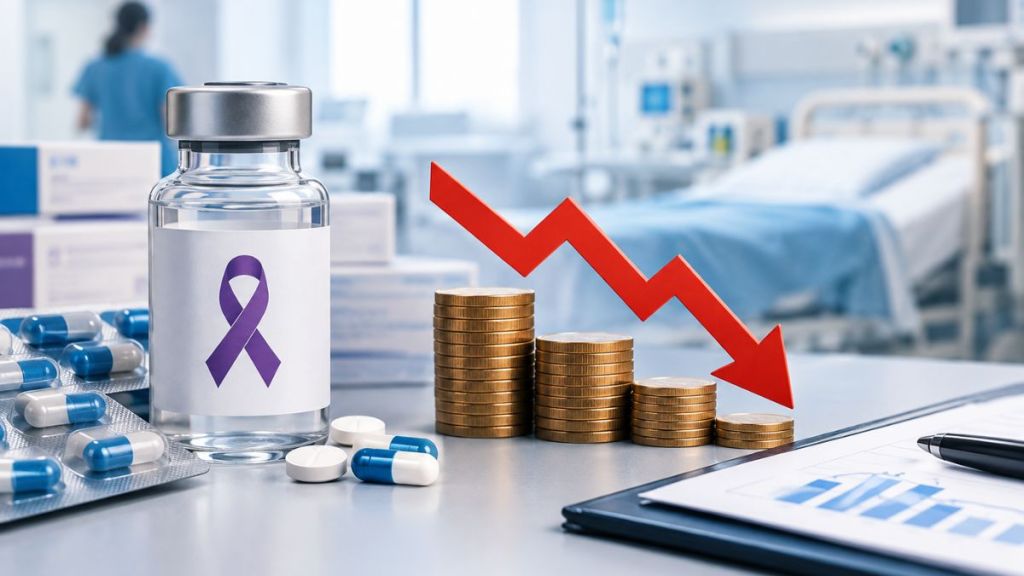

bThe government’s decision to cap retail margins at 30% on 137 non-scheduled anti-cancer medicines is expected to weigh on hospital profitability. According to brokerage firm JM Financial, the move could affect hospitals’ EBITDA by 1.5-3% due to lower trade margins.
“The impact is expected to be higher for premium multispecialty hospitals with greater oncology exposure, particularly Max Healthcare and Apollo Hospitals among our coverage names,” JM Financial added.
According to the National Pharmaceutical Pricing Authority (NPPA), the intervention aims to curb excessive margins without materially affecting legitimate revenues for pharmaceutical manufacturers. But what does it mean for hospitals?
Positive signal for healthcare sector
JM Financial views the development as positive for the healthcare sector. “It indicates that the government intends to keep the price-control measures restricted to oncology products rather than extend them to the broader pharmaceutical basket.”
However, the final hearing scheduled for October 27 will remain a key monitorable. It is expected to provide greater clarity on whether the proposed price-control measures will remain restricted to oncology products.
Government expands price controls on cancer drugs
The latest framework builds on the government’s 2019 initiative, when it capped trade margins on 42 anti-cancer medicines. That exercise resulted in maximum retail price (MRP) reductions of up to 90% across 526 brands.
The new framework covers a larger basket of 137 formulations. The list may also be revised periodically, allowing the government to update the medicines covered under the margin-control measures.
The move aims to make cancer treatment more affordable by limiting margins across the distribution and retail chain.
Revised prices to take effect from November 9
Pharmaceutical companies will have to publish revised price lists and circulate them to retailers and hospitals.
From November 9, hospitals and pharmacies will be required to charge the revised prices and display the updated rates at their outlets. Hospitals will also have to publish the revised prices on their websites.
State drug controllers will monitor compliance across the distribution chain to ensure that retailers and hospitals follow the revised pricing framework.
Hospitals may face margin pressure, but patients could benefit from lower drug prices. To prevent artificial shortages, drugmakers have also been directed to maintain existing production and supply levels. The aim of the directive is to ensure that patients continue to have uninterrupted access to the notified medicines as the revised prices come into effect.