


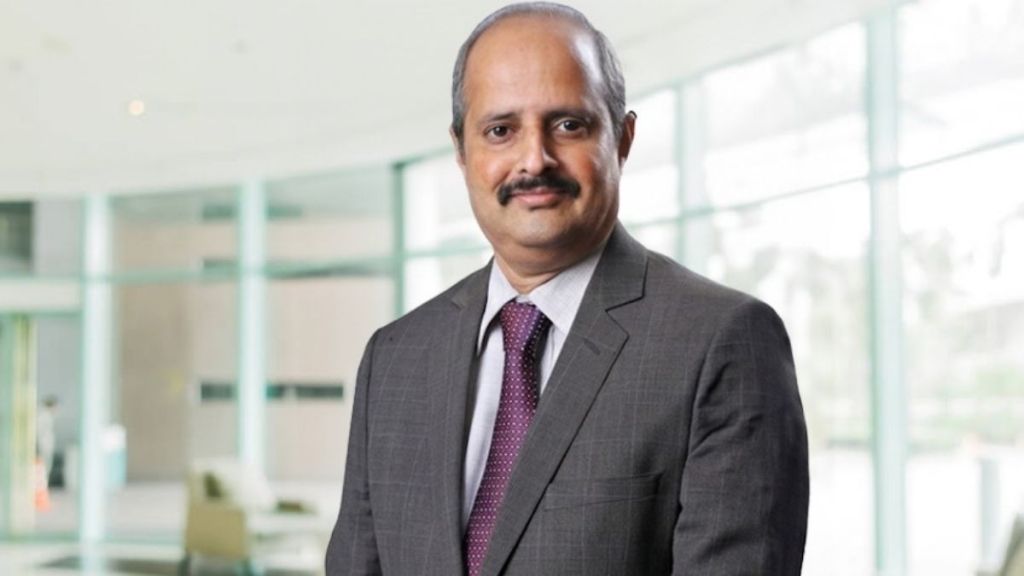

Generali Central Insurance Company, a joint venture between Italy’s Generali Group and state-owned Central Bank of India, expects significant changes in the distribution landscape following Irdai’s proposed distribution reforms. MD & CEO KG Krishnamoorthy Rao tells Narayanan V about the implications for bank-backed insurers, the pricing pressure in property insurance and why a one-size-fits-all approach to expenses of management (EoM) is not feasible for the industry. Excerpts:
Why did Generali Central’s gross direct premium income fall 17% during April-August?
The general insurance sector is facing some challenges this year, particularly because premium rates in some lines of business have been falling. This is evident in fire, property and engineering insurance. Even at the industry level, premiums in these segments have declined by 25-30%, which has had an overall impact on insurers’ performance. We have also witnessed negative growth in fire and engineering insurance.
Another segment where we were hoping to do good business this year was crop insurance. However, there has been a lot of rate competition in this line of business as well. Only a few states went for tenders this time, resulting in significant rate competition. Group health insurance is also facing considerable rate pressure because of competition. We decided to stay away from some of our own renewals because premium rates had fallen significantly, making it commercially unviable to write that business.
When do you think the pricing war will ease?
One of the reasons for the rate competition is the availability of significant capacity in the market, both on the reinsurance side and the direct insurance side. All insurers have very good treaty capacity, so most risks can be ceded to their treaties. This has led to some reduction in rates. The reinsurance market was also soft this year. It is a cyclical phenomenon. The market, particularly the reinsurance market, tends to soften for a year or two and then hardens again when losses occur. The situation may correct itself in next one or two years.
How will your distribution mix change following Irdai’s proposed reforms?
Around 9% of our business comes from bancassurance. Central Bank of India, one of our parent entities, is an important partner in this segment. Agency is one of our major channels, followed by direct-to-consumer and aggregators. To a large extent, banks have captive customers. So, even with these restrictions, banks should be able to provide insurance cover to their customers. The regulator is only trying to ensure that banks do not push products that customers do not want. I think this will bring greater transparency and help ensure that customers are not burdened with products they do not need. That said, distribution channels could undergo some changes because some of them may find it difficult to sustain their existing cost structures with the reduction in commissions. We need to see how these channels address that challenge.
The EoM limit for general insurers has been reduced to 20%. Is this achievable?
This is one point we would like to take up with the regulator. Having the same EoM percentage for all players may not be the right approach, because small and mid-sized players might have to incur higher expenses, even to grow their business. Their expenses as a percentage of topline could be higher than the prescribed EoM limit. We would request the regulator to prescribe different EoM limits depending on the size of the companies.
Regardless of the size of the company or its premium income, there are mandatory departments required by the regulator, such as compliance, actuarial, secretarial and legal. These require adequate manpower and qualified staff. Second, companies, irrespective of their size, have to build their IT infrastructure and spend money on it. Whether you are a small or a large company, this expenditure is more or less the same for all players. All these expenses have to be incurred by companies, but those with lower gross direct premium income will have a higher expense ratio.
This will create challenges for smaller players because they may not be able to expand their distribution networks. Once a company achieves a certain baseline, some year-on-year reduction in the EoM limit can be considered. But a 5% reduction after two years is a very, very ambitious target.