


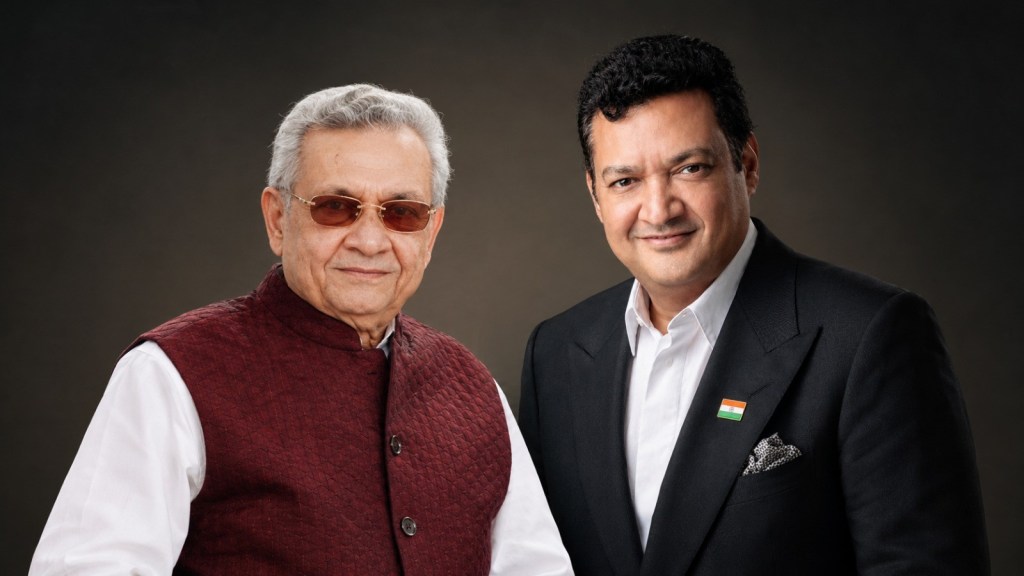

On a humid morning in Rampur, sometime in 1996, Lalit Khaitan stood inside a factory that his family had owned for nearly twenty-five years and realised the business was slowly killing itself.
The plant was running. The stills were hot. Trucks were loading. But the money was terrible. Rampur Distillery & Chemical Company was selling bulk Extra Neutral Alcohol to the big boys, the UB Groups and the Shaw Wallaces of the world, and those buyers were squeezing every last paisa out of him. They set the price. He took it. That was the deal. That had always been the deal.
He was in his early fifties. His father had bought this plant for ₹16 lakh in 1972, back when it was a loss-making mess that nobody wanted. The family had poured everything into it. And now, after all those years, the business was still just a supplier. Still begging for orders. Still one bad contract away from real trouble.
Lalit Khaitan had a choice to make. Keep selling alcohol in steel tankers to people who didn’t care whether he lived or died. Or try something that no independent Indian distillery had really done before.
Build his own brand.
He didn’t drink. His family didn’t drink. His father G.N. Khaitan was a strict teetotaller from a conservative Marwari background, the kind of family where alcohol was simply not discussed at the dinner table.
Lalit himself had only tasted alcohol for the first time at age 29 and that too only because his father had just bought a distillery and he figured he should probably know what the product actually tasted like.
But he knew the chemistry. He knew the distillation. He knew the margins. And he knew, with a clarity that must have been almost physical, that the real money in liquor was not in making it. It was in selling it under your own name.
That decision, made in the mid-1990s in a dusty Uttar Pradesh factory town, would eventually turn a ₹16 lakh distressed asset into a company worth nearly ₹60,000 crore. It would put a teetotaller on the Forbes billionaires list at age 80.
And it would prove that you didn’t need to buy brands to build a liquor empire. You could grow them yourself, from nothing, in a country where the rules were stacked against you from day one.
The boy who wanted to make liquor
Lalit Kumar Khaitan was born on June 2, 1943, in Kolkata. His father, Gajanand Khaitan, was a Marwari businessman from a traditional trading family. The Khaitans were not drinkers. This is important. In their world, alcohol was not a business opportunity. It was a moral failing.
But something strange happened to Lalit when he was in class 9. He became fascinated by the liquor trade. Not the drinking part. The industrial part. The chemistry of distillation. The economics of supply. The way alcohol moved from factory to bottle to shop to customer. While other boys his age were thinking about cricket or studies or girls, Lalit Khaitan was thinking about fermentation.
“From class 9 onwards, I was very clear that I wanted to be in the liquor trade,” he told Fortune India years later, in an interview that has been reprinted multiple times since.
His family sent him to Mayo College in Ajmer, one of India’s oldest and most prestigious boarding schools. Then to St. Xavier’s College in Kolkata. Then to BMS College of Engineering in Bengaluru, where he got his Bachelor of Engineering degree. Later, he would do an executive course in managerial finance and accounting from Harvard.
He was being trained for business. But not this business. Not the liquor business. That came later, and it came sideways.
In 1972, when Lalit was 29, his father G.N. Khaitan did something unexpected. He bought a distillery. Not a good one. Not a profitable one. A loss making, debt burdened, barely functioning plant in Rampur, Uttar Pradesh, that was being sold by industrialist Vishnu Hari Dalmia. The price was ₹16 lakh. The liabilities were significant. The future was uncertain.
G.N. Khaitan was not buying a business. He was buying a distressed asset that he believed he could fix. His son would run it.
Lalit moved to Rampur. He learned distillation engineering from the inside. He studied chemical formulas. He understood the process of turning molasses into Extra Neutral Alcohol, the clear, odourless spirit that forms the base of almost every liquor bottle in India. He did all this without drinking a drop. The Teetotaller son of a Teetotaller father was now running a liquor factory.
The commodity trap
For the next two decades, Rampur Distillery did what every other independent distillery in India did. It made bulk alcohol and sold it to the big brands. UB Group. Shaw Wallace. Mohan Meakin.
These were the companies with the labels, the distribution networks, the advertising budgets. They bought ENA from suppliers like Rampur, blended it, bottled it, and sold it at prices that were five, ten, twenty times the cost of the raw spirit.
The distillery was a B2B supplier in an industry where the real margins sat at the consumer end. Rampur was making the product but capturing almost none of the value.
By 1979, the company’s total annual turnover was ₹65 lakh. That was it. A single plant in Uttar Pradesh, selling bulk spirit to bigger players, earning thin margins on volume. The business survived, but it didn’t grow. It couldn’t grow. The model didn’t allow it.
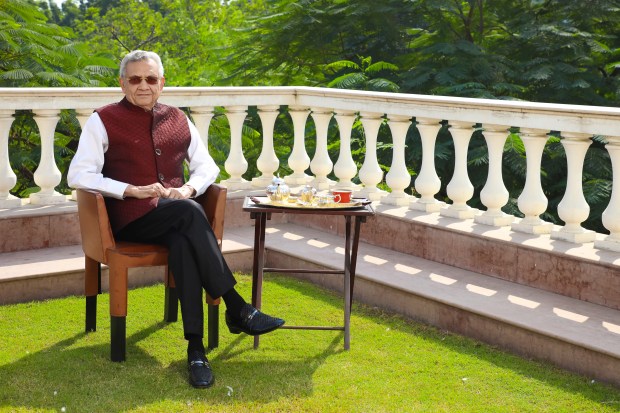
Lalit Khaitan understood this. He had understood it for years. But understanding a problem and being able to fix it are two different things. Building a consumer brand required money he didn’t have, distribution networks he didn’t control, and marketing expertise his family had never needed. The safe option was to keep supplying. Keep the plant running. Keep the workers paid. Hope for the best.
He kept supplying. For twenty years. Until the mid-1990s, when the pressure became unbearable.
The problem everyone else accepted
The Indian liquor industry in the 1990s was a strange beast. Every state controlled its own alcohol policy. Taxes were high. Regulations were tangled. Distribution was often controlled by state governments. And the market itself was dominated by brown spirits, whisky and rum, consumed mostly by men in lower and middle income groups.
White spirits, vodka and gin, were niche products. Expensive. Urban. Almost foreign. Vodka made up a very insignificant portion of total Indian liquor consumption. Nobody in their right mind would build a business around it.
The big players, UB and Shaw Wallace, had built their empires on whisky and rum. They bought their ENA from suppliers like Rampur, blended it with flavouring and colouring, and sold it under brand names that everyone knew. McDowell’s. Bagpiper. Old Monk. These were the brands that mattered.
The fundamental problem that Lalit Khaitan spotted was simple. The distilleries were doing all the hard work and capturing none of the profit. They were manufacturers without brands. Workers without ownership. The value chain was broken, and everyone accepted it because that was how things had always been.
But Lalit had a son. Abhishek Khaitan, born in 1973, had grown up around the distillery business. He had seen the contracts. He had seen the margins. And he had an idea that would have seemed insane to anyone else in the industry at the time.
Why don’t we make our own whisky?
The Eureka moment
The year was 1997. Abhishek was in his mid-twenties. He had watched his father struggle with the commodity business for years. He had seen the balance sheets. He knew that Rampur Distillery was one bad year away from serious trouble.
His proposal was simple but radical. Launch a proprietary whisky brand. Price it in the upper regular segment, above the cheap stuff but below the premium imports. Blend it with a touch of imported Scotch to give it credibility. And use the family’s own distillation capacity to keep costs low.
The name came easily. 8PM. The time when working India stops working and starts drinking.
Lalit listened. He thought. And then he made the call that would define the rest of his life.
The family committed its working capital to the launch. Industry observers thought they were crazy. An independent distillery, with no brand experience, no marketing muscle, no distribution network beyond bulk tanker sales, was going to compete with UB and Shaw Wallace in their own backyard? With what money? With what expertise?
With guts, mostly. And with a factory that could produce the spirit at cost.
One Million cases in year one
8PM launched in 1998. The price point was smart. The quality was decent. The distribution started in the Canteen Stores Department, the armed forces canteen network that was a reliable and profitable channel for any new liquor brand. From there, it spread to state retail networks in North India.
The response was immediate. 8PM sold one million cases in its first twelve months. One million. In a market where established brands took years to reach that level, a brand new whisky from an unknown Uttar Pradesh distillery had done it in a year.
It entered the Limca Book of Records. Not as a gimmick. As a genuine business achievement. No Indian liquor brand had ever sold a million cases in its debut year.
The significance went beyond the numbers. 8PM proved that an independent distillery could launch, market, and distribute a consumer brand without relying on multinational partnerships or acquisitions. It proved that the Khaitans could be more than suppliers. They could be brand owners.
The revenue started to shift. Instead of selling ENA in tankers at thin margins, Rampur was now selling bottled whisky at retail prices. The difference in profitability was enormous. The company was still small by industry standards, but the direction was clear.
Ahead of the launch of its flagship 8PM whisky in 1998, Rampur Distillery & Chemical Company adopted the name Radico Khaitan, marking a new chapter in its journey. The name change mattered. It signalled that the company was no longer just a distillery. It was a brand house.
The bet that changed everything
If 8PM was the breakthrough, Magic Moments was the bet that changed the trajectory of the entire company.
In 2005, Abhishek Khaitan proposed something that made 8PM look like a conservative decision. He wanted to launch a vodka brand.
Vodka. In India. In 2005.
The category didn’t exist. Vodka was less than 2% of the Indian liquor market. It was seen as a foreign drink, consumed by a tiny urban elite who ordered it in five-star hotel bars. No Indian company had tried to build a domestic vodka brand at scale. The big players weren’t interested. The market was too small, too niche, too uncertain.
Vodka before its time
Abhishek saw something different. He saw changing lifestyles. Young Indians with disposable income. Urban professionals who wanted to drink something lighter, something that didn’t smell on their breath the next morning, something that mixed well with juices and sodas and felt modern. He saw a category that didn’t exist yet but was about to explode.
The investment was significant. Multi crore spending on imported frosted glass bottle tooling. A distinctive guitar shaped window in the bottle design. Direct printing technology that was new to Indian spirits packaging. Specialized grain distillation infrastructure to produce the clean, neutral spirit that vodka demanded.
Industry analysts were sceptical. Why invest so much in a category that barely existed? Why not focus on whisky, where the volume was?
The answer, again, was backward integration. Radico made its own ENA. It controlled the supply chain from grain to bottle. It could produce vodka at a cost that competitors couldn’t match. And if the category grew, Radico would be positioned to dominate it.
Magic Moments launched in 2006 The frosted bottle with the guitar shaped window stood out on shelves. The branding was modern, youthful, aspirational. It didn’t feel like an Indian liquor brand. It felt like something from a global playbook.
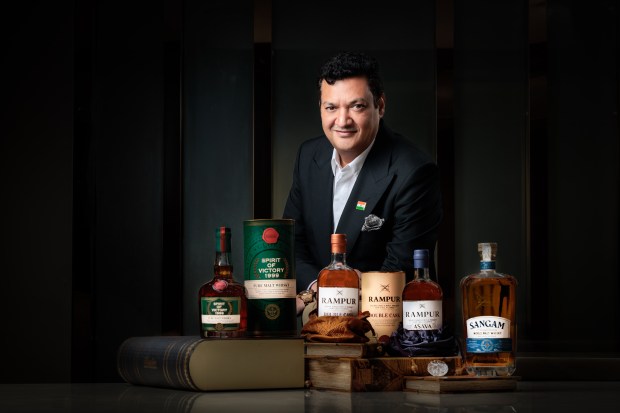
The category grew. Faster than anyone expected. And Magic Moments grew with it.
Today, Magic Moments commands more than 60% of the Indian vodka market. Sixty percent. In a category that barely existed twenty years ago. The brand sells millions of cases every quarter. In Q1 FY27 alone, the Magic Moments franchise moved 3.25 million cases, up 43% year on year.
The sceptics were wrong. The bet paid off. And Radico Khaitan became the company that defined Indian vodka.
The Comeback
The architects of Radico’s turnaround were father and son. Lalit Khaitan brought the financial discipline, the conservative Marwari approach to money, the ability to stretch every rupee. Abhishek Khaitan brought the brand vision, the consumer insight, the willingness to bet big on categories that didn’t exist yet.
The strategy had three parts.
First, shift from contract manufacturing to consumer branding. Stop selling ENA to competitors. Start selling bottled spirits under your own name.
Second, leverage backward integration. Radico made its own ENA. It controlled the supply chain from raw grain to finished bottle. This meant lower costs, better quality control, and margins that competitors couldn’t match.
Third, premiumise. Move up the value chain. Launch brands in the Prestige & Above category, where margins were higher and growth was faster. Magic Moments and Morpheus Brandy were the early bets. Rampur Single Malt and Jaisalmer Gin would come later.
The results speak for themselves.
Key numbers
| # | Number | What It Tells Us |
|---|---|---|
| 1 | ₹1.6 million (₹16 lakh) | Price paid for the Rampur plant in 1972. The branded launch used internal cash, amount not disclosed |
| 2 | 24 | Abhishek’s age when the branded business began in 1997 |
| 3 | 8 PM Whisky, Rampur, 1998 | First product, bottled on basic Italian machines |
| 4 | 1 million cases | 8 PM’s first-year sales, a Limca Book entry per the company |
| 5 | ₹6,050.43 crore | FY2026 net revenue, the highest reported |
| 6 | ₹850+ crore | Sitapur plant capex. No acquisition or fundraise is reported |
| 7 | ₹737.1 crore | Debt at the March 2024 |
| 8 | ₹600.3 crore | FY2026 net profit, nearly three times FY2023’s |
| 9 | ₹60,000 crore | Market capitalisation today |
The Company Today
Radico Khaitan today is not the company it was in 1998. It is not even the company it was in 2018.
For the financial year ended March 2026, the company reported net revenue from operations of ₹6,050.4 crore, up 24.7% year on year. EBITDA crossed ₹1,000 crore for the first time, reaching ₹1,018.5 crore, up 52.4%. Profit after tax stood at ₹600.3 crore, up 75.9%.
The market capitalisation as of September 2026 is approximately ₹59,756 crore to ₹60,766 crore, roughly $7.2 billion. The stock trades at 4,562 when I’m writing this. The business mix has shifted dramatically. As per FY26 Q1 numbers, Prestige & Above spirits now account for 76.8% of total IMFL revenue. The luxury segment, Rampur Single Malt, Jaisalmer Indian Craft Gin, Magic Moments Dazzle, is the fastest growing part of the business. After Dark Blue Whisky, a relatively new brand, saw volume grow over 60% in FY26 to 3.1 million cases.
The company operates two primary owned distilleries in Rampur and Sitapur, both in Uttar Pradesh. It has a joint venture distillation plant in Aurangabad, Maharashtra, where it holds a 36% stake. It runs 42 bottling plants across India. It exports to over 100+ countries.
Net debt as of Q1 FY27 stood at ₹106.1 crore, down ₹138 crore during the quarter alone. The company is guiding towards net debt free status in FY2027.
The biggest competitor is United Spirits Limited, the Diageo controlled giant that dominates the Indian whisky market. But in vodka, Radico is the undisputed leader. In luxury gin, Jaisalmer commands roughly 50% of the craft gin category.
What Radico Khaitan really built
Radico Khaitan changed the Indian liquor industry in three fundamental ways.
First, it democratised white spirits. Before Magic Moments, vodka in India was an imported luxury, consumed by a tiny elite. Radico proved that an Indian brand could dominate the category, make it accessible, and grow the market from almost nothing to millions of cases a year.
Second, it proved that Indian distilleries could build luxury brands. Rampur Single Malt and Jaisalmer Indian Craft Gin are not budget products. They compete with international brands at premium price points. They have won awards at global competitions. They demonstrate that Indian spirits can stand alongside Scottish whiskies and London gins.
Third, it created a model for organic brand building that the rest of the industry is still trying to replicate. While competitors acquired brands to fill portfolio gaps, Radico built everything in house.
All eight of its millionaire brands, 8PM, Magic Moments, Morpheus, Old Admiral, Contessa, Rampur Single Malt, Jaisalmer Gin, and 1965 Spirit of Victory, were created from scratch. No acquisitions. No borrowed equity. Just patient capital and brand vision.
The industry today is different because Radico Khaitan exists. White spirits are a mainstream category. Premium Indian brands compete with global giants. Independent distilleries know they don’t have to accept the commodity trap. There is another way.
The next generation
Dr. Lalit Khaitan continues as Chairman and Managing Director at age 83. His son Abhishek Khaitan, leads the company as Managing Director. Rather than following a path laid out for him, Abhishek has forged his own way, building the expertise and leadership skills needed to steer the business forward and shape its next phase of growth.
The transition has been smooth, structured, and free of the public disputes that have plagued so many Indian family businesses.
The Khaitan family holds approximately 40% of the company’s equity. As of the time of writing, domestic institutional investors hold around 28.1% of the company, while foreign institutional investors hold approximately 18.2%.
The company’s experienced leadership team includes Dilip Banthiya (Chief Financial Officer), Dinesh Gupta (Senior Vice President), Sanjeev Banga (President, International Business), Kunal Madan (Chief Marketing Officer), and Sudhir Upadhaya (Chief Sales Officer), several of whom have been associated with the company for over 15 years.
The company has professionalised without losing the family character. Lalit provides the strategic oversight and financial discipline. Abhishek drives the brand and growth agenda. The combination works.
The last word
The story of Radico Khaitan is ultimately not just about one man. Lalit Khaitan had the courage to walk away from the commodity trap and the discipline to build patiently for decades. But Abhishek Khaitan gave that foundation a new direction.
From the decision to build 8PM to the audacious bet on Magic Moments when vodka was barely a market in India, he saw opportunities where others saw risk. Father and son brought two very different strengths to the same table: Lalit’s patience, financial discipline and long-term thinking, and Abhishek’s instinct for brands, consumers and the next big opportunity.
That combination turned a ₹16 lakh distressed distillery into a ₹60,000 crore liquor empire. Lalit built the foundation. Abhishek helped turn it into the company it is today.
And perhaps that is the most remarkable part of the Radico story: it wasn’t simply inherited wealth being passed from one generation to another. It was a business rebuilt, bottle by bottle, by two generations who dared to think differently.