


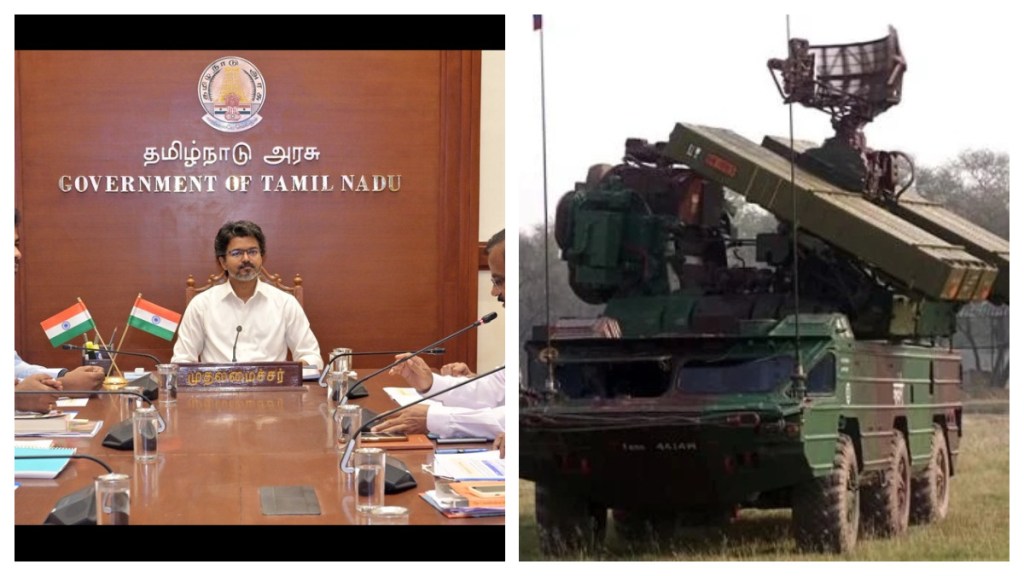

Tamil Nadu has stepped up its campaign to position itself as a major aerospace and defence (A&D) manufacturing hub, using an outreach programme in Madurai to underline the scale of opportunity opening up in India’s fast-growing defence sector. Officials of the Tamil Nadu Defence Industrial Corridor (TNDIC) and Tamil Nadu Industrial Development Corporation (TIDCO) presented the State’s case before industry participants, pitching it as a serious destination for fresh investment and manufacturing expansion.
The pitch was built around the wider national opportunity, with officials pointing out that India’s defence production crossed Rs 1.54 lakh crore last year and exports stood at more than Rs 38,000 crore. Against this backdrop, the Centre’s target of Rs 3 lakh crore in defence production and Rs 50,000 crore in exports by 2029 has opened a large window for states that can offer infrastructure, policy support and industrial capacity.
Tamil Nadu is seeking to be one of the biggest beneficiaries of that push. By aligning its industrial ecosystem with the country’s defence manufacturing ambitions, the State hopes to attract a larger share of investments, anchor projects and export-oriented production, while building on its existing strengths in engineering, precision manufacturing and supply-chain readiness.
Officials pointed to multi-billion-dollar opportunities across a wide array of defence and aerospace programmes. These include Future Ready Combat Vehicles, Future Infantry Combat Vehicles, the Advanced Medium Combat Aircraft, Medium Role Fighter Aircraft, and submarine programmes, alongside maintenance, repair and overhaul (MRO), propellants and the space sector. They said such programmes create large opportunities for the State’s micro, small and medium enterprises (MSMEs) and large manufacturers to integrate into domestic and global supply chains.
Supporting MSMEs and supply-chain integration
Tamil Nadu emphasised facilitating entry of MSMEs into defence supply chains through vendor development programmes and common facility centres. “These programmes offer substantial opportunities for Tamil Nadu’s MSMEs and large manufacturers to become part of domestic and global supply chains,” officials said, stressing the need to reduce barriers to entry and to build supplier capabilities across Tier‑1 and Tier‑2 vendors.
Under the Tamil Nadu Aerospace and Defence Industrial Policy, the State has introduced measures to incentivise industry participation, including higher capital subsidies, certification support, vendor development programmes, common testing infrastructure and Centres of Excellence for advanced manufacturing. The government has also partnered with academic and research institutions such as IIT Madras and the Defence Research and Development Organisation (DRDO) to improve access to technology and accelerate product development.
Leveraging national schemes and indigenisation platforms
Tamil Nadu govt officials urged companies to use central initiatives such as Innovations for Defence Excellence (iDEX), DRDO’s Technology Development Fund, technology transfers from DRDO and the Srijan indigenisation portal to fast-track technology development and procurement. The State stressed the importance of aligning local industry capabilities with central indigenisation goals to maximise participation in procurement and exports.
Infrastructure push: Defence Industrial Corridor and testing facilities
Tamil Nadu is investing in specialised infrastructure under the Defence Industrial Corridor, including aerospace and defence parks, engineering and innovation centres, common testing facilities and dedicated Centres of Excellence.
“We are building testing infrastructure and common facilities to reduce entry barriers for MSMEs and startups,” state govt officials said, underlining the role of concentrated industrial clusters in attracting anchor investors and integrated value chains.
Skills, accreditation and certification
Skill development is a core component of Tamil Nadu’s strategy. Officials noted initiatives to align vocational training and higher education with defence industry needs, particularly in engineering, advanced manufacturing and MRO skills. Certification support and assistance for compliance with defence quality standards were highlighted as critical enablers for suppliers to qualify for defence contracts.
Outreach, investor engagement and upcoming summit
The Madurai programme formed part of a wider outreach series that will visit Coimbatore, Hosur, Tiruchi and Chennai ahead of the National Departmental Summit on Aatmanirbharata in Defence Manufacturing – Promoting State Ecosystems, scheduled in New Delhi on August 20–21. The summit aims to strengthen state-level aerospace and defence ecosystems, align them with national indigenisation objectives and produce state-specific action plans.
Tamil Nadu has submitted a detailed presentation covering its Aerospace and Defence Industrial Policy 2022, proposed defence manufacturing clusters, anchor investor engagements, Defence Testing Infrastructure Scheme (DTIS) facilities, common infrastructure, skill development initiatives and areas where central support is requested.
Export opportunities and global supply chains
With global demand for defence equipment rising and India promoting exports, Tamil Nadu officials emphasised the State’s strategic advantage in tapping export markets. They argued that improved testing infrastructure, certification support and linkages with central indigenisation platforms would enable local manufacturers to meet export-quality benchmarks and compete internationally.
By combining targeted policy incentives, infrastructure investment, academic and DRDO partnerships, and a focused outreach campaign across industry hubs, Tamil Nadu aims to convert India’s Rs 3 lakh crore defence production target into concrete industrial development within the State. Officials maintained that a coordinated effort across government, industry and academia can position Tamil Nadu as a competitive node in India’s defence manufacturing and export ecosystem.