


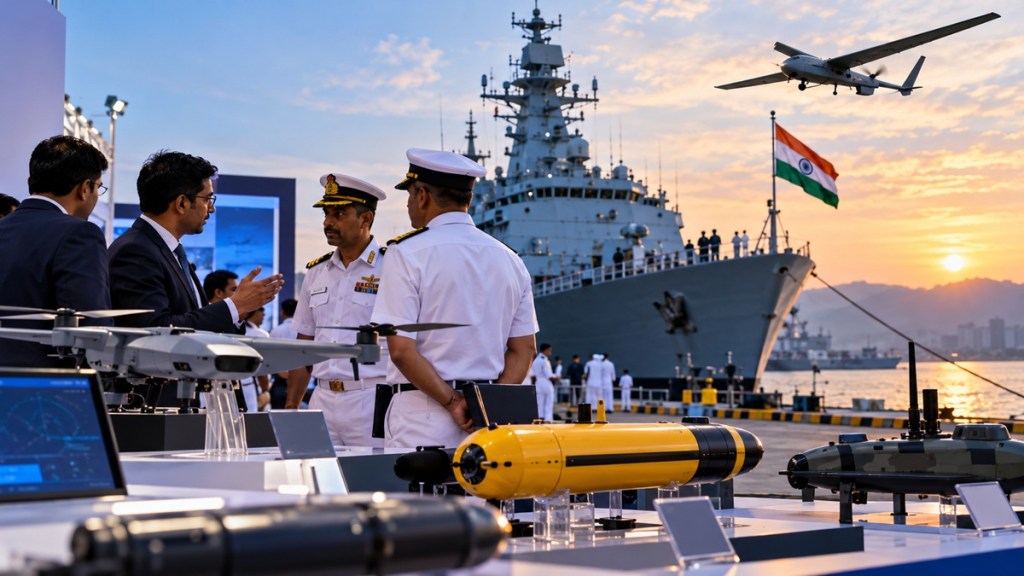

The Indian Navy has signed 25 contracts worth more than Rs 1,900 crore with startups and micro, small and medium enterprises (MSMEs) under its innovation programme, while 41 Acceptance of Necessity (AoN) cases worth over Rs 3,500 crore remain in the pipeline. The figures mark a key stage in the Navy’s push to develop indigenous defence technologies. The next challenge is whether smaller companies can turn these opportunities into sustainable businesses.
At Swavlamban 2026, the Navy confirmed the contract and approval figures, shifting the focus from innovation challenges and prototypes to procurement, manufacturing and execution. For defence startups, the central question is no longer just whether they can develop new technologies, but whether they can deliver them at scale, meet military requirements and build a reliable revenue stream.
From innovation to commercial orders
The Navy’s innovation programme has supported the development of technologies across areas including sensors, autonomous systems, directed-energy systems, quantum positioning and other naval applications. The latest figures point to progress in moving indigenous technologies towards procurement.
Since the launch of Swavlamban in 2022, Navy-specific iDEX challenges have increased from 20 to 229, accounting for approximately 35% of all iDEX challenges across the defence sector. More than 4,000 proposals have been submitted against the 229 challenges, according to the Defence Ministry’s announcement.
The Navy has recorded 41 AoN cases worth over Rs 3,500 crore and signed 25 contracts valued at more than Rs 1,900 crore. However, the two figures represent different stages of the procurement process. An AoN is an in-principle approval and should not be treated as a signed contract or guaranteed revenue.
The next step is to establish which startups and MSMEs have secured the contracts, the value of individual awards and the extent to which these agreements are translating into actual business for the companies involved.
Can smaller firms deliver at scale?
Winning a defence contract is only one part of the commercial challenge. Companies must also demonstrate that they have the manufacturing capacity, working capital, quality systems and supply chains needed to meet the armed forces’ requirements and delivery schedules.
For startups moving beyond prototype development, fulfilling procurement commitments can require investments in production facilities, engineering teams, testing and supplier networks. Companies may also need additional funding or partnerships with larger defence manufacturers to expand production and manage execution risks.
The value of the contracts signed by the Navy provides an indication of procurement activity, but the aggregate figure alone does not reveal how the awards are distributed among companies or whether individual recipients have the capacity to execute them. The extent to which payments and revenues depend on contractual milestones is another important consideration in assessing the quality of these orders.
For investors and the wider defence industry, these details matter because a company’s ability to secure an initial contract does not necessarily establish that it can manufacture at scale, deliver on time or generate sustained profits.
From one Navy order to repeat business
The longer-term opportunity lies in whether startups can use their initial contracts as a foundation for repeat orders and expansion into other markets. Technologies developed for naval applications could potentially find opportunities across the Army, Air Force and export markets, depending on their specifications and the requirements of prospective customers.
But such expansion would depend on product performance, successful induction, production capacity and the ability to meet different customers’ technical and procurement requirements. A contract with one service does not automatically translate into orders from the other services or overseas buyers.
Identifying which companies are positioned to expand beyond individual projects will therefore be central to assessing the commercial impact of the Navy’s innovation programme.
Funding and execution will determine the next phase
The Navy’s figures point to a growing pipeline of indigenous defence technologies moving towards procurement. Yet the number and value of contracts alone cannot establish whether the programme is creating a broad base of commercially sustainable defence suppliers.
The next stage will depend on how effectively participating companies convert awards into deliveries, build dependable supply chains and secure the capital required to meet their commitments. Repeat orders and the ability to serve multiple customers will also be important in determining whether startups can move beyond one-off projects.
The Rs 1,900 crore in signed contracts marks progress in procurement, while the Rs 3,500 crore-plus in AoN cases represents a potential pipeline rather than confirmed business. For India’s defence startups and MSMEs, the real test is whether they can turn these opportunities into reliable execution, recurring revenue and long-term growth.