



India’s defence sector is turning into a serious money machine, with exports hitting a record Rs 38,424 crore in 2025–26 and the government now targeting Rs 50,000 crore within two years. At the centre of this push is a simple message that Indian-made missiles and systems can be sold at “almost one-fourth of the price” of similar foreign products, Defence Secretary Rajesh Kumar Singh said at the 13th PAFI Annual Forum 2026.
Defence exports have jumped from just Rs 686 crore in 2013–14 to Rs 38,424 crore in 2025–26, a more than 55-fold rise in little over a decade. The latest fiscal alone saw a 62.66 per cent year-on-year increase, adding Rs 14,802 crore over 2024–25’s Rs 23,622 crore.
The ministry’s new goal is to cross Rs 50,000 crore in defence exports in “less than two years”, Defence Secretary Singh told the PAFI panel. He linked this ambition directly to India’s ability to deliver capable systems at sharply lower prices than established global suppliers.
#WATCH | Delhi: At the 13th Annual Forum 2026, Defence Secretary Rajesh Singh says, "Unique products; the most well-known is the BrahMos, which is fairly coveted and which we are selling to, or in the process of selling to, several Southeast Asian countries. There are also… pic.twitter.com/ounQnBRKVD
— ANI (@ANI) September 25, 2026
“One-fourth the price”: India’s pricing edge in missiles
Singh singled out missiles as the area where India’s cost advantage is most striking. “Our USP really is that we can offer missiles at almost one-fourth of the price of what foreign OEMs (Original Equipment Manufacturers) offer,” he said.
He argued that this price gap, combined with proven performance, is what will drive the next wave of orders.
“As we open up and as some of these platforms and systems prove themselves, there will be a tremendous amount of demand,” Singh said.
The message to buyers is clear that if the performance is similar, the cheaper option will win.
“People will not buy from you if they can find the same capability from somewhere else at an equal or cheaper rate,” he said.
BrahMos, Akash and artillery: What’s selling abroad?
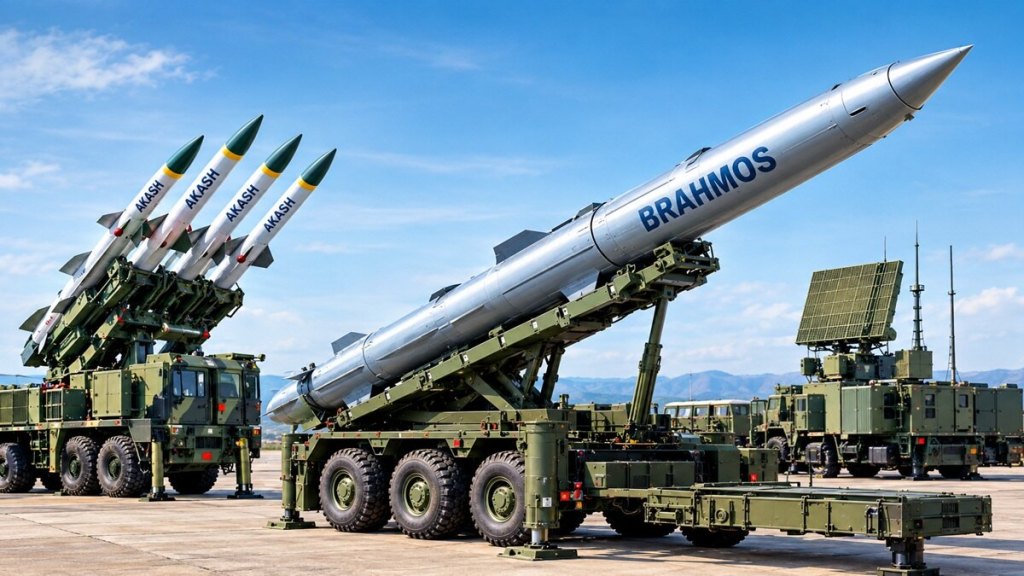
The BrahMos supersonic cruise missile is the most visible export success so far. Singh described it as “fairly coveted” and said India is “selling to or in the process of selling to, several Southeast Asian countries”.
BrahMos is a supersonic cruise missile developed jointly by India and Russia, now produced and upgraded by Indian agencies and companies. It can be launched from land, ships, submarines and aircraft, and has been exported to countries such as the Philippines, making it one of the first major “Made in India” missile systems to win foreign buyers. Its high speed, precision and relatively low cost compared with Western alternatives have helped it become a flagship Indian defence export.
Beyond BrahMos, he pointed to growing overseas interest in:
- Artillery and mounted gun systems
- DRDO technology-based products made by private firms
- Akash surface-to-air missiles, where “there is a lot of interest”
Akash is a medium-range surface-to-air missile system designed by DRDO and built by Indian public and private sector firms. It can engage multiple aircraft, drones and missiles at once, and is already in service with the Indian Army and Air Force. With growing interest from other countries, Akash is seen as a key “Made in India” air-defence product that can be offered at lower cost than many imported systems.
India has developed and now exports a range of artillery and mounted gun systems, including 155 mm howitzers and truck-mounted guns built by Indian companies using domestic and licensed designs. These systems give armies mobile, long-range fire support and are cheaper to buy and maintain than many foreign options. Their export helps showcase India’s ability to produce complete weapon systems, not just assemble imported kits.
These categories show that India is moving beyond niche items into broader, system-level exports that require long-term support and spares.
Why defence exports matter: Money, jobs and strategic leverage
For the government, defence exports are not just about prestige; they are a strategic and economic tool.
Rajesh Singh outlined 4 key benefits:
- They signal that Indian technology is good enough for foreign militaries.
- They allow India to strengthen friendly nations’ defence capabilities.
- They create long-term dependencies through spares, maintenance, and on-site support teams.
- They earn foreign exchange and generate employment at home.
“Defence exports enable you to, one, show that you are providing good technology, and that you are doing it at competitive prices,” Singh said.
“It also enables you to strengthen the capabilities of your friends. It creates long-term dependencies on you so that you will be able to support them over a long period of time through spares, maintenance, and other support, and through deploying teams to those areas,” he added.
India isn't just consuming anymore! We are CREATING, MANUFACTURING and EXPORTING to the world. 🇮🇳
Over the past 12 years of Make in India and under the visionary leadership of Hon PM Narendra Modi Ji, we have built 99.2% of our mobile phones locally, witnessed a massive surge in… pic.twitter.com/waOYJCZuBm
— Devendra Fadnavis (@Dev_Fadnavis) September 25, 2026
More exporters, smoother rules: The ecosystem behind the numbers
The export boom is backed by a widening industrial base. The number of defence exporters has grown to 145 firms, indicating deeper participation beyond a few large public sector units. To make it easier to do business, the government has revamped the Defence Exim portal.
The new system offers:
- End-to-end online application processing
- Automated company verification
- Simplified registration and real-time tracking
- Secure payment integration
These changes aim to cut delays, improve transparency, and align with the Make in India and Aatmanirbhar Bharat goals.
AMCA and the push into high-end platforms
While missiles and artillery dominate current exports, India is also working on high-end combat aircraft. On the Advanced Medium Combat Aircraft (AMCA) programme, Singh noted that proposals are being fielded by “three shortlisted companies”, all Indian defence majors.
“In general, the cost for our missile production rates is lower, and therefore that is an area where export potential is high,” he said, hinting that future platforms could follow a similar cost-competitive model.
With exports already over Rs 38,000 crore, India is aiming to reach Rs 50,000 crore in less than two years. If India continues to offer reliable defence systems at lower prices and provides good after-sales support, defence exports could become a major source of foreign exchange and an important part of India’s strategic strength.