


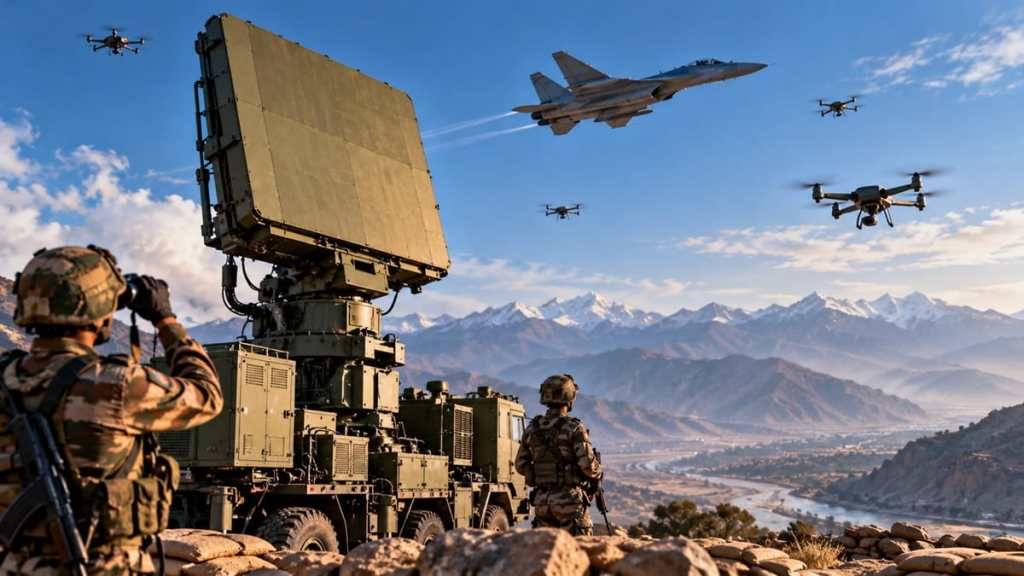

Bharat Electronics Limited (BEL) has secured a Rs 770 crore contract from the Ministry of Defence to supply Improved Low Level Light Weight Radars (LLLR-I) to the Indian Army, adding to its order inflows as the defence electronics major awaits the award of a much larger missile-system programme.
The contract, signed in the presence of Defence Secretary Rajesh Kumar Singh, covers radars designed to detect and track fighter-sized targets as well as mini and micro drones. The system also has the capability to prioritise aerial threats, strengthening the Army’s ability to detect and respond to increasingly diverse airborne threats.
The order comes at a time when BEL‘s fresh order inflows have slowed. According to Kotak Institutional Equities’ October 4 report, the company’s year-to-date order inflows stood at around Rs 7,300 crore, down 44% year-on-year. The brokerage identified the conversion of large pending programmes, particularly the Quick Reaction Surface-to-Air Missile (QRSAM) system, as a key factor for sustaining BEL’s growth visibility.
Rs 770 crore radar order adds to BEL’s inflows
The latest contract is equivalent to about 10.5% of BEL’s estimated year-to-date order inflows of Rs 7,300 crore, offering incremental support to its order book.
However, the larger order opportunity remains the QRSAM programme, estimated by Kotak at around Rs 30,000 crore. The programme is awaiting Cabinet Committee on Security (CCS) clearance, with BEL and Bharat Dynamics Limited expected to share the work.
The brokerage firm’s report said BEL was expected to deliver healthy revenue growth in the second quarter of FY27, but noted that investors would focus on the QRSAM order and the pace at which it converts into a signed contract.
The brokerage said timely awards of major defence programmes were critical to maintaining revenue growth visibility through FY29. Until such contracts are finalised, individual procurements such as the latest radar deal will continue to contribute to order inflows, even as the market watches for larger awards.
Indigenous radar deal comes amid rising counter-drone demand
The procurement has been placed under the Buy Indian–Indigenously Designed, Developed and Manufactured category, in line with the government’s push to expand domestic defence manufacturing and reduce import dependence.
The Ministry of Defence said the contract would support India’s defence manufacturing ecosystem, including micro, small and medium enterprises, and contribute to building a self-reliant and globally competitive defence industry.
As the prime contractor, BEL is expected to anchor a domestic supply chain for components required by the radar system. The contract details provided do not specify the individual suppliers or the value of work likely to be placed with them.
The radar’s ability to detect and track small drones is also relevant to the broader expansion of counter-unmanned aerial system capabilities. In its July 8 aerospace and defence report, Kotak estimated that India could spend around US$4–5 billion on counter-drone systems over the next decade, identifying BEL among the domestic companies positioned to benefit from this demand.
The brokerage’s assessment provides a wider industry context for the Army’s radar procurement, although it does not specifically assess the LLLR-I contract.
Defence spending is rising, but contract conversion remains crucial
The BEL order comes against a backdrop of strong defence spending and a sizeable procurement pipeline. Kotak’s October 4 report said defence capital expenditure had grown 37% year-on-year during the first five months of FY27, while Acceptance of Necessity (AoN) approvals exceeded Rs 1.6 lakh crore year-to-date.
Kotak also noted that only 31% of the FY27 defence budget had been utilised at the time of its assessment, pointing to the possibility of a stronger spending pace in the second half of the year.
For BEL, the combination of ongoing radar and electronics procurements and pending large programmes creates a substantial opportunity pipeline. But the pace at which that pipeline translates into signed orders will be an important determinant of future order inflows.