


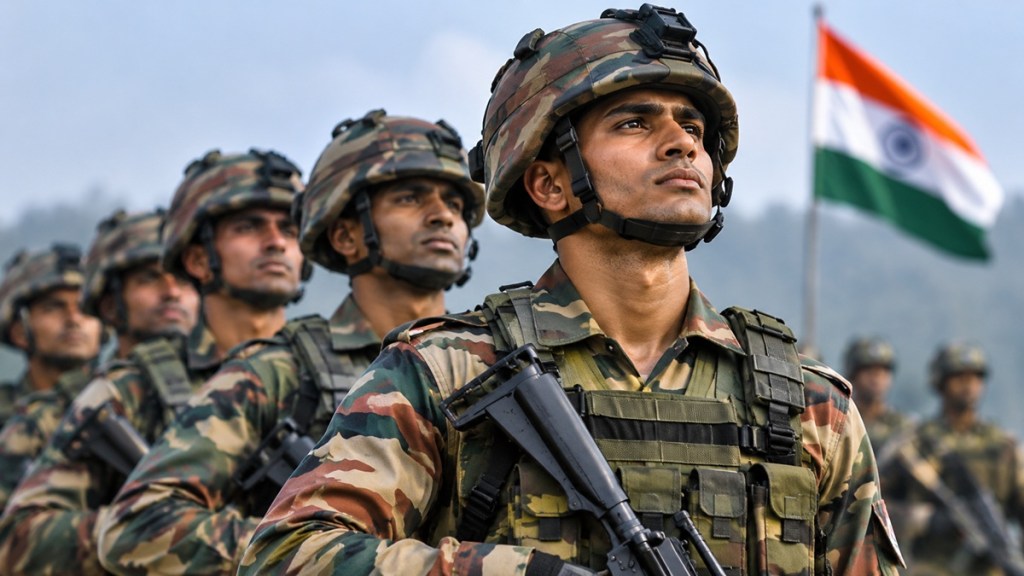

Agniveer Scheme Service Tenure Extended: The Centre has announced a major change to the Agnipath recruitment scheme, offering an additional two-year engagement period to the 75% of Agniveers who were previously required to exit the Armed Forces after completing their initial four-year tenure.
Addressing the media, Chief of Defence Staff (CDS) General NS Raja Subramani on Wednesday announced the decision, saying the extended engagement would provide Agniveers with another opportunity to serve in the military before being considered for enrolment into the regular Armed Forces.
Under the revised arrangement, Agniveers completing their initial four-year service will be offered an additional two-year engagement period. At the end of the extended tenure, those willing to continue in the Armed Forces will be eligible for enrolment, subject to objective selection criteria.
The announcement marks a massive change to the original structure of the Agnipath scheme, under which 25% of each batch of Agniveers were eligible for enrolment into the regular cadre based on merit, while the remaining 75% were required to leave after four years.
Addressing the media, General Subramani said the decision followed a review of the scheme and positive feedback received from the performance evaluations of Agniveers over the past four years.
“Today is a very significant day for the Indian Defence Forces and for our Agniveers. The Cabinet has created a pathway for all Agniveers to be absorbed into the Indian Army,” the CDS said.
He recalled that the Agnipath scheme was introduced on June 14, 2022, with a provision for continuous performance evaluation and periodic reviews. The first batch of Agniveers is now approaching the completion of its four-year engagement period.
“Based on the performance evaluations conducted over these four years, we have received very positive feedback regarding their performance,” he said.
What changes under the revised Agnipath scheme?
Under the original arrangement, 25% of Agniveers were to be retained in the regular forces based on merit after completing four years of service. The remaining 75% were expected to transition back into civilian life.
The revised decision provides the latter group with an additional two years of engagement, extending their potential service period to six years before the next stage of selection.
General Subramani said that after completing the additional two-year period, Agniveers willing to continue would be enrolled into the Armed Forces, subject to objective selection criteria.
The CDS described the Cabinet decision as a significant development for the scheme, which was introduced to provide young people an opportunity to serve in the Armed Forces while maintaining a youthful and dynamic military profile.
However, the announcement, as outlined by the CDS, does not specify the detailed selection criteria, the number of Agniveers who may eventually be enrolled after the extended period or the precise implementation arrangements.
Agnipath scheme and the four-year service structure
In 2022, the Union Cabinet introduced the Agnipath scheme to recruit personnel into the Armed Forces as Agniveers under the respective Service Acts for a period of four years.
The scheme was designed to provide young people with an opportunity to serve the country and contribute to nation-building. It was also intended to make the Armed Forces’ personnel profile younger and more dynamic.
Under its original framework, only 25% of Agniveers were eligible for enrolment into the regular forces after their four-year tenure, based on merit. The remaining 75% were required to exit the military.
The limited engagement period and the provision for only a quarter of each batch to enter the regular forces had drawn criticism since the scheme’s introduction.
The latest decision comes as the first batch approaches the end of its initial four-year service period and follows the performance review process outlined when the scheme was launched.
States had announced reservations for Agniveers in other services
The shorter tenure and uncertainty over long-term military employment had also prompted several state governments to announce reservation or preference measures for former Agniveers in police and other government services.
States including Uttar Pradesh, Haryana and Maharashtra had announced provisions aimed at facilitating their employment after their military engagement ended.
The Centre’s latest decision now offers an additional period of service to the 75% of Agniveers who were earlier expected to return to civilian life after four years.
The revised arrangement could provide them with a longer opportunity to gain military experience before the next selection stage. Those who are willing to continue will, however, have to meet the objective criteria prescribed for enrolment into the Armed Forces.