


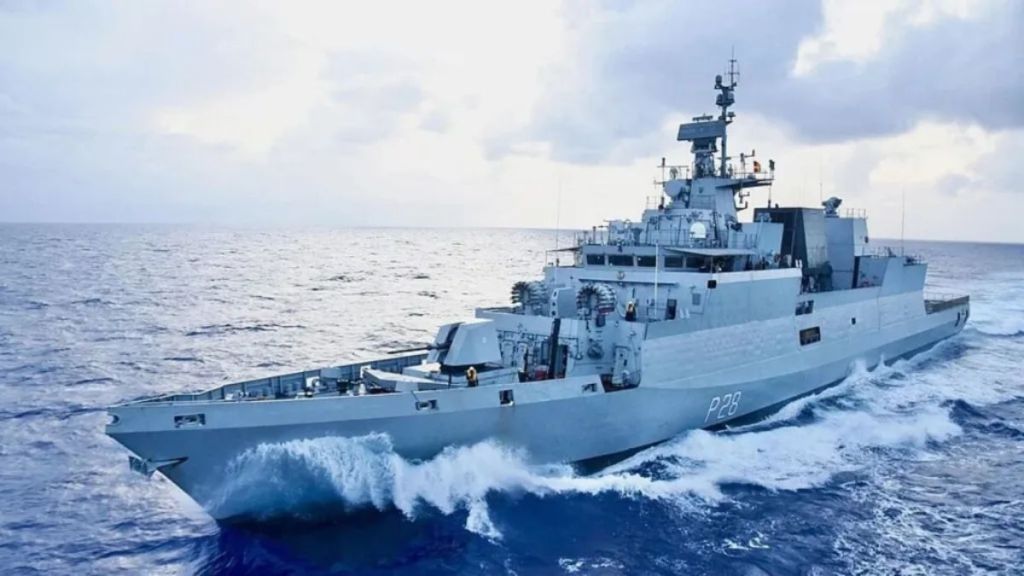

The Indian Navy is set to add eight next-generation corvettes to its fleet after the Cabinet Committee on Security (CCS) approved a project worth over Rs 40,000 crore, according to The Indian Express. The new warships will be designed for multiple combat roles and are expected to strengthen India’s maritime security capabilities across the Indian Ocean Region (IOR).
The CCS, chaired by Prime Minister Narendra Modi, is learnt to have cleared the proposal earlier this week. The government is expected to sign construction contracts with Garden Reach Shipbuilders & Engineers (GRSE), based in Kolkata, and Goa Shipyard Limited (GSL), the report said.
The approval is a key stage in the defence procurement process and comes ahead of the finalisation of contracts with the two shipyards.
The corvettes will be built using an indigenous design developed by the Indian Navy. Designed to be fast and agile, the vessels are expected to achieve speeds of around 30 knots. Deliveries are scheduled to begin by 2030.
What will the Navy’s next-generation corvettes do?
Corvettes are smaller surface combatants than frigates and destroyers, but modern versions can be equipped for a wide range of naval operations. Their systems can include advanced radars, electronic warfare equipment, anti-ship missiles, air-defence systems and anti-submarine warfare capabilities.
The eight new vessels are being planned as multirole platforms that can undertake several missions, including anti-submarine warfare (ASW), maritime surveillance and reconnaissance, search-and-attack operations, and coastal and littoral defence.
Their induction is expected to strengthen the Navy’s ability to detect and respond to surface and underwater threats. The ships will also support sustained surveillance across the IOR and help reduce operational pressure on larger frontline warships.
How will the new warships add to the Navy’s existing fleet?
The new corvettes will complement the Navy’s four Kamorta-class corvettes, which are primarily designed for anti-submarine warfare. With additional vessels capable of performing multiple roles, the Navy will have more platforms for coastal operations, surveillance and maritime security missions.
The project was first cleared by the Defence Acquisition Council (DAC), which granted Acceptance of Necessity (AoN) in June 2022. At the time, the estimated cost of the programme was around Rs 36,000 crore. The latest CCS approval puts the project at over Rs 40,000 crore.