



Having a fanbase doesn’t mean consumers would be ready to shell out their hard-earned money for mediocre products. Quality and true differentiation remain critical to both brand and business success.
That’s the hard lesson many celebrity-owned brands cramming the Rs 2.4 lakh crore beauty and personal care market are being forced to learn.
Take Deepika Padukone’s skincare brand 82°E, which saw a huge 36% fall in revenue in FY25 to Rs 15.2 crore prompting beauty retailer Nykaa to consider a majority stake. Then there is 9Skin launched by Nayanthara in 2023, which has struggled to make a serious dent in the market reporting no major financial milestone since launch. Observers have pointed at a disconnect between the actor’s famously private persona and active beauty-routine marketing.
Celebrities such as Sunny Leone, Sonam Kapoor, Arjun Rampal and Shilpa Shetty have also dabbled in the beauty and fragrance market with different degrees of success.
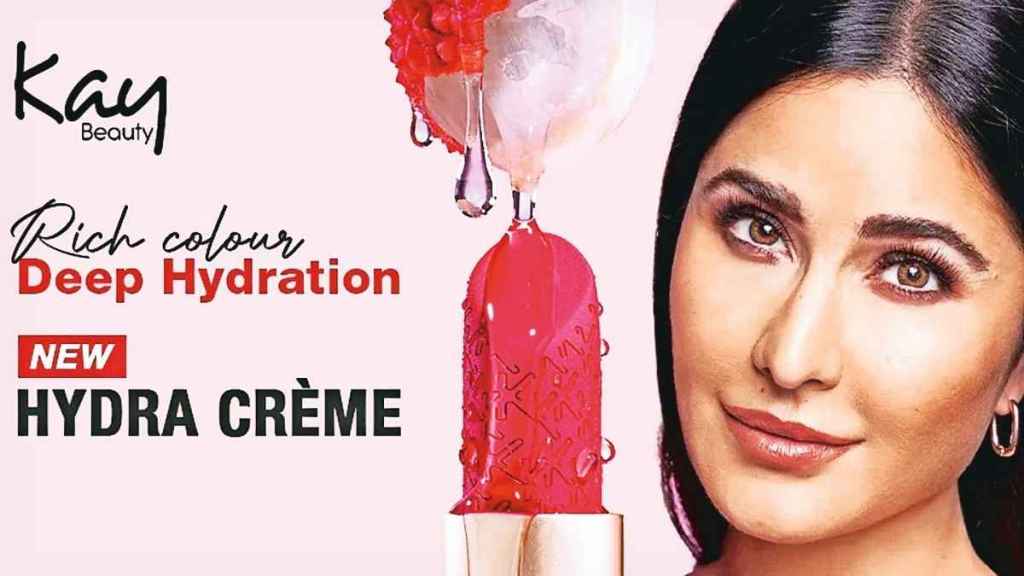
On the other hand, there’s Katrina Kaif’s Kay Beauty, which was launched in 2019 in partnership with Nykaa. The brand reached Rs 380 crore in gross merchandise value (GMV) in FY26, up from Rs 240 crore in the previous fiscal. Likewise, Kriti Sanon’s Hyphen hit the Rs 400 crore revenue mark within two years of its launch in FY25. Brands such as Masaba Gupta’s LoveChild and Priyanka Chopra’s Anomaly have also performed well.
Celebrity-backed brands, once seen as surefire bets due to their founders’ built-in audiences, are increasingly facing a reality check. As the initial brouhaha faded, they discovered that retail is a velocity business, and no amount of Facebook or Insta following can replace product-market fit and constant reinvention needed to sustain a business in the long term.
According to Rutu Mody Kamdar, founder, Jigsaw Brand Consultants, a celebrity helps with attention and trial, but that alone cannot build a beauty brand. “In beauty, a celebrity can get you noticed. Product performance is what builds the brand. Today’s beauty consumer is far more informed. She compares ingredients, prices, reviews and results,” she says.
A premium celebrity brand still needs to answer a very basic question — after takeoff what?
Beyond the buzz
Experts note that while celebrities offer cultural trust and a ready consumer base, not all are adept at other brand-building functions such as distribution or retail strategy. Vaishali Gupta, co-founder & CGO at PEP Brands (which owns Hyphen and mCaffeine), points out that Kriti Sanon’s role at Hyphen is not just limited to the face of the brand. “In fact, we don’t even call Hyphen a celebrity brand. We built the brand keeping the Indian consumers and their needs at the centre,” she says.
What also differentiates the brand is Sanon’s defined role as co-founder and chief customer officer. Gupta adds that Sanon is involved in product development, research, testing and marketing. “A celebrity can give a brand a headstart in awareness and consumer connection. What you build around that is what determines whether it becomes a sustainable business,” says Gupta. The brand has in fact reformulated some of its early launches based on consumer feedback.
Industry observers say that the celebrity might get fans to purchase their product out of curiosity or even fandom, but repeat purchase would be driven purely by the product’s efficiency. Consumer interest rapidly pivoted away from basic beauty regimen claims toward hard-hitting, clinically efficacious active ingredients. All within an accessible price point.
“In the case of 82°E, pricing products at roughly Rs 2,500 to Rs 4,000 put it in direct competition with established global luxury and clinical brands without giving consumers a sufficiently strong reason to pay that premium,” says Shekhar Suman, co-founder of Brandshark. It also lacked a clear hero product, depended heavily on its own D2C channel, and later leaned on deep discounting, which is particularly damaging when you are trying to build a luxury brand, he adds.
In contrast, Kay Beauty has successfully created make-up for Indian skin with smart pricing between Rs 500 and Rs 1,500. Hyphen simplified skincare at accessible price points, well under the Rs 1,000 mark. The strongest celebrity brands are the ones that eventually become less dependent on the star over time, says Suman. “Ultimately, the product, distribution and community have to be strong enough to resonate with consumers even if the celebrity’s picture is no longer on the homepage,” he sums up.