


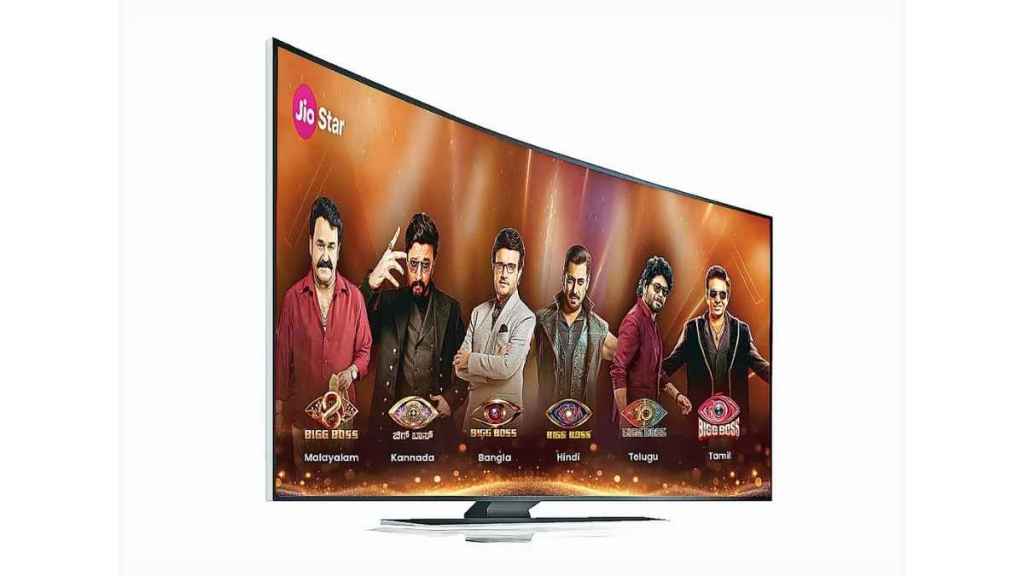

JioStar says its two-decade old reality show Bigg Boss is now an “entertainment ecosystem”. The opening week of season 20, which kicked off on on September 6, had 42.3 million unique viewers, as per data from Chrome DM. Female viewers accounted for 57% of the audience. The last season reached 500 million viewers.
The franchise continues to refresh itself through new contestants, themes and localised editions, while retaining its core proposition, says a JioStar spokesperson. “With meme culture, real-time social commentary and voting, Bigg Boss puts power in the fans’ hands, turning passive viewership into active co-authorship,” she adds. Experts say there are at least three factors that have helped it smash viewership records.
First, instead of relying on its original Hindi format, the franchise expanded into regional editions like Tamil, Telugu, Kannada, Malayalam and Bangla, with broadcaster JioStar bundling them into a nationwide advertising ecosystem, akin to the Indian Premier League (IPL), a national vehicle tailored for high local relevance.
The shift from appointment viewing on television to digital streaming helped amplify the show’s stickiness while creating constant social media fodder. According to industry data, around 60% of the show’s digital audience engages with the live feed, extending the viewing time beyond a highly edited one-hour episode.
Over the years, the show has also tweaked its casting blueprint. While the early seasons relied on traditional television and Bollywood celebrities, newer seasons have included social media influencers, content creators and other internet personalities.
All this is not to undermine the contribution of its star host Salman Khan, who has led the Hindi version for 16 seasons. “The unpredictability of contestants, evolving relationships, and daily drama keep viewers emotionally invested,” says Pramod Pawar, national head for Quantitative Research at Hansa Research Group. Will that formula work to lure viewers and advertisers going forward?
Brand magnet
The show’s ability to reinvent itself and draw eyeballs across markets also means higher advertiser interest. Bigg Boss has 95 sponsors across its editions this season. According to JioStar, over 50% of advertiser participation in the Southern markets comes from new advertisers. 70% of advertisers on the Hindi edition are first-timers. What’s also drawing advertisers is the ability to integrate into the show naturally, rather than resorting to mere logo placements.
Tiny Sengupta, chief marketing officer, Bajaj Electricals, says the show’s format is a natural fit for the brand. “The house itself is a representation of an Indian household, with everyday spaces such as the kitchen and bathroom where our products are used. Our association includes category-led tasks, product integrations, our jingle, audience contests, and advertising across TV and digital,” she adds.
Haier Appliances, which is partnering with the Hindi, Telugu and Tamil editions, says the show allows the brand to align with the average Indian consumer’s life. NS Satish, CEO, Haier Appliances India, says the format not only helps the brand demonstrate product features, but also showcases what its technology can do for the consumer.
Dubai real estate developer Danube Group built a customised apartment for Season 19, its leadership appeared on screen and it rolled out contests and giveaways to build familiarity among Indian and NRI buyers. Says Rizwan Sajan, founder & chairman, Danube Group, “The idea was to allow viewers and contestants to experience the brand rather than simply see it. We didn’t turn the show into a direct property sales presentation but simplified real estate for viewers.”
Going forward, experts say, Bigg Boss will have to balance its core drama-driven identity with continuous innovation to remain commercially attractive and generate sustained audience attention.