


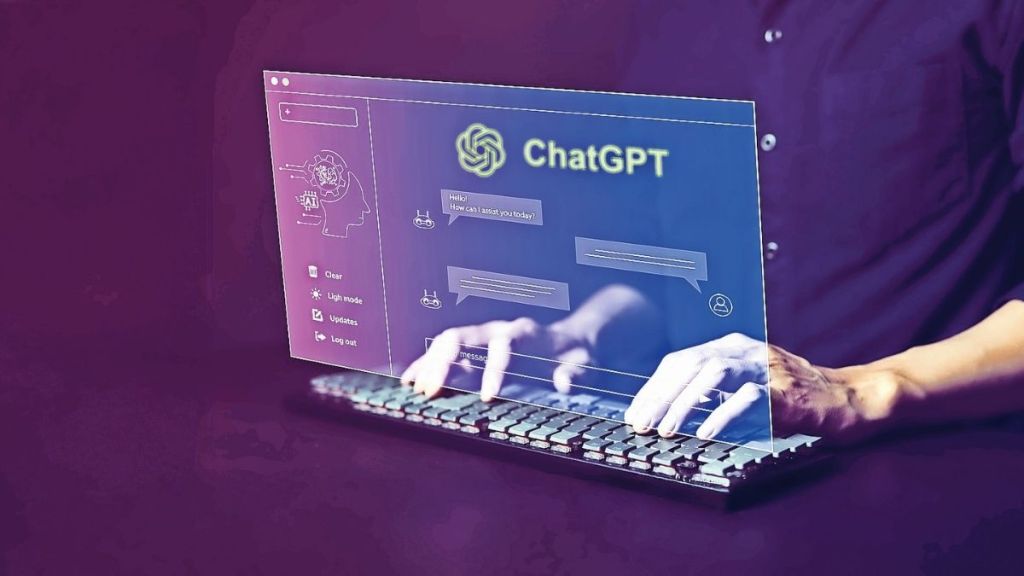

There has been a slight change in how one experiences Open AI’s ChatGPT in India since August-end. Now, when a user seeks advice on new smartphones in the market or looks for recommendations on ways to learn a new foreign language, a sponsored section labeled “ads” appears at the bottom of the responses doled out by the AI chatbot.
Do not mistake them to be part of ChatGPT’s response to your query. They are paid-for ads, promoting products and services related to the conversation the user is having with chatbot or even based on the user’s chat history.
OpenAI said in a statement that 50 brands have already shown interest to run advertising campaigns on the platform and that it has partnered with WPP and Omnicom for media. (The partnership is not exclusive and the San Francisco company says it will continue to partner with other agencies to give users access to a wide range of brands on its platform in India.) The ads will be shown to free and ChatGPT Go users, which the company says makes up the majority of the 100 million weekly active users on the platform in the country.
If OpenAI is looking to grab a share of India’s digital marketing spends, it will have to compete with the likes of Meta and Google who have a dominant share of the market already. “Google and Meta have 20 years of advertiser tools, agency relationships and attribution behind them,” says Prashant Puri, co-founder & CEO, AdLift.
According to EY and FICCI’s Stories, Scale and Impact report, digital advertising spends stood at Rs 94,700 crore, making up almost 63% of the country’s total advertising spend in 2025. Between them, Meta and Google command more than half of India’s digital media spends. The EY-FICCI study states that search and social media, including Google and Meta, contributed 64% of digital ad revenues last year.
In other words, ChatGPT might be a tad late to the party.
A real potential
Siddhant Sethi, associate director, AI & emerging initiatives, White Rivers Media, says ChatGPT should not try to compete with Google and Meta directly. Just look at their scale. Google India reported gross advertising revenue of ₹34,742 crore in FY25, while Meta India reported ₹29,392 crore. ChatGPT has logged a $1-billion revenue run-rate “globally” through ads.
India is one of Google’s largest and most crucial user bases, with hundreds of millions of daily and monthly active users relying on its search, mobile platforms, and AI tools. For Meta, India is the largest market globally, with over 500 million users on WhatsApp alone and a massive combined reach across Facebook, Instagram, and WhatsApp.
ChatGPT’s opportunities are different. People are increasingly using it before they search, to compare options, ask for advice and decide what they want. That creates a new advertising moment much earlier in the decision journey. “ChatGPT is not competing for Google’s budget yet. It is competing for the 10 minutes before the search,” says Sethi.
ChatGPT’s biggest advantage is depth of intent. Search traditionally understands keywords. Social platforms understand interests, behaviour and content consumption. Conversational AI can potentially understand the entire context surrounding a consumer’s problem.
“Someone isn’t simply typing ‘Thailand hotel’; they could be saying, ‘I’m travelling with two children in December, want somewhere luxurious but quiet, and don’t want to travel more than two hours from Bangkok’. That is an incredibly rich advertising signal,” explains Rajiv Dingra, founder & CEO, ReBid.
So rather than eating the lunch of search platforms like Google or content-led and short-video platforms like Instagram Reels, ChatGPT might prompt marketers to allocate a separate budget for AI-native discovery and decision platforms. However, the road to creating that niche in the rapidly changing digital advertising landscape is not going to be easy.
At present, the cost of running an advertising campaign on ChatGPT is high compared to platforms like Google or Meta. Brands will need to dole out at least Rs 725 a day, which constitutes about Rs 21,750 for 30 days. That would filter out most independent, small and bootstrapped startups that have the willingness but not the ability to advertise. Google and Meta do not have such minimum requirements to advertise on their platforms.
Even with Open AI’s self-serve ad manager, the cost per click (CPC) comes down to $3 from $5 — that is, to around Rs 300 a click from nearly Rs 500. “This is steep as Indian advertisers pay a fraction of that on Google. The floors are in dollars and the economics here are in rupees. Until OpenAI prices for this market instead of converting to a US rate card, it will work for BFSI, travel, education, real estate and durables, and fail quietly elsewhere,” says Puri from AdLift.
Moreover, ads in India will not be shown to ChatGPT plus, enterprise and education users, who constitute a sizeable consumer cohort. Identified youngsters and account holders below the age of 18 would not be shown ads which also keeps kids-focused brands out of the race to start with.
Viren Inaniyan, co-founder & CEO, Trucommmerce, shares that ChatGPT is seeing the strongest interest from large retailers and ecommerce companies, D2C beauty and personal-care brands, SaaS and digital-product businesses, and larger enterprises with experimental media budgets. Mamaearth has already become the first brand to advertise on ChatGPT while portfolio brands of ITC and Bella Vita are expected to also jump on to the bandwagon.