


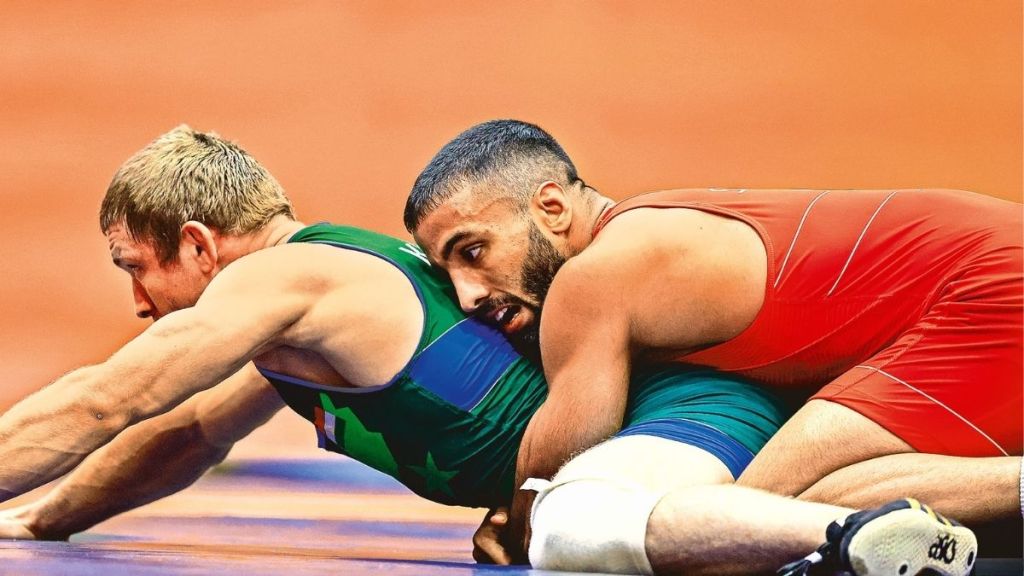

The recently concluded Asian Games brought into the limelight a bevy of new sports achievers across boxing, archery, wrestling and kabaddi. Some of the standout performers were 17-year-old archer Kumkum Mohod, who picked up two golds and a silver, boxer Lovlina Borgohain, track-and-field athlete Vithya Ramraj and wrestlers Aman Sehrawat and Sujeet Kalkal. But will this success on the playing field translate into lucrative brand deals and endorsements?
Observers say that the current crop of Asian Games winners have all the right ingredients to turn sporting success into commercial interest. Many of these players have had humble beginnings and inspiring growth journeys. “The opportunity for brands is to identify what makes the person behind the medal interesting, which could be their personality or a compelling story that people may connect with,” observes Aparajit a Biala, national planning head, Cheil India.
The objective shouldn’t be to merely find an alternative to cricket. “Cricket may give a brand mass reach, but emerging sports can offer sharper cultural and community relevance. Some sports like football for instance have a more defined Indian audience, with a particularly strong appeal among urban, affluent and digitally active consumers,” she points out.
The Asian Games may not have seen the kind of reach that a cricket World Cup typically gets, but Lokesh Sharma, MD of sports management firm TCM Sports, argues that it is unfair to make comparisons with cricketers when it comes to commercial success. “Brands that partner with sports stars tend to look beyond the medal colour. They look for a distinctive personality, an authentic fit and the prospect of a career that keeps growing,” he says, noting that partnerships with such sports stars are also advantageous since they come with lower endorsement fees and a relatively more authentic connection.
What is also drawing brands towards alternative or emerging sports is the crowded nature of the cricket endorsement market. On the flipside lies the challenge of making these personalities distinctive and recognisable across consumer segments.
The bigger opportunity is to build their identities before the next medal arrives, says Dinakar Menon, managing partner and business head at BigTrunk Communications. “There is greater room to build the association around the athlete’s journey. For example, an archer’s association with precision can be more credible for a tech or performance-led brand rather than a generic celebrity endorsement. Since they have limited visibility, digital platforms can be especially helpful in allowing advertisers to target fans and communities that are passionate about a sport,” says Menon.
Going beyond numbers
Shashank Lanjekar, chief strategy officer, BBDO India, says the onus of turning successful athletes into bigger stars cannot lie only with brands. Advertisers are the buyers of success, not the creators, he argues. “Sporting bodies and federations will need to deliver on consistent success for any non-cricketing sport to get comparable traction and media valuation. Viswanathan Anand, Sania Mirza, Saina Nehwal and Deepa Phogat have all had a considerable number of brand endorsements, but they have also been instrumental in popularising their sports,” he states, noting that the star’s success can best be measured by how the sport’s popularity has grown.
Lloyd Mathias, strategist and independent director, concurs, pointing towards China’s Yao Ming, who was the first from his country to compete in the NBA in 2001. His success sparked a massive surge in basketball viewership across China, inspiring young people to take up the sport. “If India gets to host the Olympics in the future, we will likely see viewership and advertiser interest increase for other sports,” Mathias says.
But the sad reality is that no other sports personality can come close to any of India’s leading cricketers, says Mathias . While some names like Neeraj Chopra or PV Sindhu have managed to break through cricket’s dominance, such breakout moments are rare but indicate that advertisers are willing to look beyond cricketing stars.
Brands chase mass eyeballs to scale their marketing. Cricket is a pan-India unifier, deeply penetrating both urban metros and rural markets. Alternative sports like football or kabaddi often suffer from regional localisation. “What also adds to the challenge is that these games do not happen all year round. So, these personalities are not always in the spotlight. Consequently, the scope for building any hype around these players is limited,” he notes. Mathias has a point. Cricket is a permanent fixture on the calendar. Between cricket tournaments and the Indian Premier League (IPL), top cricketers are on television and digital screens for nearly 10 month a year.
The discrepancy in major endorsement deals between cricket stars and athletes from other sports comes down to a combination of market size, media ecosystem structure, and the financial returns (ROI) that brands expect.
As per WPP Media’s Sporting Nation report, sports celebrity endorsements reached Rs 1,350 crore in 2025, of which cricket accounted for a whopping 87% at Rs 1,178 crore. Among the non-cricketing personalities that tasted commercial success last year were PV Sindhu, Neeraj Chopra, Manu Bhaker and Lakshya Sen.