


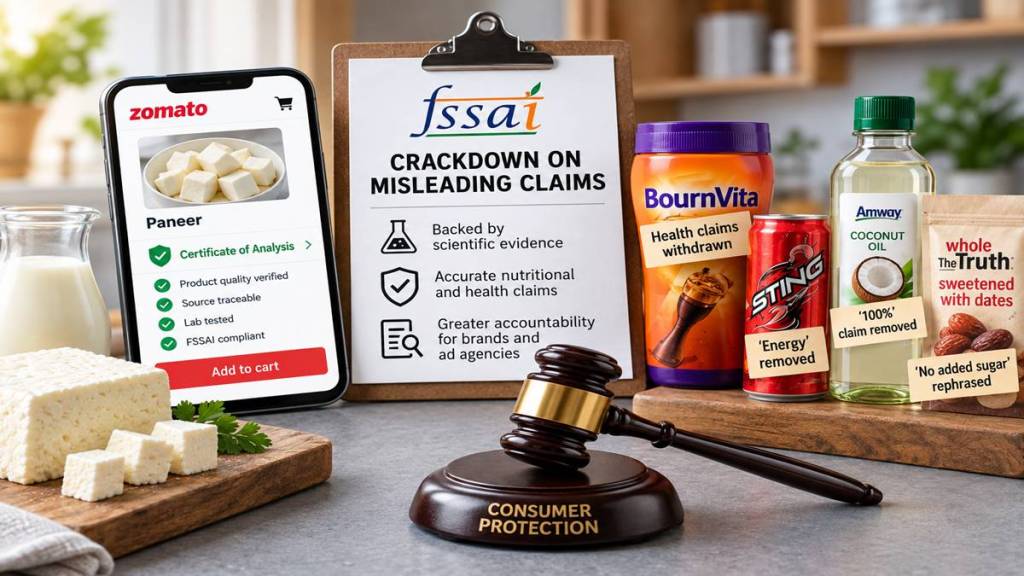

Zomato‘s Hyperpure on Monday rolled out in-app Certificate of Analysis for paneer purchases, allowing buyers to verify product quality and trace its origins. Just weeks earlier, the food ordering and delivery platform banned analogue dairy products from its platform and said restaurant partners that remained non-compliant would be delisted from the paltform.
There’s been a flurry of such activity lately. Amway India removed “100%” claims from products like coconut oil, while Mondelēz withdrew health claims from Bournvita, PepsiCo dropped the term “energy” from Sting cans, and The Whole Truth changed “no added sugar” to “sweetened with dates”.
All this followed the Food Safety and Standards Authority of India’s (FSSAI) notices to large FMCG companies and food manufacturers, including Nestle India, PepsiCo, Coca-Cola, Dabur, Pernod Ricard and others, over “false product claims, misleading advertisements and labelling non-compliance”. The regulatory body is now considering a sharper enforcement push with warning labels for foods high in sugar, salt and fat.
The FSSAI action is a clear signal that the industry is entering an era where consumer trust cannot be built through tall claims and obvious exaggerations. The evidence has to be built into the product. “This means that even packaging is no longer just a marketing asset but is becoming part of the product’s trust architecture,” says Anjana Ghosh, managing director, Scale Sherpas. This becomes especially critical in categories like baby food, functional drinks or health supplements.
FSSAI’s crackdown has been long overdue, say observers. As per the annual complaints report released by Advertising Standards Council of India (ASCI) earlier this year, misleading or harmful advertising was flagged as a major area of concern. It flagged 331 food and beverage ad violations in FY26, over 60% of which involved misleading health claims.
Nisha Sampath, managing partner, Bright Angles Consulting, says such violations are different from contamination cases such as Cadbury Dairy Milk’s worm infestation back in 2003. “Such lapses may be accidental, and consumers are likely to forgive them. A misleading claim, however, shows an intent to manipulate the consumer, which is a more corrosive issue,” she remarks, noting that the way forward is in fixing not just the product but also company policy. Creation of an environment with greater responsibility and transparency is the only sustainable way forward.
Straight talking
Today, when product information is easily available and misleading claims are debunked online within minutes, brands risk losing consumer trust with such advertising, say experts. “Marketers can no longer view themselves as translators of a brand’s claims, but they also hold the responsibility of questioning the evidence behind those claims before they reach consumers,” says Manas Gulati, CEO & co-founder, ARM Worldwide.
While brands that flout product safety norms take a hit in reputation and brand value, sometimes the damage spills over. Take Volkswagen’s “Dieselgate” scandal. The car maker installed “defeat devices” in millions of diesel vehicles to cheat on emissions tests, falsely advertising them as “clean diesel” cars. When regulators exposed the fraud in 2015, Volkswagen’s stock plunged by over 30% in a matter of days. The company faced tens of billions of dollars in fines, lawsuits, and vehicle recalls, severely tarnishing its reputation for German engineering and reliability.
D2C brands such as The Whole Truth and Food Pharmer are already creating greater consumer awareness about food labels and ingredient transparency though several of these have also found themselves under the FSSAI scanner. The Whole Truth recently replaced its “no added sugar” claim from its dark chocolate packs with “sweetened with dates” after receiving a show-cause notice from the regulator. The Health Factory’s “zero maida” bread was also questioned by the FSSAI for its misleading claims since it contains wheat-derived ingredients.
According to Yasin Hamidani, director, Media Care Brand Solutions, when it comes to food, credibility needs to be demonstrated rather than just communicated. Brands need to respond with transparency, reviewing claims, correcting labels where necessary, and strengthening internal compliance. “India can move towards greater standardisation and transparency, so brands know exactly what evidence is expected before making a claim, rather than addressing ambiguity after a campaign or pack reaches consumers,” he notes.
If penalties against errant brands are small compared with the revenues they generate, they might effectively become a cost of doing business, argues Shekhar Suman, co-founder of Brandshark. “Stronger deterrence could therefore include faster adjudication, quicker recalls, greater accountability for e-commerce and quick-commerce platforms, clearer front-of-pack disclosures and penalties that are proportionate to the scale of the company or violation,” he says. Regulatory bodies should make it commercially smarter for a brand to comply from day one rather than fix lapses later.
Under the scanner
· The FSSAI issued over 150 notices to major food and beverage firms this year over false claims and labelling violations
· ASCI flagged 331 food and beverage ad violations in FY26; over 60% of these involved misleading health claims
· Packaging and labelling are becoming part of a brand’s trust architecture
· In categories like infant food and health supplements, ingredient transparency could become a critical selling point