


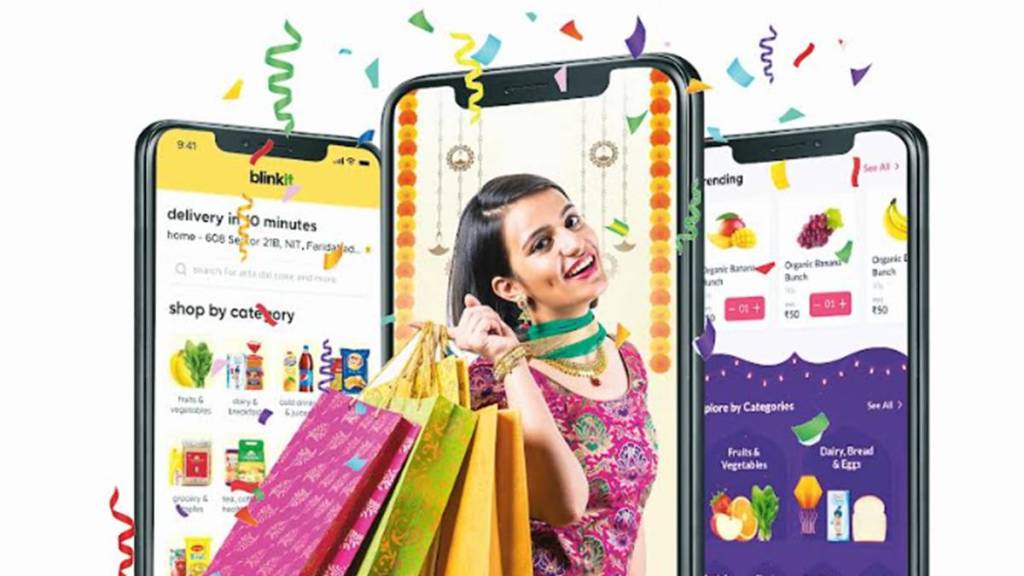

According to the 2026 Festive AdEx report by Datum Intelligence, brands are expected to spend Rs 2,200 crore on retail advertising on quick commerce platforms like Blinkit, Zepto and Swiggy Instamart this festive season. That would mark a 50% year-on-year increase in advertising spending and would constitute almost 19% of the Rs 11,500 crore that brands are expected to spend on the overall commerce and retail media this season. In fact, commerce and retail media would likely be among the largest digital ad spending categories.
“Within digital media, q-commerce is currently the best platform where brands see the highest level of ROAS (return on advertising spend) and conversions,” says Karan Taurani, EVP, media, retail, consumer discretionary & internet, Elara Capital.
Festive ad rates surge 30-40%
The rising adoption of q-commerce has shot up the advertising rates on retail media by 30-40% during the festive season, data from Datum Intelligence suggests. “It is getting expensive because the inventory is limited—there are only a handful of players in the segment currently,” says Satish Meena, founder, Datum Intelligence.
The question is, will brands get the big bang they are expecting from their advertising buck? Or will there be too much noise and wastage?
Experts say brands expect to get 5X to 6X returns on their ad spends on q-commerce this festive season. But here is the catch. Because brand visibility depends on in-app search placement, platforms often put a premium on certain slots and time windows. This forces brands to route 25-30% of their channel revenue back into platform ads just to stay top of mind, say media planners.
Mayank Shah, CMO, Parle Products, says the high cost of advertising on q-commerce will compel brands to pull back on offers and discounts, and premium products, which demand discretionary spending, will see the largest impact of this rising cost.
Smaller and D2C brands will face the biggest challenge . “Only 20% of the brands on q-commerce make up 80% of the business. If the cost of presence on q-commerce continues to rise, brands that do not get a positive ROI will drop off,” says Meena from Datum. “High ad expenses may become a challenge for marketing efficiency, especially during the festive season,”says Shaily Mehrotra, co-founder & CEO, Fixderma and FCL.
Both good & bad news
Let’s face it: Q-commerce is a big deal in India at the moment. According to a recent data released by RedSeer Strategy Consultants, estimated at $9 billion in the first half of 2026 (H12026), it makes up 22% of the total online retail gross merchandise value or GMV of $40.9 billion. RedSeer also estimates that there are more than 60 million monthly users on quick commerce in H1 2026.
Q-commerce applications are becoming the place where consumers discover many of the products they buy. The Datum Intelligence report mentions that 35% of online retail buyers discover products on q-commerce. Needless to say, brands will gravitate to the place where purchase intent is high.
According to reports, platforms like Blinkit, Zepto and Instamart deliver conversion rates of 3% to 8%. Because users mostly click on these apps when faced with some immediate need, the see-buy-delivered loop is really short.
As per media reports, q-commerce now accounts for 60-75% of the overall e-commerce sales for many FMCG players. They are using real-time inventory and location-based data to test new products—quick feedback cycles allow them to tweak discounts and bundle structures on the fly. “Especially during festive times, q-commerce adoption is high due to the convenience of fast delivery,” says Parle’s Shah.
Amit Relan, co-founder & CEO, mFilterlt, says brands will not necessarily spend less because the cost of advertising on q-commerce is high, they will become more creative and accountable. “Marketers are prioritising high-intent keywords, location-level demand and product availability, while also evaluating campaigns against incremental sales and ROAS,” he says.
The high cost of visibility makes a brand like Fixderma mindful of how it allocates the marketing budget, focusing the spends on high-potential SKUs and placements. “We also track incremental sales to understand whether our investments are generating the desired impact,” Mehrotra adds.
For the platforms, while the top-line numbers look attractive, net profitability remains some way off. Add platform commissions of 15%-25% to dark store listing fees, delivery costs and the discounts and profit margins erode quickly.
In the end, say experts, success on q-commerce will depend to a large extent on how much the brand has invested outside the q-commerce framework to build its equity and on offering competitive prices on the platform to be part of a customer’s shopping basket.