


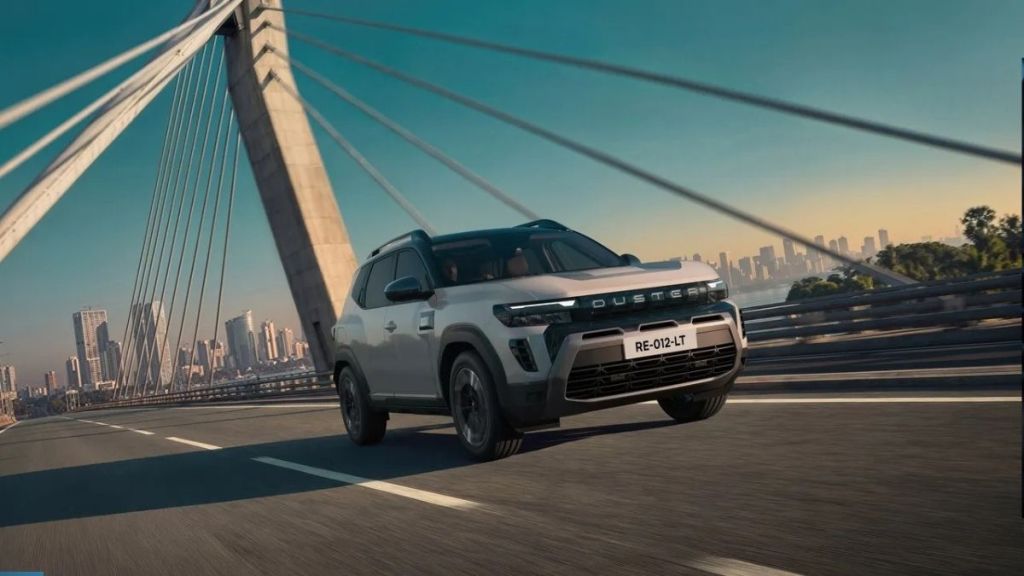

Second comings in business are rarely overnight successes; they require rebuilding trust, adapting to new market conditions, and shedding old baggage.
For Duster it’s been on a slow, winding journey to reclaim its former glory.
But can a brand attempt a second coming while struggling with a second coming? Renault India is trying to do precisely that with the launch of a strong hybrid, just seven months after reviving the legendary SUV nameplate in March 2026.
The new offering is competitively priced between Rs 16.99 lakh and Rs 19.49 lakh (ex-showroom). Hybrid rivals like the Maruti Suzuki Grand Vitara and Victoris wear price tags of Rs 16.68-19.77 lakh and Rs 16.43-19.99 lakh respectively. Another strong contender in the space Toyota Hyryder is priced around Rs 17.18-20.19 lakh, performs well as an economical family SUV, tuned for relaxed city driving. Honda City e:HEV is available at Rs 21.44 lakh.
The Duster hybrid’s top-spec version is about Rs 13,000-Rs 82,000 less than rivals. And despite the much larger engine (1.8 litre), the product offers the best fuel efficiency (29 kmpl), thanks to a larger battery pack that is more than double the size used by Maruti and Toyota.
That’s where this second coming within the larger second coming assumes significance. During the hybrid launch, Renault pushed a new pitch: “Forget diesel, go hybrid”.
As a package, the Duster hybrid builds a solid case for those looking for an efficient car without worrying about having a dedicated charging setup. But the Duster needs more than just a new powertrain and aggressive pricing to mount a serious attack on rivals. To start with, it must overhaul customer engagement and brand positioning to turn class-leading specifications into showroom footfalls and actual sales, say experts.
But the automotive landscape has changed vastly since the Duster’s heyday. The original icon built its reputation on a torquey diesel engine. The market has moved on with petrol, CNG, and hybrids as the powertrains of choice.
An uphill task
The brand has its task cut out. As Priya Narayanan, associate professor of Marketing Management at IIM Kozhikode, highlights, the midsize SUV arena is no longer an open highway, but is heavily fortified. “In the short term, a brand can suffer from a perception deficit if the market feels it didn’t do enough at the initial launch,” she says.
Even though the original Duster was a trailblazer that created the midsize SUV segment back in July 2012 – it was discontinued in February 2022 due to intense competition – the brand couldn’t replicate its success during its second coming, offered in 1.0-litre and 1.3-litre petrol engines.
Data sourced from the Society of Indian Automobile Manufacturers shows that since launch in March when it sold 1,402 units and peaked in April at 2,359 units, sales plummeted to just 465 units in September. In other words, it sold a total of 7,422 units in seven months – peanuts in comparison to the Hyundai Creta and Kia Seltos that operate in the same category and recorded sales of 107,565 and 78,708 units respectively, during the same period.
“When a cult brand attempts a comeback, it carries a heavy burden — the ghost of its own legacy,” adds Narayanan. “Relaunching a successful nameplate is vastly different from introducing a new product, as brands must battle not just their current rivals, but also the inflated benchmarks of their past.”
Renault must also bump up its presence in the country. Needless to say, Maruti Suzuki operates the largest and most deeply penetrated distribution and service network in India, with close to 4,000 sales outlets spanning more than 2,500 towns and cities. For its part, Toyota focuses on a leaner, higher-yield retail footprint with around 675 authorised showrooms nationwide.
Renault maintains a much smaller boutique or regional presence, operating roughly 400 dealerships across the country. It is heavily concentrated in urban and semi-urban clusters, giving it a much thinner rural and tier-3/tier-4 reach compared to the Japanese duo.
The Duster, however, is not the only one to post a shaky restart. The reimagined Tata Sierra – launched in December 2025, after its initial run from 1991-2003 – sold 48,471 units in the last seven months, a respectable number in isolation, but is less than half of the Creta’s tally. Contrast this with the Mahindra Thar, which Prof Narayanan notes, succeeded because it managed to exceed the high-watermark set by its predecessor.
“Reviving a legendary nameplate can be a double-edged sword,” adds a brand expert working actively with carmakers. “If you drift too far from the original’s DNA, you alienate purists; if you stay too close, modern buyers might not even take notice. That said, the Duster hybrid’s pricing is competitive and will likely provide a much-needed second wind, but not a full-scale brand resurrection on its own.”