


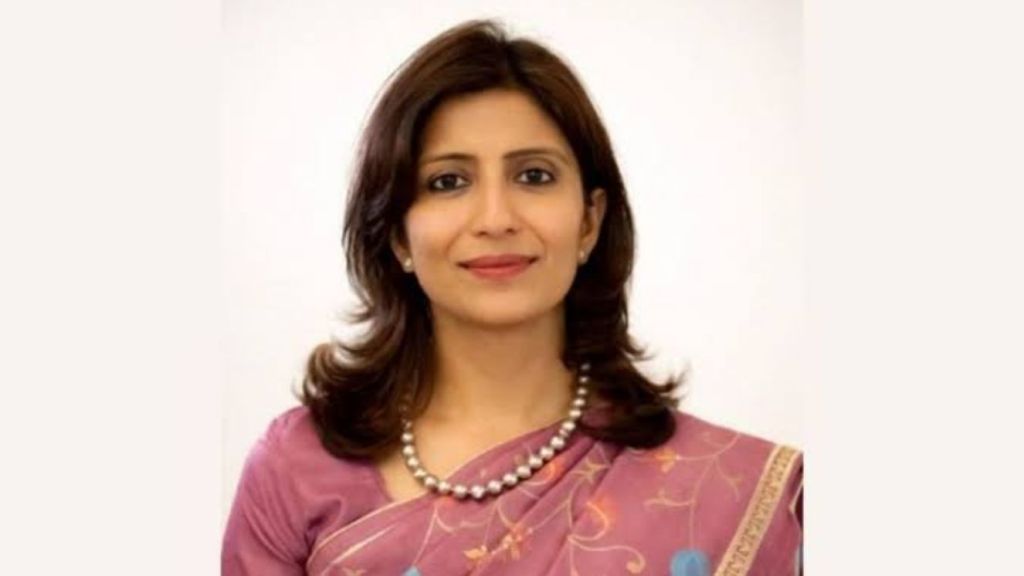

By Abhijit Lele and Kshipra Petkar
Indian mid-market companies are increasingly scouting for overseas acquisitions, supported by stronger balance sheets and improved access to financing, said Ankur Khurana, MD & Business Head, Citi Commercial Bank, India. In an interview with Abhijit Lele and Kshipra Petkar, Khurana said companies remain resilient amid geopolitical uncertainties. Excerpts:
How will the RBI’s relaxation of acquisition financing norms impact the market?
It is a very positive development, particularly for the mid-market. Large corporates never really had difficulty raising money, but mid-market companies faced limitations. With Indian banks now able to participate, the available pool of liquidity has expanded. Earlier, we relied largely on Taiwanese, Singaporean or Japanese liquidity. Now, we can confidently offer clients an initial single-bank financing solution, knowing that other Indian banks can subsequently participate. This should spur more acquisition activity.
Has the increase in interest rates affected investment appetite among mid-market companies?
We have not seen that happen yet. As long as liquidity remains available, even at an elevated cost, companies will continue investing. Many of these are multi-year investments, driven by long-term fundamentals rather than short-term interest rate movements or sentiment. Companies will, however, need to recalibrate their return on investment and payback periods. Challenges could arise when companies build excess capacity in anticipation of demand, particularly in sectors such as AI and data centres. Such investments could slow down, but this is not yet a challenge for India.
What is driving corporate credit demand currently?
Working capital requirements have increased because commodity prices have risen, pushing up the value of inventories and receivables. We saw a significant increase in working capital demand between March and September, although it has now stabilised. Organic capital expenditure and refinancing continue, while inorganic growth has been particularly robust. Indian mid-market companies have deleveraged their balance sheets, giving them the capacity to borrow and expand. They have also become more ambitious in pursuing inorganic growth.
Are Indian companies increasingly looking at overseas acquisitions?
Absolutely. European acquisition targets are available at much more attractive valuations than three years ago. In the US, geopolitical developments and tariffs are encouraging Indian companies to establish a local presence through acquisitions, manufacturing facilities or joint ventures. We are also seeing our global commercial banking clients continuing to invest and expand in India.
Are geopolitical uncertainties creating stress among mid-market borrowers?
We have undertaken extensive portfolio reviews, including of clients exposed to the Middle East through operations, exports or imports. They have proven resilient. Travel has suffered, while sectors such as chemicals face challenges. Operating conditions are tougher and margins are tighter, but we have not yet seen meaningful balance-sheet stress. Foreign exchange volatility and higher hedging costs are areas we continue to watch.
Is Citi’s fee-based business growing faster than its lending business?
We have seen balanced growth, with fee-based income growing slightly faster than lending income. This has been driven by our focus on cross-selling transaction banking, liquidity and markets products rather than relying solely on lending.
Are more technology companies choosing to list in India rather than overseas?
Yes, the trend seems to have shifted. Earlier, most companies wanted to list in the US. Now, many digital and technology companies are looking at India. US investors are heavily focused on AI, while Indian institutional investors remain willing to invest in diversified technology businesses. I believe this trend is durable because of the growing depth of domestic institutional capital.
Which sectors offer the biggest growth opportunities for Citi?
The technology sector is central to our strategy, spanning IT services, digital companies, electronics manufacturing, semiconductors and data centres. Data centres create opportunities across the entire industrial value chain, including cooling systems, transformers and power equipment. The power ecosystem, particularly transmission and grid upgrades, is another significant opportunity.
What will be Citi’s biggest priority going forward?
Cross-border business, without a doubt. That includes Indian companies expanding overseas and multinationals entering India, covering both trade and capital flows. Free trade agreements will create opportunities. My thesis is that trade flows will increase first, followed by investments. Alongside cross-border business, we will continue focusing on technology, manufacturing and healthcare.