


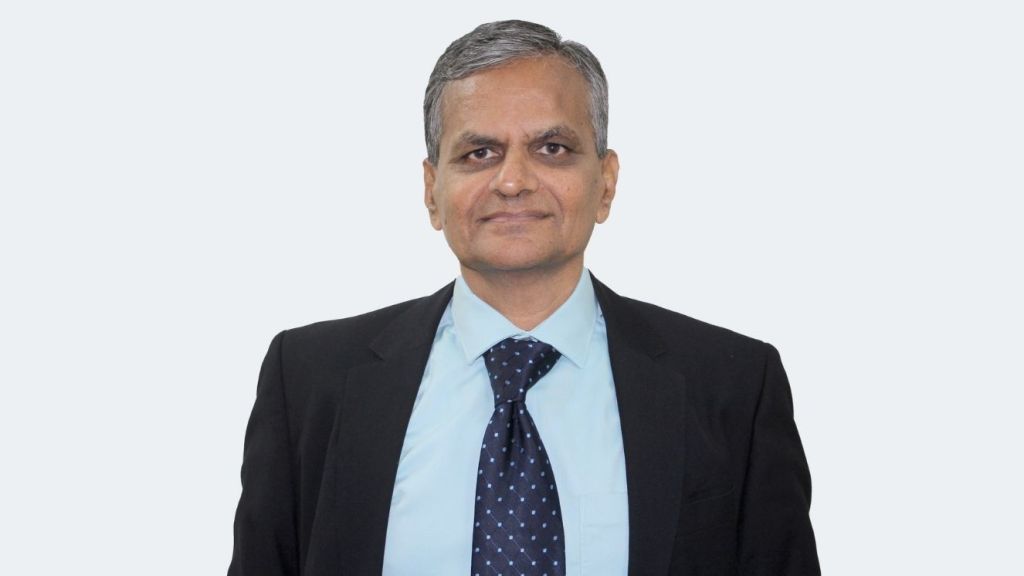

P N Vasudevan, who resigned as managing director and CEO of Equitas Small Finance Bank, describes his substantial stake dilution in the lender as a mistake. In a conversation with Narayanan V, Vasudevan explains what prompted his resignation, how the bank plans to scale up its business by another ₹1-lakh crore in the next four to five years, and why its universal banking ambition remains unaffected by the leadership change. Edited Excerpts:
Your resignation came as a surprise, particularly when the bank was performing well.
When we started Equitas in 2007, making money was never my objective. I held a 20% stake from day one, which came down to 5-6% within a year. By the time we became a small finance bank, my stake was only about 1.5%, and that too was held in my daughter’s name. In 2022, I wanted to step down to focus on philanthropy. We had launched a project to provide doorstep services for children with special needs from low-income families. That requires a lot of money. I thought I would step out of the bank, start an NBFC, and have my daughter sell her shares in the bank and invest in that NBFC. The value created would become the corpus for the trust, enabling us to expand and scale up the initiative.
Later, someone from Chola Finance resigned to start an NBFC. We then thought my daughter could invest in that NBFC instead of starting something on her own. In reality, there is no conflict because the arrangement is in line with the Banking Regulation Act. RBI is the regulator that gives the NBFC its licence and is also the authority that renews my contract every three years. But the perception has been very strong.
Many investors I have met over the last two to three years have repeatedly told me that there is a lot of talk within the investment community about a conflict of interest between Equitas and the NBFC. Because of this perceived conflict, many serious investors are reluctant to invest in the stock.
One option was for my daughter to divest her entire stake and put that money into the bank. That would have removed the conflict. But we cannot do that because we started this initiative for a particular purpose, and we cannot simply abandon it. The only other solution that kept emerging was for me to step down from the bank. That would remove the conflict altogether.
Looking back, do you regret diluting your stake in Equitas so substantially?
Yes, it was a mistake. If you ask me to go back to 2007 and start all over again, I would do things differently. But in those days, money was never on my mind. Not only had I reduced my stake substantially, but when I looked at my salary in November 2008, it was 45 times the lowest salary in the organisation. So, in March 2009, when we did the annual review, I told the board to reduce my salary. My total CTC was ₹52 lakh, and I asked them to bring it down to ₹45 lakh so that it would be 40 times the lowest salary. I kept it at that level for the next 10 years with no ESOPs or any other incentives.
When we became a bank, there were around 50 people in the organisation drawing more than me. When we started this (philanthropy) project, I realised that I needed money. The money is not necessarily for myself but can be used to do something for somebody else. That is when the whole idea of the NBFC came into our minds.
So, if you ask me whether diluting my stake was a mistake and whether I would do it differently if I could go back to 2007, I would definitely do things differently. I would want to create as much wealth as I could. That is why, in the new NBFC started by the former Chola executive, where my daughter is an investor, we will ensure that she holds at least 20-25% even after five to six years. The value created through that stake should eventually go towards building the corpus for the trust.
Will the leadership change affect Equitas’ universal bank plans?
We are technically qualified under RBI’s guidelines to apply for a universal bank licence. We are in dialogue with the RBI, and it is only a question of timing. There have been two instances where RBI has returned applications. We do not want that to happen to us. So, we are not in a hurry. We will review the matter internally and discuss it with the RBI. When we feel there is a good level of comfort and the probability of getting the licence is high, that is when we will apply.
Having crossed the ₹1-lakh-crore business milestone, how quickly can Equitas double its business?
In the last 10 years of banking, we have grown our advances and deposits by around 25% annually, despite hiccups such as demonetisation, the Covid-19 pandemic and, most recently, the microfinance crisis. This growth has been supported by our geographical spread as well as a diversified product mix, including small business loans, vehicle financing, affordable housing, microfinance, MSME working capital and gold loans.
I think the next ₹1 lakh crore will be achieved in four to five years because all the segments we operate in have a high level of unmet credit demand. The entire banking credit in India is around ₹250 lakh crore, and the total unmet credit demand is one-third of that, or about ₹85 lakh crore. All our products are focused on serving customers in that category.