


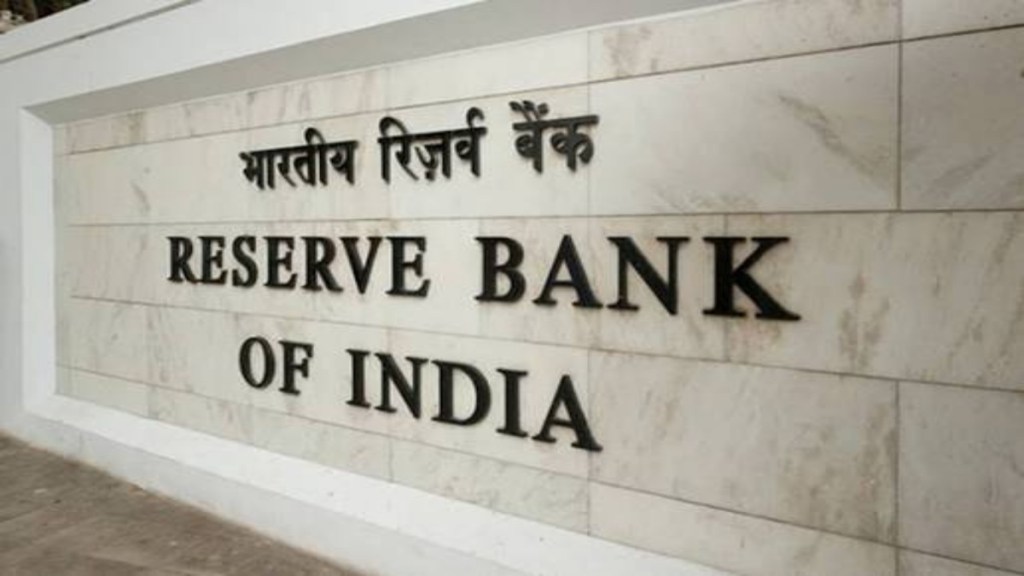

The Reserve Bank of India’s 25-basis-point repo rate hike on Wednesday may take time to fully transmit to lending and deposit rates, as abundant liquidity leaves banks with little incentive to raise funding costs, experts said.
“Transmission will likely be slower, except for loans directly linked to the external benchmark lending rate (EBLR), which must adjust faster. Given the surplus liquidity in the system, the weighted average call rate (WACR) remains relatively low, so transmission will remain muted until liquidity gets deployed or the RBI steps up its liquidity mop-up,” said Sachin Sachdeva, vice-president and co-group head, financial sector ratings, ICRA.
Sachdeva said banks are also likely to take longer to raise deposit rates as they face little pressure to attract funds. “Deposit-side transmission is likely to begin only after a few months, once liquidity gets absorbed and lenders start chasing domestic deposits.”
Madan Sabnavis, chief economist at Bank of Baroda, agreed that banks have little need to reprice deposits while they remain flush with liquidity. “Most lenders can meet short-term requirements via bulk deposits without committing to higher retail rates. Since deposit costs underpin the MCLR, lending rates cannot move up unless funding costs increase.”
System liquidity surged to a record Rs 11.16 lakh crore on September 6, prompting the RBI to step up absorption through variable rate reverse repos (VRRRs), open market operations (OMOs) and forex swaps. The surplus has since moderated following RBI bond sales and tax-related outflows, but remained sizeable at Rs 4.98 lakh crore on October 6.
The WACR, the operating target of monetary policy, ended at 5.37% on Wednesday, 13 basis points below the new repo rate of 5.50%, underscoring the drag that surplus liquidity could exert on monetary transmission.
“A rate hike while maintaining a liquidity surplus creates counteracting forces that work against each other, so calibrated tightening was required. I expect liquidity to remain moderately in surplus till December. Deposit rates are likely to change only after December, depending on the liquidity conditions at that time,” said Alok Singh, treasury head at CSB Bank.
The divergence between lending and deposit rates has already been visible. During July-August, banks’ weighted average lending rate (WALR) on fresh rupee loans hardened by 8 basis points, while the weighted average domestic term deposit rate (WADTDR) declined by 28 basis points, according to RBI data.
Going forward, the RBI will use an appropriate mix of liquidity-management tools and seek to align the WACR with the policy repo rate, Governor Sanjay Malhotra said in the Monetary Policy statement.
At the post-policy press conference, Malhotra said he expects a large part of the surplus liquidity to be absorbed during the current financial year.
“We believe that this higher liquidity is not a very long-term phenomenon because of natural reasons like currency leakage and reserve requirements of the banks, through our various operations, whether it is spot or sell-buy swap operations,” he said.
“We have other tools like OMO, CRR and the spot intervention that we do to support the rupee,” Malhotra added.