



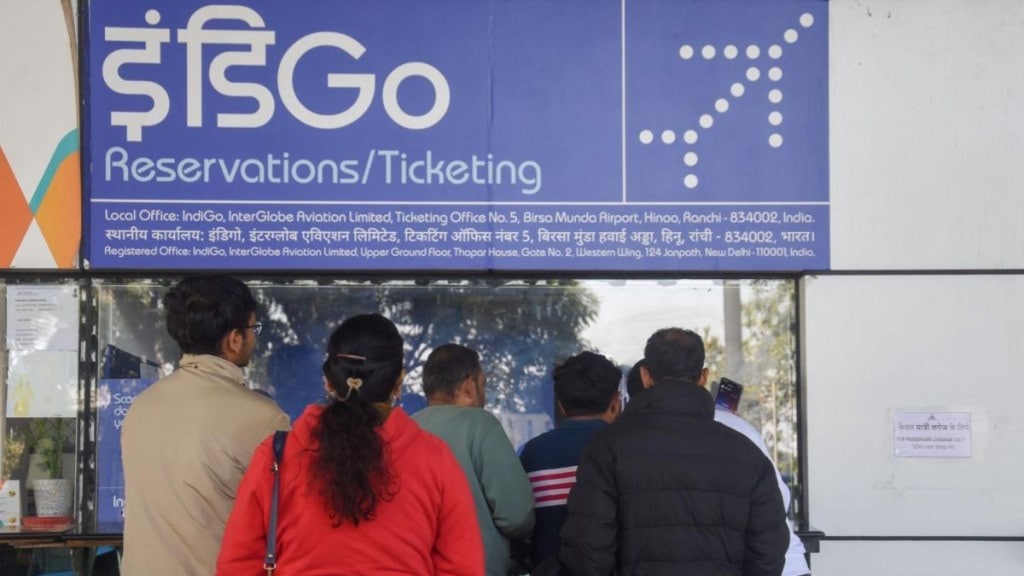
IndiGo crisis: Captain CS Randhawa, President of the Federation of Indian Pilots (FIP), has alleged that the IndiGo crisis, now in its second week, was “pre-planned”, accusing the airline’s senior management of intentionally triggering the crisis. He, in an interview with India Today, further demanded that the top leadership be fined and criminally prosecuted for allegedly pressuring the government to roll back newly introduced Flight Duty Time Limitation (FDTL) norms.
‘IndiGo crisis pre-planned’
While speaking on India Today, Randhawa claimed that the crisis “was not due to weather, ATC congestion, or crew shortages” but “pre-planned”.
“Day one, that is from the 2nd of December, the FIP has been clearly voicing its opinion and saying it is not weather, it is not ATC congestion, it is not FDTL-CR, it is not crew shortage, it is because it is pre-planned,” he said.
Randhawa alleged that the airline had scheduled a network planning and crew utilisation software integration ahead of the winter schedule, under which IndiGo was allotted an additional 150 daily flights.
“It was pre-planned. They had to do an integration of the network planning software with the optimisation of the crew utilisation because they were given 150 flights per day extra in the winter schedule. So everything had to be integrated. Now, how can you have all the aircraft on the ground, all the pilots available, all the cabin crew available, and yet no flight taking off?” he asked, before claiming that the IndiGo CEO had admitted the crisis was “pre-planned”.
“That means that they have planned from the 2nd of December and didn’t communicate either to the DGCA or to the passengers and created a crisis around the country.”
‘Senior management needs to be criminally prosecuted’
Randhawa said that senior IndiGo executives must face strict legal consequences. “They need to be the senior management of IndiGo airline needs to be criminally prosecuted and fined for thousands of crores. They cannot take people and the citizens of the country to ransom. And on the contrary, they have been given a clean chit not to adhere to the safety norms of the pilots, as if the safety norms are not applicable to 5,800 to 6,000 pilots of IndiGo.”
He also expressed his displeasure with the way the government handled the situation. “So it is total rubbish what has happened and the way the government has handled it, I am shocked. When there is a problem, analyse the problem at least,” he expressed.
“We’ve been saying from the 2nd of December that there has been no flight cancellation even after the second phase of the CR was implemented on 1st November. Then I went on record and even said that when the software modification on the Airbus 320 aircraft, 200 aircraft of IndiGo happened on the 29th, no flight was cancelled. There were some delays. But nothing happened on the 1st of December. On the second, a bomb exploded, and everything started crumbling. And now also, if you see, lots of flights are getting cancelled,” he further added.
Following the IndiGo crisis, the Ministry of Civil Aviation rolled back the FDTL norms, but not entirely. Only specific and temporary relaxations have been granted to IndiGo’s A320 fleet to help restore normalcy. The FIP President criticised the government for this move as well, saying that pilots are “extremely unhappy” about it.
“They are not human beings! Are they not human beings?” he asked.
‘We’ll curtail IndiGo’s routes’: Aviation Minister
Civil Aviation Minister K Ram Mohan Naidu on Monday said IndiGo’s winter flight schedule would be reduced, with flights reallocated to other airlines following the recent large-scale operational disruptions.
“We will curtail IndiGo’s routes. They are currently operating 2,200 flights. We will definitely curtail them,” Naidu told Doordarshan.
He added that Rs 745 crore in refunds had been issued for 7,30,655 cancelled PNRs between December 1-8, and said 6,000 of 9,000 stranded passenger bags had been returned, with the remainder expected to be delivered shortly.
Amid the ongoing IndiGo fiasco, the Ministry of Civil Aviation (MoCA) and Directorate General of Civil Aviation (DGCA) have been monitoring the situation across all airports in real time. A high-level review meeting comprising all senior officials was held, and all senior officials of the Ministry have been instructed to visit airports to verify airline operations and passenger-oriented services. Any shortcomings identified, including feedback from passenger interactions, are to be addressed and rectified immediately.