


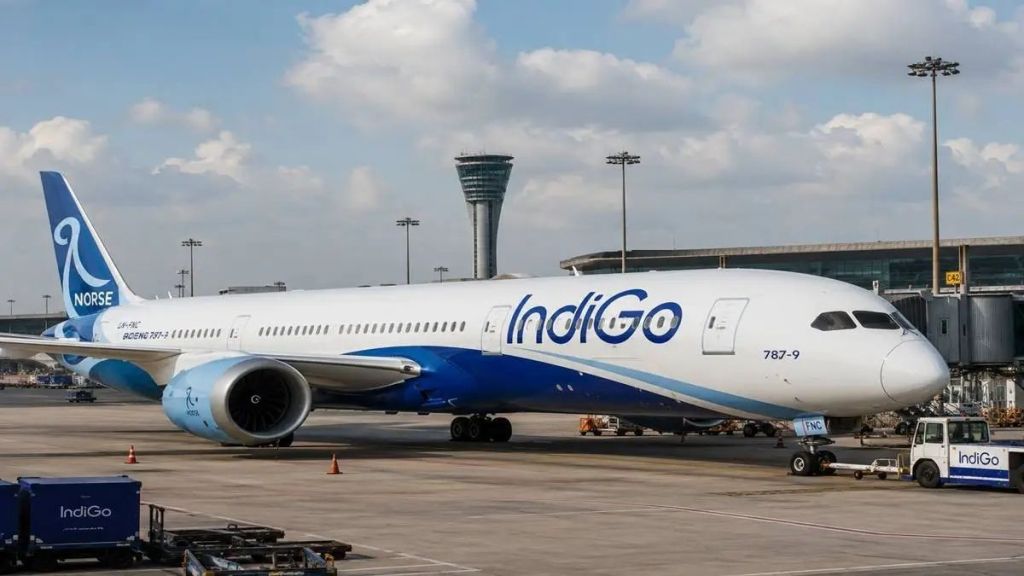

IndiGo will increase fuel charges on domestic and international flights from October 6, as a sustained rise in aviation turbine fuel (ATF) prices pushes airline operating costs higher. The latest revision marks the third consecutive monthly increase in India’s ATF prices and comes ahead of the festive travel season.
The revised fuel charges will apply to all new bookings made after 12:01 am on October 6. IndiGo said the latest month-on-month increase in ATF prices has exceeded 14%, taking fuel costs to among their highest levels in the last decade.
For domestic flights, the fuel charge will now range from Rs 375 for journeys up to 500 km to Rs 1,300 for flights longer than 2,000 km. The charges for journeys of 501-1,000 km, 1,001-1,500 km and 1,501-2,000 km will be Rs 600, Rs 900 and Rs 1,150, respectively.
This represents a sizeable increase from the charges introduced in April. The surcharge for flights up to 500 km has risen from Rs 275 to Rs 375, while the charge for flights above 2,000 km has increased from Rs 950 to Rs 1,300 — an increase of about 36% in both cases.
The increase is also significantly higher than the flat Rs 425 domestic fuel charge IndiGo had introduced in March when fuel prices initially surged amid geopolitical tensions in the Middle East.
On international routes, the latest fuel charge ranges from Rs 1,000 for SAARC flights up to 500 km to Rs 10,000 for Europe. Southeast Asia, the GCC and Middle East, and North and East Asia will attract a Rs 5,500 charge, while Africa will attract Rs 6,000. SAARC flights beyond 500 km will carry a Rs 3,000 charge.
The latest move follows a sharp rise in domestic ATF prices. On October 1, ATF prices for domestic airlines were increased by Rs 16 per litre to Rs 137, from Rs 121.28 in September, a around 13% increase. This was the third straight monthly hike, following increases in August and September.
Overall, domestic ATF prices in Delhi have risen 24.5% since July, from ₹110 per litre to ₹137 per litre in October, after three consecutive monthly increases. Fuel is one of the largest cost components for airlines, meaning sustained increases can force carriers to either absorb the additional cost, raise fares or rationalise capacity.
IndiGo, however, said it has kept the latest increase measured, noting that fully offsetting the rise in fuel costs would require a significantly larger increase in fuel charges.
The move could add to airfare pressure during the upcoming festive period, when demand for domestic and international travel typically strengthens.