



Domestic air passenger traffic fell 6.34% year-on-year to 12.13 million in August from 12.9 million in the same month last year, its steepest decline since April, as the market cooled after the summer travel peak and airlines continued to recalibrate capacity.
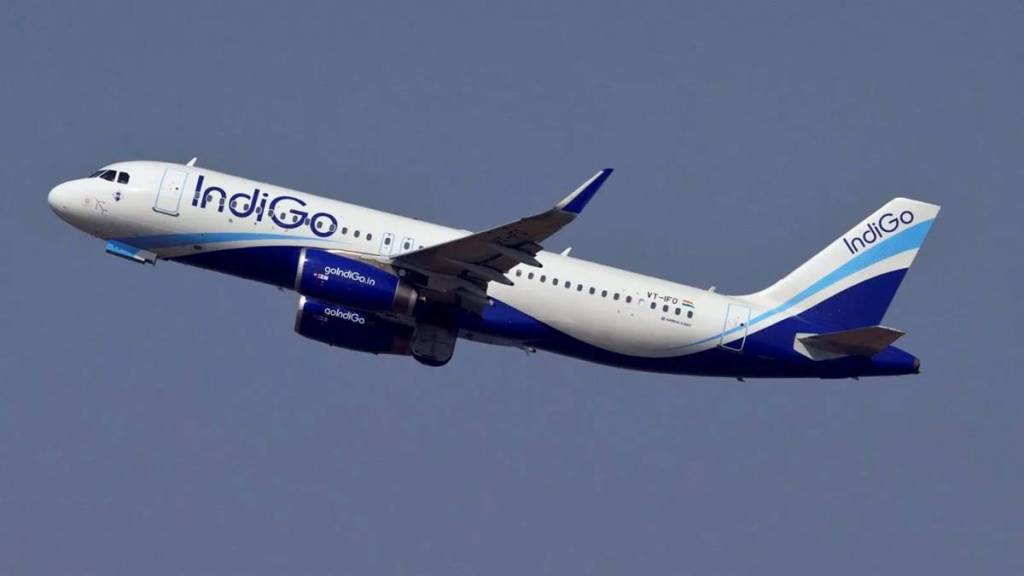
The decline also reshaped the competitive landscape. IndiGo’s market share fell to 65% in August from a record 67.4% in July, while the Air India Group gained ground, with its share rising to 26.7% from 24%. SpiceJet, meanwhile, continued to lose market share, falling to 1.2% from 1.6%, according to data released by the Directorate General of Civil Aviation (DGCA).
IndiGo carried 7.9 million passengers in August, down from 8.1 million in July. The Air India Group, comprising Air India and Air India Express, carried 3.2 million passengers, up from 2.9 million in July.
Together, IndiGo and the Air India Group accounted for 91.7% of domestic passenger traffic in August, slightly higher than their combined 91.4% share in July, highlighting the continued concentration of the market despite the shift in share between the two groups.
Akasa Air retained a 5.5% market share, while SpiceJet’s share fell to 1.2%. The airline carried just 140,000 passengers in August, down from 187,000 in July.
The August decline was significantly sharper than the 1.03% contraction in June and 4.8% fall in July.
Traffic had risen 9.49% year-on-year in May, when passenger volumes reached 15.39 million, before falling to 13.46 million in June and 12 million in July. The May traffic surge reflected the peak summer travel season, which typically drives higher air travel demand.
The August weakness comes after the traditional summer travel peak and during the monsoon season, when domestic air travel demand typically moderates.
However, the market has now recorded three consecutive months of year-on-year contraction, suggesting that the slowdown extends beyond a single month of seasonal correction. Airlines have also continued to calibrate capacity and network deployment amid changing demand conditions.
At the same time, the sequential picture is less severe. August traffic was 1.1% higher than July, indicating that the sharp fall in passenger volumes following the May peak may be beginning to stabilise.
For January-August, domestic airlines carried 110.53 million passengers, marginally lower than 110.73 million in the corresponding period last year, translating into a 0.18% decline.
Load factors also moderated in August. IndiGo’s passenger load factor fell to 79.2% from 82.4% in July, while the Air India Group’s declined to 77% from 83.2%. Akasa Air recorded the highest load factor among the major carriers at 87.6%.
The domestic aviation market is also operating against a challenging cost environment, with elevated ATF prices and airspace restrictions affecting airline networks and aircraft deployment, particularly on international routes. The combination of seasonal demand moderation and continued capacity recalibration is likely to remain a key factor for passenger traffic in the coming months.